Джозеф Киплинг - Indian Tales
Здесь есть возможность читать онлайн «Джозеф Киплинг - Indian Tales» весь текст электронной книги совершенно бесплатно (целиком полную версию без сокращений). В некоторых случаях можно слушать аудио, скачать через торрент в формате fb2 и присутствует краткое содержание. Год выпуска: 2014, Издательство: epubBooks Classics, Жанр: Классическая проза, на английском языке. Описание произведения, (предисловие) а так же отзывы посетителей доступны на портале библиотеки ЛибКат.
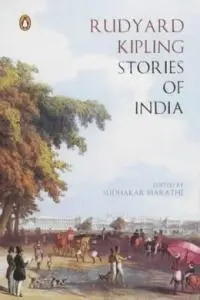
- Название:Indian Tales
- Автор:
- Издательство:epubBooks Classics
- Жанр:
- Год:2014
- ISBN:нет данных
- Рейтинг книги:5 / 5. Голосов: 1
-
Избранное:Добавить в избранное
- Отзывы:
-
Ваша оценка:
Indian Tales: краткое содержание, описание и аннотация
Предлагаем к чтению аннотацию, описание, краткое содержание или предисловие (зависит от того, что написал сам автор книги «Indian Tales»). Если вы не нашли необходимую информацию о книге — напишите в комментариях, мы постараемся отыскать её.
Indian Tales — читать онлайн бесплатно полную книгу (весь текст) целиком
Ниже представлен текст книги, разбитый по страницам. Система сохранения места последней прочитанной страницы, позволяет с удобством читать онлайн бесплатно книгу «Indian Tales», без необходимости каждый раз заново искать на чём Вы остановились. Поставьте закладку, и сможете в любой момент перейти на страницу, на которой закончили чтение.
Интервал:
Закладка:
So, at his own time, Khem Singh knocked at the wicket–gate of the Fort and walked to the Captain and the Subaltern, who were nearly grey–headed on account of correspondence that daily arrived from Simla marked "Private,"
"I have come back, Captain Sahib," said Khem Singh, "Put no more guards over me. It is no good out yonder."
A week later I saw him for the first time to my knowledge, and he made as though there were an understanding between us.
"It was well done, Sahib," said he, "and greatly I admired your astuteness in thus boldly facing the troops when I, whom they would have doubtless torn to pieces, was with you. Now there is a man in Fort Ooltagarh whom a bold man could with ease help to escape. This is the position of the Fort as I draw it on the sand"—
But I was thinking how I had become Lalun's Vizier after all.
The Broken-link Handicap
While the snaffle holds, or the long–neck slings,
While the big beam tilts, or the last bell rings,
While horses are horses to train and to race.
Then women and wine take a second place
For me—for me—
While a short "ten–three"
Has a field to squander or fence to face!
There are more ways of running a horse to suit your book than pulling his head off in the straight. Some men forget this. Understand clearly that all racing is rotten—as everything connected with losing money must be. In India, in addition to its inherent rottenness, it has the merit of being two–thirds sham; looking pretty on paper only. Every one knows every one else far too well for business purposes. How on earth can you rack and harry and post a man for his losings, when you are fond of his wife, and live in the same Station with him? He says, "On the Monday following," "I can't settle just yet." You say, "All right, old man," and think yourself lucky if you pull off nine hundred out of a two–thousand–rupee debt. Any way you look at it, Indian racing is immoral, and expensively immoral. Which is much worse. If a man wants your money, he ought to ask for it, or send round a subscription–list, instead of juggling about the country, with an Australian larrikin; a "brumby," with as much breed as the boy; a brace of chumars in gold–laced caps; three or four ekka –ponies with hogged manes, and a switch–tailed demirep of a mare called Arab because she has a kink in her flag. Racing leads to the shroff quicker than anything else. But if you have no conscience and no sentiments, and good hands, and some knowledge of pace, and ten years' experience of horses, and several thousand rupees a month, I believe that you can occasionally contrive to pay your shoeing–bills.
Did you ever know Shackles—b. w. g., 15. 1–3/8—coarse, loose, mule–like ears—barrel as long as a gatepost—tough as a telegraph–wire—and the queerest brute that ever looked through a bridle? He was of no brand, being one of an ear–nicked mob taken into the Bucephalus at £4:10s., a head to make up freight, and sold raw and out of condition at Calcutta for Rs.275. People who lost money on him called him a "brumby"; but if ever any horse had Harpoon's shoulders and The Gin's temper, Shackles was that horse. Two miles was his own particular distance. He trained himself, ran himself, and rode himself; and, if his jockey insulted him by giving him hints, he shut up at once and bucked the boy off. He objected to dictation. Two or three of his owners did not understand this, and lost money in consequence. At last he was bought by a man who discovered that, if a race was to be won, Shackles, and Shackles only, would win it in his own way, so long as his jockey sat still. This man had a riding–boy called Brunt—a lad from Perth, West Australia—and he taught Brunt, with a trainer's whip, the hardest thing a jock can learn—to sit still, to sit still, and to keep on sitting still. When Brunt fairly grasped this truth, Shackles devastated the country. No weight could stop him at his own distance; and the fame of Shackles spread from Ajmir in the South, to Chedputter in the North. There was no horse like Shackles, so long as he was allowed to do his work in his own way. But he was beaten in the end; and the story of his fall is enough to make angels weep.
At the lower end of the Chedputter racecourse, just before the turn into the straight, the track passes close to a couple of old brick–mounds enclosing a funnel–shaped hollow. The big end of the funnel is not six feet from the railings on the off–side. The astounding peculiarity of the course is that, if you stand at one particular place, about half a mile away, inside the course, and speak at ordinary pitch, your voice just hits the funnel of the brick–mounds and makes a curious whining echo there. A man discovered this one morning by accident while out training with a friend. He marked the place to stand and speak from with a couple of bricks, and he kept his knowledge to himself. Every peculiarity of a course is worth remembering in a country where rats play the mischief with the elephant–litter, and Stewards build jumps to suit their own stables. This man ran a very fairish country–bred, a long, racking high mare with the temper of a fiend, and the paces of an airy wandering seraph—a drifty, glidy stretch. The mare was, as a delicate tribute to Mrs. Reiver, called "The Lady Regula Baddun"—or for short, Regula Baddun.
Shackles' jockey, Brunt, was a quite well–behaved boy, but his nerve had been shaken. He began his career by riding jump–races in Melbourne, where a few Stewards want lynching, and was one of the jockeys who came through the awful butchery—perhaps you will recollect it—of the Maribyrnong Plate. The walls were colonial ramparts—logs of jarrah spiked into masonry—with wings as strong as Church buttresses. Once in his stride, a horse had to jump or fall. He couldn't run out. In the Maribyrnong Plate, twelve horses were jammed at the second wall. Red Hat, leading, fell this side, and threw out The Gled, and the ruck came up behind and the space between wing and wing was one struggling, screaming, kicking shambles. Four jockeys were taken out dead; three were very badly hurt, and Brunt was among the three. He told the story of the Maribyrnong Plate sometimes; and when he described how Whalley on Red Hat, said, as the mare fell under him—"God ha' mercy, I'm done for!" and how, next instant, Sithee There and White Otter had crushed the life out of poor Whalley, and the dust hid a small hell of men and horses, no one marveled that Brunt had dropped jump–races and Australia together. Regula Baddun's owner knew that story by heart. Brunt never varied it in the telling. He had no education.
Shackles came to the Chedputter Autumn races one year, and his owner walked about insulting the sportsmen of Chedputter generally, till they went to the Honorary Secretary in a body and said, "Appoint handicappers, and arrange a race which shall break Shackles and humble the pride of his owner." The Districts rose against Shackles and sent up of their best; Ousel, who was supposed to be able to do his mile in 1–53; Petard, the stud–bred, trained by a cavalry regiment who knew how to train; Gringalet, the ewe–lamb of the 75th; Bobolink, the pride of Peshawar; and many others.
They called that race The Broken–Link Handicap, because it was to smash Shackles; and the Handicappers piled on the weights, and the Fund gave eight hundred rupees, and the distance was "round the course for all horses." Shackles' owner said, "You can arrange the race with regard to Shackles only. So long as you don't bury him under weight–cloths, I don't mind." Regula Baddun's owner said, "I throw in my mare to fret Ousel. Six furlongs is Regula's distance, and she will then lie down and die. So also will Ousel, for his jockey doesn't understand a waiting race." Now, this was a lie, for Regula had been in work for two months at Dehra, and her chances were good, always supposing that Shackles broke a blood–vessel—or Brunt moved on him.
Читать дальшеИнтервал:
Закладка:
Похожие книги на «Indian Tales»
Представляем Вашему вниманию похожие книги на «Indian Tales» списком для выбора. Мы отобрали схожую по названию и смыслу литературу в надежде предоставить читателям больше вариантов отыскать новые, интересные, ещё непрочитанные произведения.








Обсуждение, отзывы о книге «Indian Tales» и просто собственные мнения читателей. Оставьте ваши комментарии, напишите, что Вы думаете о произведении, его смысле или главных героях. Укажите что конкретно понравилось, а что нет, и почему Вы так считаете.