Джозеф Киплинг - Indian Tales
Здесь есть возможность читать онлайн «Джозеф Киплинг - Indian Tales» весь текст электронной книги совершенно бесплатно (целиком полную версию без сокращений). В некоторых случаях можно слушать аудио, скачать через торрент в формате fb2 и присутствует краткое содержание. Год выпуска: 2014, Издательство: epubBooks Classics, Жанр: Классическая проза, на английском языке. Описание произведения, (предисловие) а так же отзывы посетителей доступны на портале библиотеки ЛибКат.
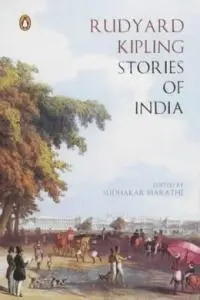
- Название:Indian Tales
- Автор:
- Издательство:epubBooks Classics
- Жанр:
- Год:2014
- ISBN:нет данных
- Рейтинг книги:5 / 5. Голосов: 1
-
Избранное:Добавить в избранное
- Отзывы:
-
Ваша оценка:
Indian Tales: краткое содержание, описание и аннотация
Предлагаем к чтению аннотацию, описание, краткое содержание или предисловие (зависит от того, что написал сам автор книги «Indian Tales»). Если вы не нашли необходимую информацию о книге — напишите в комментариях, мы постараемся отыскать её.
Indian Tales — читать онлайн бесплатно полную книгу (весь текст) целиком
Ниже представлен текст книги, разбитый по страницам. Система сохранения места последней прочитанной страницы, позволяет с удобством читать онлайн бесплатно книгу «Indian Tales», без необходимости каждый раз заново искать на чём Вы остановились. Поставьте закладку, и сможете в любой момент перейти на страницу, на которой закончили чтение.
Интервал:
Закладка:
I put my hands to the long red silk waist–cloth that was hanging out of the window, and we three pulled and pulled with all the strength at our command. There was something very heavy at the end, and it swore in an unknown tongue as it kicked against the City wall.
"Pull, oh, pull!" said Lalun, at the last. A pair of brown hands grasped the window–sill and a venerable Muhammadan tumbled upon the floor, very much out of breath. His jaws were tied up, his turban had fallen over one eye, and he was dusty and angry.
Lalun hid her face in her hands for an instant and said something about Wali Dad that I could not catch,
Then, to my extreme gratification, she threw her arms round my neck and murmured pretty things. I was in no haste to stop her; and Nasiban, being a handmaiden of tact, turned to the big jewel–chest that stands in the corner of the white room and rummaged among the contents. The Muhammadan sat on the floor and glared.
"One service more, Sahib, since thou hast come so opportunely," said Lalun. "Wilt thou"—it is very nice to be thou–ed by Lalun—"take this old man across the City—the troops are everywhere, and they might hurt him for he is old—to the Kumharsen Gate? There I think he may find a carriage to take him to his house. He is a friend of mine, and thou art—more than a friend—therefore I ask this."
Nasiban bent over the old man, tucked something into his belt, and I raised him up, and led him into the streets. In crossing from the east to the west of the City there was no chance of avoiding the troops and the crowd. Long before I reached the Gully of the Horsemen I heard the shouts of the British Infantry crying cheeringly: "Hutt, ye beggars! Hutt, ye devils! Get along! Go forward, there!" Then followed the ringing of rifle–butts and shrieks of pain. The troops were banging the bare toes of the mob with their gun–butts—for not a bayonet had been fixed. My companion mumbled and jabbered as we walked on until we were carried back by the crowd and had to force our way to the troops. I caught him by the wrist and felt a bangle there—the iron bangle of the Sikhs—but I had no suspicions, for Lalun had only ten minutes before put her arms round me. Thrice we were carried back by the crowd, and when we made our way past the British Infantry it was to meet the Sikh Cavalry driving another mob before them with the butts of their lances.
"What are these dogs?" said the old man.
"Sikhs of the Cavalry, Father," I said, and we edged our way up the line of horses two abreast and found the Deputy Commissioner, his helmet smashed on his head, surrounded by a knot of men who had come down from the Club as amateur constables and had helped the Police mightily.
"We'll keep 'em on the run till dawn," said Petitt, "Who's your villainous friend?"
I had only time to say: "The Protection of the Sirkar! " when a fresh crowd flying before the Native Infantry carried us a hundred yards nearer to the Kumharsen Gate, and Petitt was swept away like a shadow.
"I do not know—I cannot see—this is all new to me!" moaned my companion. "How many troops are there in the City?"
"Perhaps five hundred," I said.
"A lakh of men beaten by five hundred—and Sikhs among them! Surely, surely, I am an old man, but—the Kumharsen Gate is new. Who pulled down the stone lions? Where is the conduit? Sahib, I am a very old man, and, alas, I—I cannot stand." He dropped in the shadow of the Kumharsen Gate where there was no disturbance. A fat gentleman wearing gold pince–nez came out of the darkness.
"You are most kind to bring my old friend," he said, suavely. "He is a landholder of Akala. He should not be in a big City when there is religious excitement. But I have a carriage here. You are quite truly kind. Will you help me to put him into the carriage? It is very late."
We bundled the old man into a hired victoria that stood close to the gate, and I turned back to the house on the City wall. The troops were driving the people to and fro, while the Police shouted, "To your houses! Get to your houses!" and the dog–whip of the Assistant District Superintendent cracked remorselessly. Terror–stricken bunnias clung to the stirrups of the cavalry, crying that their houses had been robbed (which was a lie), and the burly Sikh horsemen patted them on the shoulder, and bade them return to those houses lest a worse thing should happen. Parties of five or six British soldiers, joining arms, swept down the side–gullies, their rifles on their backs, stamping, with shouting and song, upon the toes of Hindu and Musalman. Never was religious enthusiasm more systematically squashed; and never were poor breakers of the peace more utterly weary and footsore. They were routed out of holes and corners, from behind well–pillars and byres, and bidden to go to their houses. If they had no houses to go to, so much the worse for their toes.
On returning to Lalun's door I stumbled over a man at the threshold. He was sobbing hysterically and his arms flapped like the wings of a goose. It was Wali Dad, Agnostic and Unbeliever, shoeless, turbanless, and frothing at the mouth, the flesh on his chest bruised and bleeding from the vehemence with which he had smitten himself. A broken torch–handle lay by his side, and his quivering lips murmured, "Ya Hasan! Ya Hussain!" as I stooped over him. I pushed him a few steps up the staircase, threw a pebble at Lalun's City window and hurried home.
Most of the streets were very still, and the cold wind that comes before the dawn whistled down them. In the centre of the Square of the Mosque a man was bending over a corpse. The skull had been smashed in by gun–butt or bamboo–stave.
"It is expedient that one man should die for the people," said Petitt, grimly, raising the shapeless head. "These brutes were beginning to show their teeth too much."
And from afar we could hear the soldiers singing "Two Lovely Black Eyes," as they drove the remnant of the rioters within doors.
Of course you can guess what happened? I was not so clever. When the news went abroad that Khem Singh had escaped from the Fort, I did not, since I was then living this story, not writing it, connect myself, or Lalun, or the fat gentleman of the gold pince–nez , with his disappearance. Nor did it strike me that Wali Dad was the man who should have convoyed him across the City, or that Lalun's arms round my neck were put there to hide the money that Nasiban gave to Kehm Singh, and that Lalun had used me and my white face as even a better safeguard than Wali Dad who proved himself so untrustworthy. All that I knew at the time was that, when Fort Amara was taken up with the riots, Khem Singh profited by the confusion to get away, and that his two Sikh guards also escaped.
But later on I received full enlightenment; and so did Khem Singh. He fled to those who knew him in the old days, but many of them were dead and more were changed, and all knew something of the Wrath of the Government. He went to the young men, but the glamour of his name had passed away, and they were entering native regiments of Government offices, and Khem Singh could give them neither pension, decorations, nor influence—nothing but a glorious death with their backs to the mouth of a gun. He wrote letters and made promises, and the letters fell into bad hands, and a wholly insignificant subordinate officer of Police tracked them down and gained promotion thereby. Moreover, Khem Singh was old, and anise–seed brandy was scarce, and he had left his silver cooking–pots in Fort Amara with his nice warm bedding, and the gentleman with the gold pince–nez was told by those who had employed him that Khem Singh as a popular leader was not worth the money paid.
"Great is the mercy of these fools of English!" said Khem Singh when the situation was put before him. "I will go back to Fort Amara of my own free will and gain honor. Give me good clothes to return in,"
Читать дальшеИнтервал:
Закладка:
Похожие книги на «Indian Tales»
Представляем Вашему вниманию похожие книги на «Indian Tales» списком для выбора. Мы отобрали схожую по названию и смыслу литературу в надежде предоставить читателям больше вариантов отыскать новые, интересные, ещё непрочитанные произведения.








Обсуждение, отзывы о книге «Indian Tales» и просто собственные мнения читателей. Оставьте ваши комментарии, напишите, что Вы думаете о произведении, его смысле или главных героях. Укажите что конкретно понравилось, а что нет, и почему Вы так считаете.