ROBBINS Harold - The Carpetbaggers
Здесь есть возможность читать онлайн «ROBBINS Harold - The Carpetbaggers» весь текст электронной книги совершенно бесплатно (целиком полную версию без сокращений). В некоторых случаях можно слушать аудио, скачать через торрент в формате fb2 и присутствует краткое содержание. Жанр: Классическая проза, на английском языке. Описание произведения, (предисловие) а так же отзывы посетителей доступны на портале библиотеки ЛибКат.
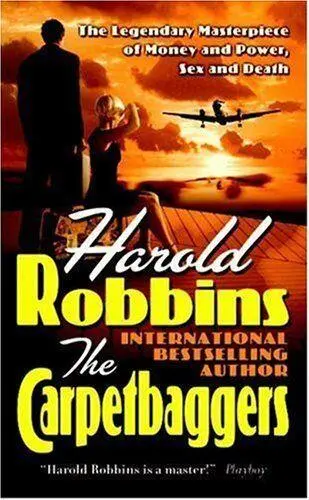
- Название:The Carpetbaggers
- Автор:
- Жанр:
- Год:неизвестен
- ISBN:нет данных
- Рейтинг книги:4 / 5. Голосов: 1
-
Избранное:Добавить в избранное
- Отзывы:
-
Ваша оценка:
The Carpetbaggers: краткое содержание, описание и аннотация
Предлагаем к чтению аннотацию, описание, краткое содержание или предисловие (зависит от того, что написал сам автор книги «The Carpetbaggers»). Если вы не нашли необходимую информацию о книге — напишите в комментариях, мы постараемся отыскать её.
The Carpetbaggers — читать онлайн бесплатно полную книгу (весь текст) целиком
Ниже представлен текст книги, разбитый по страницам. Система сохранения места последней прочитанной страницы, позволяет с удобством читать онлайн бесплатно книгу «The Carpetbaggers», без необходимости каждый раз заново искать на чём Вы остановились. Поставьте закладку, и сможете в любой момент перейти на страницу, на которой закончили чтение.
Интервал:
Закладка:
Sam's voice stopped her. It was icy cold as he made probably the longest speech he ever made in his life. "I don't know nothin' about your religion, ma'am, nor do I mind how you believe. All I do know is you're two thousand miles from Virginia an' you took my ten dollars to teach my boy the same as you took the money from ever'body else at the meetin' in the general store. If you're not goin' to learn him the way you agreed, you better take the next stage back East."
The teacher stared at him indignantly. "Mr. Sand, how dare you talk to me like that? Do you think the parents of the other children would want them to attend school with your son?"
"They were all at that meetin'," Sam said. "I didn't hear none of them say no."
The teacher looked at him. Sam could see the fight go out of her. "I'll never understand you Westerners," she said helplessly.
She looked down at Max disapprovingly. "At any rate, we can't have him in school in those clothes. He’ll have to wear proper clothes like the other children."
"Yes, ma'am," Sam said. He turned to Max. "Come on," he said. "We're goin' to the store to get you regular clothes."
"While you're at it," she said, "get him a haircut. That way, he won't seem any different from the others."
Sam nodded. He knew what she meant. "I will, ma'am," he said. "Thank you, ma'am."
Max trotted along beside him as they strode down toward the general store. He looked up at his father. It was the first time he had thought about it. "Am I different than the others, Pa?"
Sam looked down at him. It was the first time he'd thought about it, too. A sudden sadness came into him. He knelt down in the dust of the street beside his son. He spoke with the sudden knowledge that came from living off the earth.
"Of course you're different," he said, looking into Max's eyes. "Everybody in this world is different, like there are no two buffalo alike or no two mules. Everybody is alike an' yet everybody is different."
By the end of Max's first year in school, the teacher was very proud of him. Much to her surprise, he had turned out to be her best pupil. His mind was quick and bright and he learned easily. When the term ended, she made sure to get Sam's promise that his son would return in the fall.
When the school closed down for the summer, Max brought his clothing back from Olsens' and settled down. During that first week, he was kept busy repairing all the damage done to the cabin by the winter.
One evening, after Max had gone to bed, Kaneha turned to her husband. "Sam," she said in English.
Sam almost dropped the leather harness on which he had been working. It was the first time in all their years together that she had called him by name.
Kaneha felt the blood rush into her face. She wondered at her temerity. Squaws never spoke to their husband except in reply. She looked down at the floor in front of her. "It is true that our son has done well in the school of the White Eyes?"
She could feel his gaze boring into her. "It's true," she heard his voice reply.
"I am proud of our son," she said, lapsing into Kiowa. "And I am grateful to his father, who is a mighty hunter and great provider."
"Yes?" Sam asked, still watching.
"While it is true that our son learns many things in the school of the White Eyes that make mighty medicine, there are things also that he learns that disturb him greatly."
"Such as?" Sam asked gently.
She looked up into his face proudly. "There are some among the White Eyes who say to our son that he is less than they, that his blood does not run red like theirs."
Sam's lips tightened. He wondered how she would know this. She never came into town, she never left the place. He felt a vague guilt stir inside him. "They are stupid children," he said.
"I know," she said simply.
He reached out his hand and touched her cheek gratefully. She caught his hand and held it to her cheek. "I think it is time we send our son to the tents of the mighty chief, his grandfather, so that he may learn the true strength of his blood."
Sam looked into her face. In many ways, it was a wise suggestion. In one summer with the Kiowa, Max would learn all the things he needed to survive in this land. He would also learn that he came from a family that could trace its blood further back than any of the jackals who tormented him. He nodded. "I will take our son to the tents of my brothers, the Kiowa," he said.
He looked at her again. He was now fifty-two and she was little more than half his age. She was still straight and slim and strong; she had never run to fat the way Indian women usually did. He felt his heart begin to swell inside him.
He let the harness drop from his hand and he drew her head down to his chest. His hand stroked her hair gently. Suddenly he knew what he had felt deep inside him all these years. He turned her face up to him. "I love you, Kaneha," he said.
Her eyes were dark and filled with tears. "I love you, my husband."
And for the first time, he kissed her on the mouth.
4
IT WAS ABOUT TWO O'CLOCK on a Saturday afternoon three summers later when Max stood on a wagon in the yard back of Olsen's Livery Stable, pitching hay up into the open loft over his head. He was naked above his buckskin breeches and his body was burnt a coppery black by the blazing sun that hung overhead. The muscles rippled easily in his back as he forked the hay up from the wagon.
The three men came riding into the yard and pulled their horses up near the wagon. They did not dismount but sat there, looking at him.
Max did not interrupt his work and after a moment, one of them spoke. "Hey, Injun," he said. "Where is the Sand boy?"
Max threw another forkful into the loft. Then he sank the pitchfork into the hay and looked down at them. "I'm Max Sand," he said easily, resting on the fork handle.
The men exchanged meaningful looks. "We're lookin' fer yer pappy," the man who had spoken before said.
Max stared at them without answering. His blue eyes were dark and unreadable.
"We were over at the stage line but the place was closed. There was a sign there that said your pappy hauled freight."
"That's right," Max said. "But this is Saturday afternoon an' he's gone home."
One of the others pushed forward. "We got a wagonload of freight we got to get over to Virginia City," he said. "We're in a hurry. We'd like to talk to him."
Max picked up the pitchfork again. He tossed another forkful of hay into the loft. "I'll tell him when I get home to-night."
"We cain't wait that long," the first man said. "We want to make the deal and get on out of here tonight. How do we find your place?"
Max looked at them curiously. They didn't look like settlers or miners or the usual run of people that had freight for his father to haul. They looked more like gunmen or drifters, the way they sat there with their guns tied low on their legs, their hats shading their faces.
"I'll be th'ough here in a couple of hours," Max said. "I’ll take you out there."
"I said we was in a hurry, boy. Your pappy won't like it none if he hears we gave our load to somebody else."
Max shrugged his shoulders. "Follow the north road out about twenty miles."
Without another word the three turned their horses around and began to ride out of the yard. Their voices floated back on the lazy breeze.
"Yuh'd think with all the dough ol' Sand's got buried, he'd do better than bein' a squaw man," one of them said.
Max heard the others laugh as he angrily pitched hay up into the loft.
It was Kaneha who heard them first. Her ears were turned to the road every Saturday afternoon for it was then that Max came home from school. She went to the door and opened it. "Three men come," she said, looking out.
Читать дальшеИнтервал:
Закладка:
Похожие книги на «The Carpetbaggers»
Представляем Вашему вниманию похожие книги на «The Carpetbaggers» списком для выбора. Мы отобрали схожую по названию и смыслу литературу в надежде предоставить читателям больше вариантов отыскать новые, интересные, ещё непрочитанные произведения.











Обсуждение, отзывы о книге «The Carpetbaggers» и просто собственные мнения читателей. Оставьте ваши комментарии, напишите, что Вы думаете о произведении, его смысле или главных героях. Укажите что конкретно понравилось, а что нет, и почему Вы так считаете.