ROBBINS Harold - The Carpetbaggers
Здесь есть возможность читать онлайн «ROBBINS Harold - The Carpetbaggers» весь текст электронной книги совершенно бесплатно (целиком полную версию без сокращений). В некоторых случаях можно слушать аудио, скачать через торрент в формате fb2 и присутствует краткое содержание. Жанр: Классическая проза, на английском языке. Описание произведения, (предисловие) а так же отзывы посетителей доступны на портале библиотеки ЛибКат.
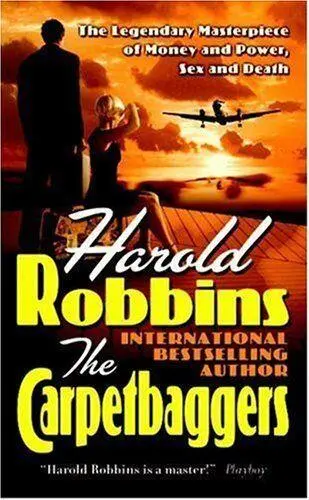
- Название:The Carpetbaggers
- Автор:
- Жанр:
- Год:неизвестен
- ISBN:нет данных
- Рейтинг книги:4 / 5. Голосов: 1
-
Избранное:Добавить в избранное
- Отзывы:
-
Ваша оценка:
The Carpetbaggers: краткое содержание, описание и аннотация
Предлагаем к чтению аннотацию, описание, краткое содержание или предисловие (зависит от того, что написал сам автор книги «The Carpetbaggers»). Если вы не нашли необходимую информацию о книге — напишите в комментариях, мы постараемся отыскать её.
The Carpetbaggers — читать онлайн бесплатно полную книгу (весь текст) целиком
Ниже представлен текст книги, разбитый по страницам. Система сохранения места последней прочитанной страницы, позволяет с удобством читать онлайн бесплатно книгу «The Carpetbaggers», без необходимости каждый раз заново искать на чём Вы остановились. Поставьте закладку, и сможете в любой момент перейти на страницу, на которой закончили чтение.
Интервал:
Закладка:
David looked down at the blue, leather-bound book of accounts. Six million dollars' profit this year. Almost two million last year. If nothing else, the figures proved how right had been the deal he made with Bonner three years ago.
True, Bonner made almost as much for himself. But he had a right to it. Almost all that profit had come from his own big pictures, those he had produced and financed himself. If only David had been able to persuade Jonas to come up with the financing when Bonner offered it to them. If he had, the profit this year would have been ten million dollars.
Only one thing troubled David. During the past year, Cord had been gradually liquidating part of his stock as the market rose. He'd already recovered his original investment and the twenty-three per cent of the stock he still owned was free and clear. Ordinarily, in a company this size, that meant control. But someone was buying. It was the story of Uncle Bernie all over again. Only this time, Jonas was on the wrong side of the fence.
One day, a broker named Sheffield had come to see David. He was rumored to be the head of a powerful syndicate and their holdings in the company were considerable. David had looked at him questioningly, as he sat down.
"For almost a year now, we've been trying to arrange a meeting with Mr. Cord to discuss our mutual problems," Sheffield said. "But no one seems to know where he is or how he can be reached. We've never even received an answer to our letters.''
"Mr. Cord is a busy man."
"I know," Sheffield said quickly. "I’ve had dealings with him before. The least I can say is that he's erratic." He drew a gold cigarette case from his pocket and opened it. Carefully he took out a cigarette and placed it between his lips. He lit the cigarette and as carefully put the case back in his pocket. He blew a cloud of smoke toward David. "Our patience is at an end," he said. "We have a considerable investment in this company, an investment that will tolerate neither a dilettante operation nor an obvious neglect of profit opportunities."
"It seems to me the investors have very little to complain about," David said. "Especially in view of the profits this year."
"I commend your loyalty, Mr. Woolf," Sheffield said. He smiled. "But we both know better. My group of investors was willing to advance the financing needed for certain pictures which might have doubled our profit. Mr. Cord was not. We are willing to work out an equitable stock and profit-sharing plan for certain key executives. Mr. Cord is not. And definitely we are not interested in burdening the company with certain expenses, like those at the Boulevard Park Hotel."
David had been wondering how long it would take him to get around to that. It was an open secret in the industry. Cord's harem, they called it.
It had begun two years ago, when Jonas tried to get a suite in the hotel for a girl and was refused. Using the picture company as a subterfuge, he then rented several floors of the staid establishment on the fringe of Beverly Hills. On the day the lease was signed, he had the studio move in all the girls on the contract-players' list.
There had almost been a riot as thirty girls swarmed into as many apartments under the shocked eyes of the hotel management. The newspapers had a field day, pointing out that none of the girls made as much in a year as each apartment would have ordinarily cost in a month.
That had been two years ago but the lease ran for fifteen years. Admittedly, it cost the company a great deal of money. The hotel would have been only too willing to cancel the lease but Jonas would have no part of it. Gradually most of the girls moved out. Now most of the apartments were empty, except when Jonas came across a girl he thought had possibilities.
David leaned back in his chair. "I don't have to point out, of course, that Mr. Cord receives no remuneration or expenses from the company."
Sheffield smiled. "We would have no objections if Mr. Cord rendered any service to the company. But the truth is that he is not at all active. He has not attended a single board meeting since his association with the company began."
"Mr. Cord bought the controlling interest in the company," David pointed out. "Therefore, his association with it is not in the ordinary category of employees."
"I'm quite aware of that," Sheffield said. "But are you quite sure control of the company still remains in his hands? We now have as much and perhaps more stock than he has. We feel we're entitled to a voice in management."
"I'll be glad to relay your suggestion to Mr. Cord."
"That won't be necessary," Sheffield said. "We are certain, because of his refusal to reply to our requests for a meeting, that he is not interested."
"In that case, why did you come to me?" David asked. Now the preliminaries were over; they were getting down to the heart of things.
Sheffield leaned forward. "We feel that the success of this company is directly attributed to you and your policies. We have the highest regard for your ability and would like to see you take your proper place in the company as chief executive officer." He ground out his cigarette in the ash tray before him. "With proper authority and compensation, of course."
David stared at him. The world on a silver platter. "That's very gratifying," he said cautiously. "What if I were to ask you to leave things as they are? What if I were to persuade Mr. Cord to adopt some of your suggestions? Would that be satisfactory to you?"
Sheffield shook his head. "With all due respect to your sincerity – no. You see, we're firmly convinced that Cord is detrimental to the progress of this company."
"Then you'd launch a proxy fight if I didn't go along with you?"
"I doubt that it would be necessary," Sheffield said. "I have already mentioned that we own a considerable amount of the stock outstanding. Certain brokers have pledged us an additional five per cent." He took a paper from his pocket and handed it to David. "And here is a commitment from Mr. Bonner to sell us all of the stock in his possession on December fifteenth, the day of the annual meeting, next week. Mr. Bonner's ten per cent of the stock brings our total to thirty-eight per cent. With or without the five per cent you own, we have more than sufficient stock to take control of the company. Even with proxies, Mr. Cord would not be able to vote more than thirty per cent of the stock."
David picked up the sheet of paper and looked at it. It was a firm commitment, all right. And it was Bonner's signature. He pushed the paper back to Sheffield silently. Suddenly, he remembered the old Norman warehouse, where he had first gone to work. The king must die. But now it was no mere platform boss, it was Jonas. Until this moment, he had never let himself think about it. Jonas had seemed invulnerable.
But all that had changed. Jonas was slipping. And what Sheffield was saying in effect was, string along with us and we'll make you king. David took a deep breath. Why shouldn't it be he? It was something he had felt ever since that first day in the warehouse.
Rosa put the newspaper down on the bed and reached for a cigarette. She looked at the clock. It was after eight. That made it after eleven o'clock in New York. David should have called by now. Usually, if he expected to be out late, he would let her know.
Could something have happened to him? Could he be lying hurt in the streets of New York, three thousand miles away, and she'd never know until it was too late?
She picked up the telephone and called him at his hotel in New York. She heard the rapid relay of the telephone across the country, then the phone ringing in his suite. It rang for a long time.
"Hello," he said. His voice was low and cautious.
"David, are you all right?"
"I'm fine," he said.
Читать дальшеИнтервал:
Закладка:
Похожие книги на «The Carpetbaggers»
Представляем Вашему вниманию похожие книги на «The Carpetbaggers» списком для выбора. Мы отобрали схожую по названию и смыслу литературу в надежде предоставить читателям больше вариантов отыскать новые, интересные, ещё непрочитанные произведения.












Обсуждение, отзывы о книге «The Carpetbaggers» и просто собственные мнения читателей. Оставьте ваши комментарии, напишите, что Вы думаете о произведении, его смысле или главных героях. Укажите что конкретно понравилось, а что нет, и почему Вы так считаете.