ROBBINS Harold - The Carpetbaggers
Здесь есть возможность читать онлайн «ROBBINS Harold - The Carpetbaggers» весь текст электронной книги совершенно бесплатно (целиком полную версию без сокращений). В некоторых случаях можно слушать аудио, скачать через торрент в формате fb2 и присутствует краткое содержание. Жанр: Классическая проза, на английском языке. Описание произведения, (предисловие) а так же отзывы посетителей доступны на портале библиотеки ЛибКат.
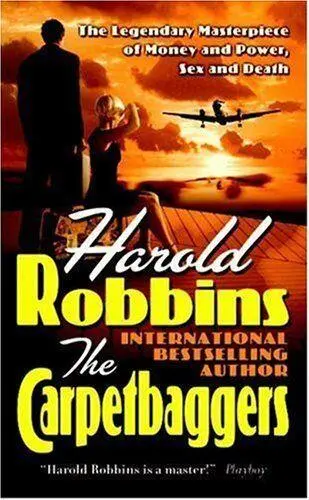
- Название:The Carpetbaggers
- Автор:
- Жанр:
- Год:неизвестен
- ISBN:нет данных
- Рейтинг книги:4 / 5. Голосов: 1
-
Избранное:Добавить в избранное
- Отзывы:
-
Ваша оценка:
The Carpetbaggers: краткое содержание, описание и аннотация
Предлагаем к чтению аннотацию, описание, краткое содержание или предисловие (зависит от того, что написал сам автор книги «The Carpetbaggers»). Если вы не нашли необходимую информацию о книге — напишите в комментариях, мы постараемся отыскать её.
The Carpetbaggers — читать онлайн бесплатно полную книгу (весь текст) целиком
Ниже представлен текст книги, разбитый по страницам. Система сохранения места последней прочитанной страницы, позволяет с удобством читать онлайн бесплатно книгу «The Carpetbaggers», без необходимости каждый раз заново искать на чём Вы остановились. Поставьте закладку, и сможете в любой момент перейти на страницу, на которой закончили чтение.
Интервал:
Закладка:
David took his hand. The grip was firm and warm. "Come on in," he said. "Mama's ready to bust. Dinner's ready."
They went into the living room. Mr. Strassmer got to his feet and his mother looked at Needlenose suspiciously. David glanced around quickly. Rosa was not in the room. "Mama," he said. "You remember Irving Schwartz?"
"Hello, Mrs. Woolf."
"Yitzchak Schwartz," she said. "Sure I remember. What happened to your nose?"
"Mama," David protested.
Needlenose smiled. "That's all right, David. I had it fixed, Mrs. Woolf."
"A mishegass . With such a small nose, it's a wonder you can breathe. You got a job, Yitzchak?" she demanded belligerently. "Or are you still hanging around with the bums by Shocky's garage?"
"Mama!" David said quickly. "Irving lives out here now."
"So it's Irving now." His mother's voice was angry. "Fixing his nose is not enough. His name, too, he's got to fix. What's wrong with the name your parents gave you – Isidore – hah?"
Needlenose began to laugh. He looked at David. "I see what you mean," he said. "Nothing's changed. Nothing's wrong with it, Mrs. Woolf. Irving's easier to spell."
"You'd finish school like my son, David," she retorted, "it shouldn't be so hard to spell."
"Come on, Mrs. Woolf. David promised me knaidlach . I couldn't wait; all day I was so hungry thinking about it."
Mrs. Woolf stared at him suspiciously. "You be a good boy, now," she said, somewhat mollified, "and every Friday you come for knaidlach .''
"I will, Mrs. Woolf."
"All right," she said. "So now I'll go see if the soup is hot."
Rosa came into the room just as David was about to introduce Needlenose to the Strassmers. She stopped in the doorway, a look of surprise on her face. Then she smiled and came into the room. "Why, Mr. Schwartz," she said. "How nice to see you."
Irving looked up. He held out his hand. "Hey, Doc," he said. "I didn't know you knew my friend David."
She took his hand. "We just met this evening."
Irving looked at David. "Doc Strassmer did my nose retread. She's really great, David. Did you know she did that job on Linda Davis last year?"
David looked at Rosa curiously. No one had ever said anything about her being a doctor. And the Linda Davis operation had been a big one. The actress's face had been cut to ribbons in an automobile accident, yet when she went before the cameras a year later, there wasn't the slightest visible trace of disfigurement.
He was suddenly aware that Mr. and Mrs. Strassmer were staring at him nervously. He smiled at Rosa. "Doctor, you're just the one I wanted to talk to. What do you think I ought to do about the terribly empty feeling I suddenly got in my stomach?"
She looked at him gratefully. The nervousness was gone from her eyes now and they glinted mischievously. "I think a few of your mother's knaidlach might fix that."
" Knaidlach ? Who said something about my knaidlach ?" his mother said from the doorway. She bustled into the room importantly. "So everybody sit down," she said. "The soup's on the table and already it's getting cold."
11
When they had finished dinner, Rosa looked at her watch. "You'll have to excuse me for a little while," she said. "I have to run over to the hospital to see a patient."
David looked at her. "I’ll drive you over, if you like."
She smiled. "You don't have to do that. I have my own car."
"It's no bother," David said politely. "At least, let me keep you company."
Irving got to his feet. "I have to be going, too," he said. He turned to Mrs. Woolf. "Thank you for a delicious dinner. It made me homesick."
David's mother smiled. "So be a good boy, Yitzchak," she said, "and you can come again."
Rosa smiled at David's mother. "We won't be long."
"Go," Mrs. Woolf said. "Don't you children rush." She glanced beamingly at Rosa's parents. "We older ones have a lot to talk about."
"I'm sorry, Irving," David said as they came out of the apartment house. "We didn't have much of a chance to talk. Maybe we can make it tomorrow?"
"We can talk right now," Irving said quietly. "I’m sure we can trust Rosa. Can't we, Doc?"
Rosa made a gesture. "I can wait in the car," she said quickly.
David stopped her. "No, that's all right." He turned back to Irving. "I must have seemed stupid when you called yesterday. But Dan Pierce mostly handles our labor relations."
"That's O.K., Davy," Irving said. "I figured something like that."
"Dan tells me we're looking down the throat of a strike. I suppose you know we can't afford one. It'll bust us."
"I know," Irving answered. "And I'm trying to help. But I’m in a spot unless we can work out some kind of a deal."
"What kind of a spot can you be in? Nobody's pressing you to go out on strike. Your members are just getting over the effects of the depression layoffs."
"Yeah." Irving nodded. "They don't want to strike but the commies are moving in. And they're stirring up a lot of trouble about how the picture companies are keeping all the gravy for themselves. A lot of people are listening. They hear about the high salaries stars and executives get and it looks good to them. Why shouldn't they get a little of it? And the commies keep them stirred up."
"What about Bioff and Brown?"
"They were pigs," Irving said contemptuously. "One side wasn't enough for them. They were trying to take it from both. That's why we dumped them."
"You dumped them?" David asked skeptically. "I thought they got caught."
Irving stared at him. "Where do you think the government got its documentation to build a case? They didn't find it layin' around in the street."
"It seems to me you're trying to use us to put out a fire your own people started," David said. "You're using the commies as an excuse."
Irving smiled. "Maybe we are, a little. But the communists are very active in the guilds. And the entire industry just signed new agreements with the Screen Directors Guild and Screen Writers Guild calling for the biggest increase they ever got. The commies are taking all the credit. Now they're starting to move in on the craft unions. And you know how the crafts are. They'll figure that if the commies can do it for the guilds, they can do it for them. The craft-union elections are coming up soon. The commies are putting up a big fight and if we don't come up with something soon, we're going to be on the outside looking in. If that happens, you'll find they're a lot harder to deal with than we were."
David looked at him. "What you're suggesting, then, is for us to decide who we want to deal with – you or the communists. How do the members feel about it? Haven't they got anything to say?"
Irving's voice was matter-of-fact. "Most of them are jerks," he said contemptuously. "All they care about is their pay envelope and who promises them the most." He took out a package of cigarettes. "Right now, the commies are beginning to look real good to them."
David was silent while his friend lit a cigarette. The gold lighter glowed briefly, then went back into Irving's pocket. His jacket opened slightly and David saw the black butt of a gun in a shoulder holster.
Gold lighters and guns. And two kids from the East Side of New York standing in a warm spring night under the California stars talking about money and power and communism. He wondered what Irving got out of it but he knew better than to ask. There were some things that were none of his business.
"What do you want me to do?" he asked.
Irving flicked the cigarette into the gutter. "The commies are asking an increase of twenty-five cents an hour and a thirty-five-hour week. We'll settle for five cents an hour now, another nickel next year and a thirty-seven-and-a-half-hour work week." He looked into David's eyes. "Dan Pierce says he hasn't the authority to do anything about it. He says he can't get to Cord. I been waiting three months. I can't wait any longer. You sit on your can, the strike is on. You lose and we lose. Only you lose more. Your whole company goes down the drain. We'll still get lots of action other places. The only real winners are the commies."
Читать дальшеИнтервал:
Закладка:
Похожие книги на «The Carpetbaggers»
Представляем Вашему вниманию похожие книги на «The Carpetbaggers» списком для выбора. Мы отобрали схожую по названию и смыслу литературу в надежде предоставить читателям больше вариантов отыскать новые, интересные, ещё непрочитанные произведения.











Обсуждение, отзывы о книге «The Carpetbaggers» и просто собственные мнения читателей. Оставьте ваши комментарии, напишите, что Вы думаете о произведении, его смысле или главных героях. Укажите что конкретно понравилось, а что нет, и почему Вы так считаете.