Margaret Mitchell - Gone with the Wind
Здесь есть возможность читать онлайн «Margaret Mitchell - Gone with the Wind» весь текст электронной книги совершенно бесплатно (целиком полную версию без сокращений). В некоторых случаях можно слушать аудио, скачать через торрент в формате fb2 и присутствует краткое содержание. Жанр: Классическая проза, на английском языке. Описание произведения, (предисловие) а так же отзывы посетителей доступны на портале библиотеки ЛибКат.
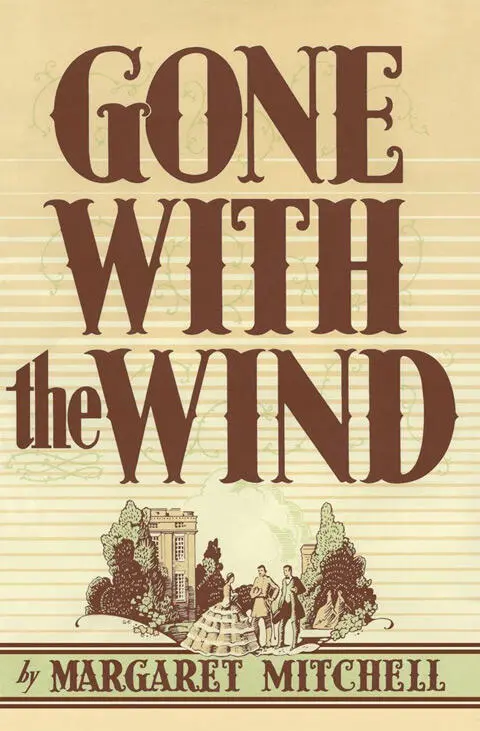
- Название:Gone with the Wind
- Автор:
- Жанр:
- Год:неизвестен
- ISBN:нет данных
- Рейтинг книги:4.17 / 5. Голосов: 6
-
Избранное:Добавить в избранное
- Отзывы:
-
Ваша оценка:
Gone with the Wind: краткое содержание, описание и аннотация
Предлагаем к чтению аннотацию, описание, краткое содержание или предисловие (зависит от того, что написал сам автор книги «Gone with the Wind»). Если вы не нашли необходимую информацию о книге — напишите в комментариях, мы постараемся отыскать её.
Gone with the Wind — читать онлайн бесплатно полную книгу (весь текст) целиком
Ниже представлен текст книги, разбитый по страницам. Система сохранения места последней прочитанной страницы, позволяет с удобством читать онлайн бесплатно книгу «Gone with the Wind», без необходимости каждый раз заново искать на чём Вы остановились. Поставьте закладку, и сможете в любой момент перейти на страницу, на которой закончили чтение.
Интервал:
Закладка:
She also had a letter from Suellen, poorly spelled, violent, abusive, tear splotched, a letter so full of venom and truthful observations upon her character that she was never to forget it nor forgive the writer. But even Suellen’s words could not dim her happiness that Tara was safe, at least from immediate danger.
It was hard to realize that Atlanta and not Tara was her permanent home now. In her desperation to obtain the tax money, no thought save Tara and the fate which threatened it had any place in her mind. Even at the moment of marriage, she had not given a thought to the fact that the price she was paying for the safety of home was permanent exile from it. Now that the deed was done, she realized this with a wave of homesickness hard to dispel. But there it was. She had made her bargain and she intended to stand by it. And she was so grateful to Frank for saving Tara she felt a warm affection for him and an equally warm determination that he should never regret marrying her.
The ladies of Atlanta knew their neighbors’ business only slightly less completely than they knew their own and were far more interested in it. They all knew that for years Frank Kennedy had had an “understanding” with Suellen O’Hara. In fact, he had said, sheepishly, that he expected to get married in the spring. So the tumult of gossip, surmise and deep suspicion which followed the announcement of his quiet wedding to Scarlett was not surprising. Mrs. Merriwether, who never let her curiosity go long unsatisfied if she could help it, asked him point-blank just what he meant by marrying one sister when he was betrothed to the other. She reported to Mrs. Elsing that all the answer she got for her pains was a silly look. Not even Mrs. Merriwether, doughty soul that she was, dared to approach Scarlett on the subject. Scarlett seemed demure and sweet enough these days, but there was a pleased complacency in her eyes which annoyed people and she carried a chip on her shoulder which no one cared to disturb.
She knew Atlanta was talking but she did not care. Alter all, there wasn’t anything immoral in marrying a man. Tara was safe. Let people talk. She had too many other matters to occupy her mind. The most important was how to make Frank realize, in a tactful manner, that his store should bring in more money. After the fright Jonas Wilkerson had given her, she would never rest easy until she and Frank had some money ahead. And even if no emergency developed, Frank would need to make more money, if she was going to save enough for next year’s taxes. Moreover, what Frank had said about the sawmill stuck in her mind. Frank could make lots of money out of a mill. Anybody could, with lumber selling at such outrageous prices. She fretted silently because Frank’s money had not been enough to pay the taxes on Tara and buy the mill as well. And she made up her mind that he had to make more money on the store somehow, and do it quickly, so he could buy that mill before some one else snapped it up. She could see it was a bargain.
If she were a man she would have that mill, if she had to mortgage the store to raise the money. But, when she intimated this delicately to Frank, the day after they married, he smiled and told her not to bother her sweet pretty little head about business matters. It had come as a surprise to him that she even knew what a mortgage was and, at first, he was amused. But this amusement quickly passed and a sense of shock took its place in the early days of their marriage. Once, incautiously, he had told her that “people” (he was careful not to mention names) owed him money but could not pay just now and he was, of course, unwilling to press old friends and gentlefolk. Frank regretted ever mentioning it for, thereafter, she had questioned him about it again and again. She had the most charmingly childlike air but she was just curious, she said, to know who owed him and how much they owed. Frank was very evasive about the matter. He coughed nervously and waved his hands and repeated his annoying remark about her sweet pretty little head.
It had begun to dawn on him that this same sweet pretty little head was a “good head for figures.” In fact, a much better one than his own and the knowledge was disquieting. He was thunderstruck to discover that she could swiftly add a long column of figures in her head when he needed a pencil and paper for more than three figures. And fractions presented no difficulties to her at all. He felt there was something unbecoming about a woman understanding fractions and business matters and he believed that, should a woman be so unfortunate as to have such unladylike comprehension, she should pretend not to. Now he disliked talking business with her as much as he had enjoyed it before they were married. Then he had thought it all beyond her mental grasp and it had been pleasant to explain things to her. Now he saw that she understood entirely too well and he felt the usual masculine indignation at the duplicity of women. Added to it was the usual masculine disillusionment in discovering that a woman has a brain.
Just how early in his married life Frank learned of the deception Scarlett had used in marrying him, no one ever knew. Perhaps the truth dawned on him when Tony Fontaine, obviously fancy free, came to Atlanta on business. Perhaps it was told him more directly in letters from his sister in Jonesboro who was astounded at his marriage. Certainly he never learned from Suellen herself. She never wrote him and naturally he could not write her and explain. What good would explanations do anyway, now that he was married? He writhed inwardly at the thought that Suellen would never know the truth and would always think he had senselessly jilted her. Probably everyone else was thinking this too and criticizing him. It certainly put him in an awkward position. And he had no way of clearing himself, for a man couldn’t go about saying he had lost his head about a woman—and a gentleman couldn’t advertise the fact that his wife had entrapped him with a lie.
Scarlett was his wife and a wife was entitled to the loyalty of her husband. Furthermore, he could not bring himself to believe she had married him coldly and with no affection for him at all. His masculine vanity would not permit such a thought to stay long in his mind. It was more pleasant to think she had fallen so suddenly in love with him she had been willing to lie to get him. But it was all very puzzling. He knew he was no great catch for a woman half his age and pretty and smart to boot, but Frank was a gentleman and he kept his bewilderment to himself. Scarlett was his wife and he could not insult her by asking awkward questions which, after all, would not remedy matters.
Not that Frank especially wanted to remedy matters, for it appeared that his marriage would be a happy one. Scarlett was the most charming and exciting of women and he thought her perfect in all things—except that she was so headstrong. Frank learned early in his marriage that so long as she had her own way, life could be very pleasant, but when she was opposed—Given her own way, she was as gay as a child, laughed a good deal, made foolish little jokes, sat on his knee and tweaked his beard until he vowed he felt twenty years younger. She could be unexpectedly sweet and thoughtful, having his slippers toasting at the fire when he came home at night, fussing affectionately about his wet feet and interminable head colds, remembering that he always liked the gizzard of the chicken and three spoonfuls of sugar in his coffee. Yes, life was very sweet and cozy with Scarlett—as long as she had her own way.
When the marriage was two weeks old, Frank contracted the grippe and Dr. Meade put him to bed. In the first year of the war, Frank had spent two months in the hospital with pneumonia and he had lived in dread of another attack since that time, so he was only too glad to lie sweating under three blankets and drink the hot concoctions Mammy and Aunt Pitty brought him every hour.
Читать дальшеИнтервал:
Закладка:
Похожие книги на «Gone with the Wind»
Представляем Вашему вниманию похожие книги на «Gone with the Wind» списком для выбора. Мы отобрали схожую по названию и смыслу литературу в надежде предоставить читателям больше вариантов отыскать новые, интересные, ещё непрочитанные произведения.










Обсуждение, отзывы о книге «Gone with the Wind» и просто собственные мнения читателей. Оставьте ваши комментарии, напишите, что Вы думаете о произведении, его смысле или главных героях. Укажите что конкретно понравилось, а что нет, и почему Вы так считаете.