Margaret Mitchell - Gone with the Wind
Здесь есть возможность читать онлайн «Margaret Mitchell - Gone with the Wind» весь текст электронной книги совершенно бесплатно (целиком полную версию без сокращений). В некоторых случаях можно слушать аудио, скачать через торрент в формате fb2 и присутствует краткое содержание. Жанр: Классическая проза, на английском языке. Описание произведения, (предисловие) а так же отзывы посетителей доступны на портале библиотеки ЛибКат.
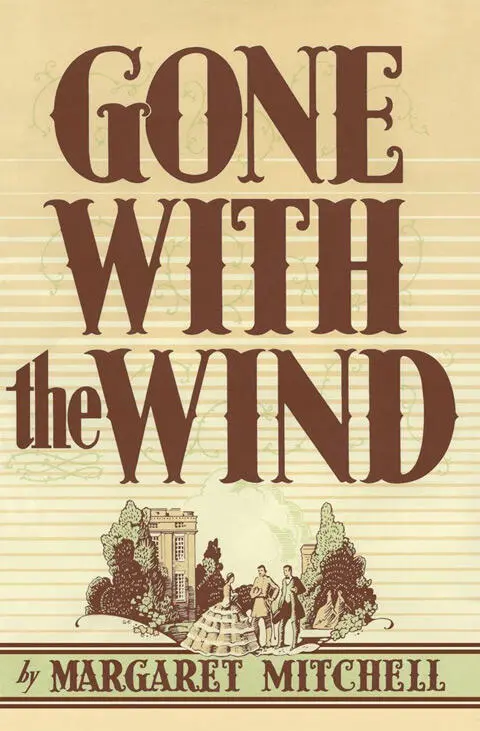
- Название:Gone with the Wind
- Автор:
- Жанр:
- Год:неизвестен
- ISBN:нет данных
- Рейтинг книги:4.17 / 5. Голосов: 6
-
Избранное:Добавить в избранное
- Отзывы:
-
Ваша оценка:
Gone with the Wind: краткое содержание, описание и аннотация
Предлагаем к чтению аннотацию, описание, краткое содержание или предисловие (зависит от того, что написал сам автор книги «Gone with the Wind»). Если вы не нашли необходимую информацию о книге — напишите в комментариях, мы постараемся отыскать её.
Gone with the Wind — читать онлайн бесплатно полную книгу (весь текст) целиком
Ниже представлен текст книги, разбитый по страницам. Система сохранения места последней прочитанной страницы, позволяет с удобством читать онлайн бесплатно книгу «Gone with the Wind», без необходимости каждый раз заново искать на чём Вы остановились. Поставьте закладку, и сможете в любой момент перейти на страницу, на которой закончили чтение.
Интервал:
Закладка:
She was writing busily, her face screwed up with the effort, her tongue clamped between her teeth, when the front door opened and a great draft of cold wind swept the store. A tall man came into the dingy room walking with a light Indian-like tread, and looking up she saw Rhett Butler.
He was resplendent in new clothes and a greatcoat with a dashing cape thrown back from his heavy shoulders. His tall hat was off in a deep bow when her eyes met his and his hand went to the bosom of a spotless pleated shirt. His white teeth gleamed startlingly against his brown face and his bold eyes raked her.
“My dear Mrs. Kennedy,” he said, walking toward her. “My very dear Mrs. Kennedy!” and he broke into a loud merry laugh.
At first she was as startled as if a ghost had invaded the store and then, hastily removing her foot from beneath her, she stiffened her spine and gave him a cold stare.
“What are you doing here?”
“I called on Miss Pittypat and learned of your marriage and so I hastened here to congratulate you.”
The memory of her humiliation at his hands made her go crimson with shame.
“I don’t see how you have the gall to face me!” she cried.
“On the contrary! How have you the gall to face me?”
“Oh, you are the most—”
“Shall we let the bugles sing truce?” he smiled down at her, a wide flashing smile that had impudence in it but no shame for his own actions or condemnation for hers. In spite of herself, she had to smile too, but it was a wry, uncomfortable smile.
“What a pity they didn’t hang you!”
“Others share your feeling, I fear. Come, Scarlett, relax. You look like you’d swallowed a ramrod and it isn’t becoming. Surely, you’ve had time to recover from my—er—my little joke.”
“Joke? Ha! I’ll never get over it!”
“Oh, yes, you will. You are just putting on this indignant front because you think it’s proper and respectable. May I sit down?”
“No.”
He sank into a chair beside her and grinned.
“I hear you couldn’t even wait two weeks for me,” he said and gave a mock sigh. “How fickle is woman!”
When she did not reply he continued.
“Tell me, Scarlett, just between friends—between very old and very intimate friends—wouldn’t it have been wiser to wait until I got out of jail? Or are the charms of wedlock with old Frank Kennedy more alluring than illicit relations with me?”
As always when his mockery aroused wrath within her, wrath fought with laughter at his impudence.
“Don’t be absurd.”
“And would you mind satisfying my curiosity on one point which has bothered me for some time? Did you have no womanly repugnance, no delicate shrinking from marrying not just one man but two for whom you had no love or even affection? Or have I been misinformed about the delicacy of our Southern womanhood?”
“Rhett!”
“I have my answer. I always felt that women had a hardness and endurance unknown to men, despite the pretty idea taught me in childhood that women are frail, tender, sensitive creatures. But after all, according to the Continental code of etiquette, it’s very bad form for husband and wife to love each other. Very bad taste, indeed. I always felt that the Europeans had the right idea in that matter. Marry for convenience and love for pleasure. A sensible system, don’t you think? You are closer to the old country than I thought.”
How pleasant it would be to shout at him: “I did not marry for convenience!” But unfortunately, Rhett had her there and any protest of injured innocence would only bring more barbed remarks from him.
“How you do run on,” she said coolly. Anxious to change the subject, she asked: “How did you ever get out of jail?”
“Oh, that!” he answered, making an airy gesture. “Not much trouble. They let me out this morning. I employed a delicate system of blackmail on a friend in Washington who is quite high in the councils of the Federal government. A splendid fellow—one of the staunch Union patriots from whom I used to buy muskets and hoop skirts for the Confederacy. When my distressing predicament was brought to his attention in the right way, he hastened to use his influence, and so I was released. Influence is everything, and guilt or innocence merely an academic question.”
“I’ll take oath you weren’t innocent.”
“No, now that I am free of the toils, I’ll frankly admit that I’m as guilty as Cain. I did kill the nigger. He was uppity to a lady, and what else could a Southern gentleman do? And while I’m confessing, I must admit that I shot a Yankee cavalryman after some words in a barroom. I was not charged with that peccadillo, so perhaps some other poor devil has been hanged for it, long since.”
He was so blithe about his murders her blood chilled. Words of moral indignation rose to her lips but suddenly she remembered the Yankee who lay under the tangle of scuppernong vines at Tara. He had not been on her conscience any more than a roach upon which she might have stepped. She could not sit in judgment on Rhett when she was as guilty as he.
“And, as I seem to be making a clean breast of it, I must tell you, in strictest confidence (that means, don’t tell Miss Pittypat!) that I did have the money, safe in a bank in Liverpool.”
“The money?”
“Yes, the money the Yankees were so curious about. Scarlett, it wasn’t altogether meanness that kept me from giving you the money you wanted. If I’d drawn a draft they could have traced it somehow and I doubt if you’d have gotten a cent. My only hope lay in doing nothing. I knew the money was pretty safe, for if worst came to worst, if they had located it and tried to take it away from me, I would have named every Yankee patriot who sold me bullets and machinery during the war. Then there would have been a stink, for some of them are high up in Washington now. In fact, it was my threat to unbosom my conscience about them that got me out of jail. I—”
“Do you mean you—you actually have the Confederate gold?”
“Not all of it. Good Heavens, no! There must be fifty or more exblockaders who have plenty salted away in Nassau and England and Canada. We will be pretty unpopular with the Confederates who weren’t as slick as we were. I have got close to half a million. Just think, Scarlett, a half-million dollars, if you’d only restrained your fiery nature and not rushed into wedlock again!”
A half-million dollars. She felt a pang of almost physical sickness at the thought of so much money. His jeering words passed over her head and she did not even hear them. It was hard to believe there was so much money in all this bitter and povertystricken world. So much money, so very much money, and someone else had it, someone who took it lightly and didn’t need it. And she had only a sick elderly husband and this dirty, piddling, little store between her and a hostile world. It wasn’t fair that a reprobate like Rhett Butler should have so much and she, who carried so heavy a load, should have so little. She hated him, sitting there in his dandified attire, taunting her. Well, she wouldn’t swell his conceit by complimenting him on his cleverness. She longed viciously for sharp words with which to cut him.
“I suppose you think it’s honest to keep the Confederate money. Well, it isn’t. It’s plain out and out stealing and you know it. I wouldn’t have that on my conscience.”
“My! How sour the grapes are today!” he exclaimed, screwing up his face. “And just whom am I stealing from?”
She was silent, trying to think just whom indeed. After all, he had only done what Frank had done on a small scale.
“Half the money is honestly mine,” he continued, “honestly made with the aid of honest Union patriots who were willing to sell out the Union behind its back—for one-hundred-per-cent profit on their goods. Part I made out of my little investment in cotton at the beginning of the war, the cotton I bought cheap and sold for a dollar a pound when the British mills were crying for it. Part I got from food speculation. Why should I let the Yankees have the fruits of my labor? But the rest did belong to the Confederacy. It came from Confederate cotton which I managed to run through the blockade and sell in Liverpool at sky-high prices. The cotton was given me in good faith to buy leather and rifles and machinery with. And it was taken by me in good faith to buy the same. My orders were to leave the gold in English banks, under my own name, in order that my credit would be good. You remember when the blockade tightened, I couldn’t get a boat out of any Confederate port or into one, so there the money stayed in England. What should I have done? Drawn out all that gold from English banks, like a simpleton, and tried to run it into Wilmington? And let the Yankees capture it? Was it my fault that the blockade got too tight? Was it my fault that our Cause failed? The money belonged to the Confederacy. Well, there is no Confederacy now—though you’d never know it, to hear some people talk. Whom shall I give the money to? The Yankee government? I should so hate for people to think me a thief.”
Читать дальшеИнтервал:
Закладка:
Похожие книги на «Gone with the Wind»
Представляем Вашему вниманию похожие книги на «Gone with the Wind» списком для выбора. Мы отобрали схожую по названию и смыслу литературу в надежде предоставить читателям больше вариантов отыскать новые, интересные, ещё непрочитанные произведения.








Обсуждение, отзывы о книге «Gone with the Wind» и просто собственные мнения читателей. Оставьте ваши комментарии, напишите, что Вы думаете о произведении, его смысле или главных героях. Укажите что конкретно понравилось, а что нет, и почему Вы так считаете.