Margaret Mitchell - Gone with the Wind
Здесь есть возможность читать онлайн «Margaret Mitchell - Gone with the Wind» весь текст электронной книги совершенно бесплатно (целиком полную версию без сокращений). В некоторых случаях можно слушать аудио, скачать через торрент в формате fb2 и присутствует краткое содержание. Жанр: Классическая проза, на английском языке. Описание произведения, (предисловие) а так же отзывы посетителей доступны на портале библиотеки ЛибКат.
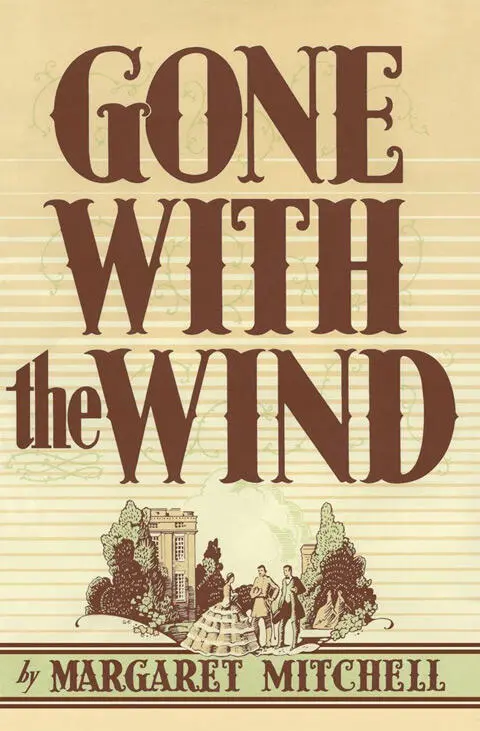
- Название:Gone with the Wind
- Автор:
- Жанр:
- Год:неизвестен
- ISBN:нет данных
- Рейтинг книги:4.17 / 5. Голосов: 6
-
Избранное:Добавить в избранное
- Отзывы:
-
Ваша оценка:
Gone with the Wind: краткое содержание, описание и аннотация
Предлагаем к чтению аннотацию, описание, краткое содержание или предисловие (зависит от того, что написал сам автор книги «Gone with the Wind»). Если вы не нашли необходимую информацию о книге — напишите в комментариях, мы постараемся отыскать её.
Gone with the Wind — читать онлайн бесплатно полную книгу (весь текст) целиком
Ниже представлен текст книги, разбитый по страницам. Система сохранения места последней прочитанной страницы, позволяет с удобством читать онлайн бесплатно книгу «Gone with the Wind», без необходимости каждый раз заново искать на чём Вы остановились. Поставьте закладку, и сможете в любой момент перейти на страницу, на которой закончили чтение.
Интервал:
Закладка:
There was no going back and she was going forward.
Throughout the South for fifty years there would be bitter-eyed women who looked backward, to dead times, to dead men, evoking memories that hurt and were futile, bearing poverty with bitter pride because they had those memories. But Scarlett was never to look back.
She gazed at the blackened stones and, for the last time, she saw Twelve Oaks rise before her eyes as it had once stood, rich and proud, symbol of a race and a way of living. Then she started down the road toward Tara, the heavy basket cutting into her flesh.
Hunger gnawed at her empty stomach again and she said aloud: “As God is my witness, as God is my witness, the Yankees aren’t going to lick me. I’m going to live through this, and when it’s over, I’m never going to be hungry again. No, nor any of my folks. If I have to steal or kill—as God is my witness, I’m never going to be hungry again.”
In the days that followed, Tara might have been Crusoe’s desert island, so still it was, so isolated from the rest of the world. The world lay only a few miles away, but a thousand miles of tumbling waves might have stretched between Tara and Jonesboro and Fayetteville and Lovejoy, even between Tara and the neighbors’ plantations. With the old horse dead, their one mode of conveyance was gone, and there was neither time nor strength for walking the weary red miles.
Sometimes, in the days of backbreaking work, in the desperate struggle for food and the never-ceasing care of the three sick girls, Scarlett found herself straining her ears for familiar sounds—the shrill laughter of the pickaninnies in the quarters, the creaking of wagons home from the fields, the thunder of Gerald’s stallion tearing across the pasture, the crunching of carriage wheels on the drive and the gay voices of neighbors dropping in for an afternoon of gossip. But she listened in vain. The road lay still and deserted and never a cloud of red dust proclaimed the approach of visitors. Tara was an island in a sea of rolling green hills and red fields.
Somewhere was the world and families who ate and slept safely under their own roofs. Somewhere girls in thrice-turned dresses were flirting gaily and singing “When This Cruel War Is Over,” as she had done only a few weeks before. Somewhere there was a war and cannon booming and burning towns and men who rotted in hospitals amid sickening-sweet stinks. Somewhere a barefoot army in dirty homespun was marching, fighting, sleeping, hungry and weary with the weariness that comes when hope is gone. And somewhere the hills of Georgia were blue with Yankees, well-fed Yankees on sleek corn-stuffed horses.
Beyond Tara was the war and the world. But on the plantation the war and the world did not exist except as memories which must be fought back when they rushed to mind in moments of exhaustion. The world outside receded before the demands of empty and half-empty stomachs and life resolved itself into two related thoughts, food and how to get it.
Food! Food! Why did the stomach have a longer memory than the mind? Scarlett could banish heartbreak but not hunger and each morning as she lay half asleep, before memory brought back to her mind war and hunger, she curled drowsily expecting the sweet smells of bacon frying and rolls baking. And each morning she sniffed so hard to really smell the food she woke herself up.
There were apples, yams, peanuts and milk on the table at Tara but never enough of even this primitive fare. At the sight of them, three times a day, her memory would rush back to the old days, the meals of the old days, the candle-lit table and the food perfuming the air.
How careless they had been of food then, what prodigal waste! Rolls, corn muffins, biscuits and waffles, dripping butter, all at one meal. Ham at one end of the table and fried chicken at the other, collards swimming richly in pot liquor iridescent with grease, snap beans in mountains on brightly flowered porcelain, fried squash, stewed okra, carrots in cream sauce thick enough to cut. And three desserts, so everyone might have his choice, chocolate layer cake, vanilla blanc mange and pound cake topped with sweet whipped cream. The memory of those savory meals had the power to bring tears to her eyes as death and war had failed to do, and the power to turn her ever-gnawing stomach from rumbling emptiness to nausea. For the appetite Mammy had always deplored, the healthy appetite of a nineteen-year-old girl, now was increased fourfold by the hard and unremitting labor she had never known before.
Hers was not the only troublesome appetite at Tara, for wherever she turned hungry faces, black and white, met her eyes. Soon Carreen and Suellen would have the insatiable hunger of typhoid convalescents. Already little Wade whined monotonously: “Wade doan like yams. Wade hungwy.”
The others grumbled, too:
“Miss Scarlett, ’ness I gits mo’ to eat, I kain nuss neither of these chillun.”
“Miss Scarlett, ef Ah doan have mo’ in mah stummick, Ah kain split no wood.”
“Lamb, Ah’s perishin’ fer real vittles.”
“Daughter, must we always have yams?”
Only Melanie did not complain, Melanie whose face grew thinner and whiter and twitched with pain even in her sleep.
“I’m not hungry, Scarlett. Give my share of the milk to Dilcey. She needs it to nurse the babies. Sick people are never hungry.”
It was her gentle hardihood which irritated Scarlett more than the nagging whining voices of the others. She could—and did—shout them down with bitter sarcasm but before Melanie’s unselfishness she was helpless, helpless and resentful. Gerald, the negroes and Wade clung to Melanie now, because even in her weakness she was kind and sympathetic, and these days Scarlett was neither.
Wade especially haunted Melanie’s room. There was something wrong with Wade, but just what it was Scarlett had no time to discover. She took Mammy’s word that the little boy had worms and dosed him with the mixture of dried herbs and bark which Ellen always used to worm the pickaninnies. But the vermifuge only made the child look paler. These days Scarlett hardly thought of Wade as a person. He was only another worry, another mouth to feed. Some day when the present emergency was over, she would play with him, tell him stories and teach him his ABC’s but now she did not have the time or the soul or the inclination. And, because he always seemed underfoot when she was most weary and worried, she often spoke sharply to him.
It annoyed her that her quick reprimands brought such acute fright to his round eyes, for he looked so simple minded when he was frightened. She did not realize that the little boy lived shoulder to shoulder with terror too great for an adult to comprehend. Fear lived with Wade, fear that shook his soul and made him wake screaming in the night. Any unexpected noise or sharp word set him to trembling, for in his mind noises and harsh words were inextricably mixed with Yankees and he was more afraid of Yankees than of Prissy’s hants.
Until the thunders of the siege began, he had never known anything but a happy, placid, quiet life. Even though his mother paid him little attention, he had known nothing but petting and kind words until the night when he was jerked from slumber to find the sky aflame and the air deafening with explosions. In that night and the day which followed, he had been slapped by his mother for the first time and had heard her voice raised at him in harsh words. Life in the pleasant brick house on Peachtree Street, the only life he knew, had vanished that night and he would never recover from its loss. In the flight from Atlanta, he had understood nothing except that the Yankees were after him and now he still lived in fear that the Yankees would catch him and cut him to pieces. Whenever Scarlett raised her voice in reproof, he went weak with fright as his vague childish memory brought up the horrors of the first time she had ever done it. Now, Yankees and a cross voice were linked forever in his mind and he was afraid of his mother.
Читать дальшеИнтервал:
Закладка:
Похожие книги на «Gone with the Wind»
Представляем Вашему вниманию похожие книги на «Gone with the Wind» списком для выбора. Мы отобрали схожую по названию и смыслу литературу в надежде предоставить читателям больше вариантов отыскать новые, интересные, ещё непрочитанные произведения.










Обсуждение, отзывы о книге «Gone with the Wind» и просто собственные мнения читателей. Оставьте ваши комментарии, напишите, что Вы думаете о произведении, его смысле или главных героях. Укажите что конкретно понравилось, а что нет, и почему Вы так считаете.