Margaret Mitchell - Gone with the Wind
Здесь есть возможность читать онлайн «Margaret Mitchell - Gone with the Wind» весь текст электронной книги совершенно бесплатно (целиком полную версию без сокращений). В некоторых случаях можно слушать аудио, скачать через торрент в формате fb2 и присутствует краткое содержание. Жанр: Классическая проза, на английском языке. Описание произведения, (предисловие) а так же отзывы посетителей доступны на портале библиотеки ЛибКат.
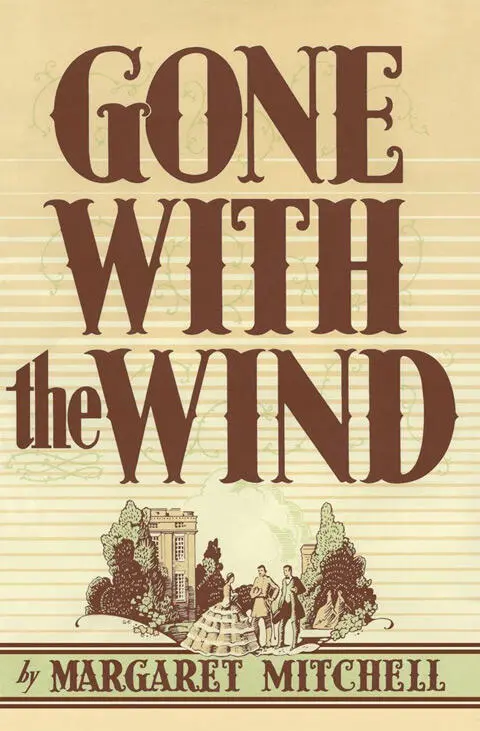
- Название:Gone with the Wind
- Автор:
- Жанр:
- Год:неизвестен
- ISBN:нет данных
- Рейтинг книги:4.17 / 5. Голосов: 6
-
Избранное:Добавить в избранное
- Отзывы:
-
Ваша оценка:
Gone with the Wind: краткое содержание, описание и аннотация
Предлагаем к чтению аннотацию, описание, краткое содержание или предисловие (зависит от того, что написал сам автор книги «Gone with the Wind»). Если вы не нашли необходимую информацию о книге — напишите в комментариях, мы постараемся отыскать её.
Gone with the Wind — читать онлайн бесплатно полную книгу (весь текст) целиком
Ниже представлен текст книги, разбитый по страницам. Система сохранения места последней прочитанной страницы, позволяет с удобством читать онлайн бесплатно книгу «Gone with the Wind», без необходимости каждый раз заново искать на чём Вы остановились. Поставьте закладку, и сможете в любой момент перейти на страницу, на которой закончили чтение.
Интервал:
Закладка:
All had suffered crushing misfortunes and had not been crushed. They had not been broken by the crash of empires, the machetes of revolting slaves, war, rebellion, proscription, confiscation. Malign fate had broken their necks, perhaps, but never their hearts. They had not whined, they had fought. And when they died, they died spent but unquenched. All of those shadowy folks whose blood flowed in her veins seemed to move quietly in the moonlit room. And Scarlett was not surprised to see them, these kinsmen who had taken the worst that fate could send and hammered it into the best. Tara was her fate, her fight, and she must conquer it.
She turned drowsily on her side, a slow creeping blackness enveloping her mind. Were they really there, whispering wordless encouragement to her, or was this part of her dream?
“Whether you are there or not,” she murmured sleepily, “good night—and thank you.”
Chapter XXV
The next morning Scarlett’s body was so stiff and sore from the long miles of walking and jolting in the wagon that every movement was agony. Her face was crimson with sunburn and her blistered palms raw. Her tongue was furred and her throat parched as if flames had scorched it and no amount of water could assuage her thirst. Her head felt swollen and she winced even when she turned her eyes. A queasiness of the stomach reminiscent of the early days of her pregnancy made the smoking yams on the breakfast table unendurable, even to the smell. Gerald could have told her she was suffering the normal aftermath of her first experience with hard drinking but Gerald noticed nothing. He sat at the head of the table, a gray old man with absent, faded eyes fastened on the door and head cocked slightly to hear the rustle of Ellen’s petticoats, to smell the lemon verbena sachet.
As Scarlett sat down, he mumbled: “We will wait for Mrs. O’Hara. She is late.” She raised an aching head, looked at him with startled incredulity and met the pleading eyes of Mammy, who stood behind Gerald’s chair. She rose unsteadily, her hand at her throat and looked down at her father in the morning sunlight. He peered up at her vaguely and she saw that his hands were shaking, that his head trembled a little.
Until this moment she had not realized how much she had counted on Gerald to take command, to tell her what she must do, and now—Why, last night he had seemed almost himself. There had been none of his usual bluster and vitality, but at least he had told a connected story and now—now, he did not even remember Ellen was dead. The combined shock of the coming of the Yankees and her death had stunned him. She started to speak, but Mammy shook her head vehemently and raising her apron dabbed at her red eyes.
“Oh, can Pa have lost his mind?” thought Scarlett and her throbbing head felt as if it would crack with this added strain. “No, no. He’s just dazed by it all. It’s like he was sick. He’ll get over it. He must get over it. What will I do if he doesn’t?—I won’t think about it now. I won’t think of him or Mother or any of these awful things now. No, not till I can stand it. There are too many other things to think about—things that can be helped without my thinking of those I can’t help.”
She left the dining room without eating, and went out onto the back porch where she found Pork, barefooted and in the ragged remains of his best livery, sitting on the steps cracking peanuts. Her head was hammering and throbbing and the bright sunlight stabbed into her eyes. Merely holding herself erect required an effort of will power and she talked as briefly as possible, dispensing with the usual forms of courtesy her mother had always taught her to use with negroes.
She began asking questions so brusquely and giving orders so decisively Pork’s eyebrows went up in mystification. Miss Ellen didn’t never talk so short to nobody, not even when she caught them stealing pullets and watermelons. She asked again about the fields, the gardens, the stock, and her green eyes had a hard bright glaze which Pork had never seen in them before.
“Yas’m, dat hawse daid, lyin’ dar whar Ah tie him wid his nose in de water bucket he tuhned over. No’m, de cow ain’ daid. Din’ you know? She done have a calf las’ night. Dat why she beller so.”
“A fine midwife your Prissy will make,” Scarlett remarked caustically. “She said she was bellowing because she needed milking.”
“Well’m, Prissy ain’ fixin’ ter be no cow midwife, Miss Scarlett,” Pork said tactfully. “An’ ain’ no use quarrelin’ wid blessin’s, ’cause dat calf gwine ter mean a full cow an’ plen’y buttermilk fer de young Misses, lak dat Yankee doctah say dey’ need.”
“All right, go on. Any stock left?”
“No’m. Nuthin’ ’cept one ole sow an’ her litter. Ah driv dem inter de swamp de day de Yankees come, but de Lawd knows how we gwine git dem. She mean, dat sow.”
“We’ll get them all right. You and Prissy can start right now hunting for her.”
Pork was amazed and indignant.
“Miss Scarlett, dat a fe’el han’s bizness. Ah’s allus been a house nigger.”
A small fiend with a pair of hot tweezers plucked behind Scarlett’s eyeballs.
“You two will catch the sow—or get out of here, like the field hands did.”
Tears trembled in Pork’s hurt eyes. Oh, if only Miss Ellen was here! She understood such niceties and realized the wide gap between the duties of a field hand and those of a house nigger.
“Git out, Miss Scarlett? Whar’d Ah git out to, Miss Scarlett?”
“I don’t know and I don’t care. But anyone at Tara who won’t work can go hunt up the Yankees. You can tell the others that too.”
“Now, what about the corn and the cotton, Pork?”
“De cawn? Lawd, Miss Scarlett, dey pasture dey hawses in de cawn an’ cah’ied off whut de hawses din’ eat or spile. An’ dey driv dey cannons an’ waggins ‘cross de cotton till it plum ruint, ’cept a few acres over on de creek bottom dat dey din’ notice. But dat cotton ain’ wuth foolin’ wid, ’cause ain’ but ’bout three bales over dar.”
Three bales. Scarlett thought of the scores of bales Tara usually yielded and her head hurt worse. Three bales. That was little more than the shiftless Slatterys raised. To make matters worse, there was the question of taxes. The Confederate government took cotton for taxes in lieu of money, but three bales wouldn’t even cover the taxes. Little did it matter though, to her or the Confederacy, now that all the field hands had run away and there was no one to pick the cotton.
“Well, I won’t think of that either,” she told herself. “Taxes aren’t a woman’s job anyway. Pa ought to look after such things, but Pa—I won’t think of Pa now. The Confederacy can whistle for its taxes. What we need now is something to eat.”
“Pork, have any of you been to Twelve Oaks or the MacIntosh place to see if there’s anything left in the gardens there?”
“No, Ma’m! Us ain’ lef’ Tara. De Yankees mout git us.”
“I’ll send Dilcey over to MacIntosh. Perhaps she’ll find something there. And I’ll go to Twelve Oaks.”
“Who wid, chile?”
“By myself. Mammy must stay with the girls and Mr. Gerald can’t—”
Pork set up an outcry which she found infuriating. There might be Yankees or mean niggers at Twelve Oaks. She mustn’t go alone.
“That will be enough, Pork. Tell Dilcey to start immediately. And you and Prissy go bring in the sow and her litter,” she said briefly, turning on her heel.
Mammy’s old sunbonnet, faded but clean, hung on its peg on the back porch and Scarlett put it on her head, remembering, as from another world, the bonnet with the curling green plume which Rhett had brought her from Paris. She picked up a large split-oak basket and started down the back stairs, each step jouncing her head until her spine seemed to be trying to crash through the top of her skull.
Читать дальшеИнтервал:
Закладка:
Похожие книги на «Gone with the Wind»
Представляем Вашему вниманию похожие книги на «Gone with the Wind» списком для выбора. Мы отобрали схожую по названию и смыслу литературу в надежде предоставить читателям больше вариантов отыскать новые, интересные, ещё непрочитанные произведения.









Обсуждение, отзывы о книге «Gone with the Wind» и просто собственные мнения читателей. Оставьте ваши комментарии, напишите, что Вы думаете о произведении, его смысле или главных героях. Укажите что конкретно понравилось, а что нет, и почему Вы так считаете.