William Thackeray - Vanity Fair
Здесь есть возможность читать онлайн «William Thackeray - Vanity Fair» — ознакомительный отрывок электронной книги совершенно бесплатно, а после прочтения отрывка купить полную версию. В некоторых случаях можно слушать аудио, скачать через торрент в формате fb2 и присутствует краткое содержание. Жанр: Классическая проза, на английском языке. Описание произведения, (предисловие) а так же отзывы посетителей доступны на портале библиотеки ЛибКат.

- Название:Vanity Fair
- Автор:
- Жанр:
- Год:неизвестен
- ISBN:нет данных
- Рейтинг книги:5 / 5. Голосов: 1
-
Избранное:Добавить в избранное
- Отзывы:
-
Ваша оценка:
Vanity Fair: краткое содержание, описание и аннотация
Предлагаем к чтению аннотацию, описание, краткое содержание или предисловие (зависит от того, что написал сам автор книги «Vanity Fair»). Если вы не нашли необходимую информацию о книге — напишите в комментариях, мы постараемся отыскать её.
Vanity Fair — читать онлайн ознакомительный отрывок
Ниже представлен текст книги, разбитый по страницам. Система сохранения места последней прочитанной страницы, позволяет с удобством читать онлайн бесплатно книгу «Vanity Fair», без необходимости каждый раз заново искать на чём Вы остановились. Поставьте закладку, и сможете в любой момент перейти на страницу, на которой закончили чтение.
Интервал:
Закладка:
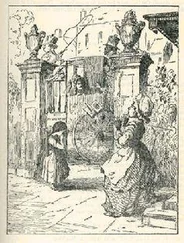
“The governor has cut into the timber,” Rawdon said, looking about, and then was silent - so was Becky. Both of them were rather agitated, and thinking of old times. He about Eton, and his mother, whom he remembered, a frigid demure woman, and a sister who died, of whom he had been passionately fond; and how he used to thrash Pitt; and about little Rawdy at home. And Rebecca thought about her own youth and the dark secrets of those early tainted days; and of her entrance into life by yonder gates; and of Miss Pinkerton, and Jos, and Amelia.
The gravel walk and terrace had been scraped quite clean. A grand painted hatchment was already over the great entrance, and two very solemn and tall personages in black flung open each a leaf of the door as the carriage pulled up at the familiar steps. Rawdon turned red, and Becky somewhat pale, as they passed through the old hall, arm in arm. She pinched her husband’s arm as they entered the oak parlour, where Sir Pitt and his wife were ready to receive them. Sir Pitt in black, Lady Jane in black, and my Lady Southdown with a large black head-piece of bugles and feathers, which waved on her Ladyship’s head like an undertaker’s tray.
Sir Pitt had judged correctly, that she would not quit the premises. She contented herself by preserving a solemn and stony silence, when in company of Pitt and his rebellious wife, and by frightening the children in the nursery by the ghastly gloom of her demeanour. Only a very faint bending of the head-dress and plumes welcomed Rawdon and his wife, as those prodigals returned to their family.
To say the truth, they were not affected very much one way or other by this coolness. Her Ladyship was a person only of secondary consideration in their minds just then - they were intent upon the reception which the reigning brother and sister would afford them.
Pitt, with rather a heightened colour, went up and shook his brother by the hand, and saluted Rebecca with a hand-shake and a very low bow. But Lady Jane took both the hands of her sister-in-law and kissed her affectionately. The embrace somehow brought tears into the eyes of the little adventuress - which ornaments, as we know, she wore very seldom. The artless mark of kindness and confidence touched and pleased her; and Rawdon, encouraged by this demonstration on his sister’s part, twirled up his mustachios and took leave to salute Lady Jane with a kiss, which caused her Ladyship to blush exceedingly.
“Dev’lish nice little woman, Lady Jane,” was his verdict, when he and his wife were together again. “Pitt’s got fat, too, and is doing the thing handsomely.” “He can afford it,” said Rebecca and agreed in her husband’s farther opinion “that the mother-in-law was a tremendous old Guy - and that the sisters were rather well-looking young women.”
They, too, had been summoned from school to attend the funeral ceremonies. It seemed Sir Pitt Crawley, for the dignity of the house and family, had thought right to have about the place as many persons in black as could possibly be assembled. All the men and maids of the house, the old women of the Alms House, whom the elder Sir Pitt had cheated out of a great portion of their due, the parish clerk’s family, and the special retainers of both Hall and Rectory were habited in sable; added to these, the undertaker’s men, at least a score, with crapes and hatbands, and who made goodly show when the great burying show took place - but these are mute personages in our drama; and having nothing to do or say, need occupy a very little space here.
With regard to her sisters-in-law Rebecca did not attempt to forget her former position of Governess towards them, but recalled it frankly and kindly, and asked them about their studies with great gravity, and told them that she had thought of them many and many a day, and longed to know of their welfare. In fact you would have supposed that ever since she had left them she had not ceased to keep them uppermost in her thoughts and to take the tenderest interest in their welfare. So supposed Lady Crawley herself and her young sisters.
“She’s hardly changed since eight years,” said Miss Rosalind to Miss Violet, as they were preparing for dinner.
“Those red-haired women look wonderfully well,” replied the other.
“Hers is much darker than it was; I think she must dye it,” Miss Rosalind added. “She is stouter, too, and altogether improved,” continued Miss Rosalind, who was disposed to be very fat.
“At least she gives herself no airs and remembers that she was our Governess once,” Miss Violet said, intimating that it befitted all governesses to keep their proper place, and forgetting altogether that she was granddaughter not only of Sir Walpole Crawley, but of Mr. Dawson of Mudbury, and so had a coal-scuttle in her scutcheon. There are other very well-meaning people whom one meets every day in Vanity Fair who are surely equally oblivious.
“It can’t be true what the girls at the Rectory said, that her mother was an opera-dancer - ”
“A person can’t help their birth,” Rosalind replied with great liberality. “And I agree with our brother, that as she is in the family, of course we are bound to notice her. I am sure Aunt Bute need not talk; she wants to marry Kate to young Hooper, the wine-merchant, and absolutely asked him to come to the Rectory for orders.”
“I wonder whether Lady Southdown will go away, she looked very glum upon Mrs. Rawdon,” the other said.
“I wish she would. I won’t read the Washerwoman of Finchley Common,” vowed Violet; and so saying, and avoiding a passage at the end of which a certain coffin was placed with a couple of watchers, and lights perpetually burning in the closed room, these young women came down to the family dinner, for which the bell rang as usual.
But before this, Lady Jane conducted Rebecca to the apartments prepared for her, which, with the rest of the house, had assumed a very much improved appearance of order and comfort during Pitt’s regency, and here beholding that Mrs. Rawdon’s modest little trunks had arrived, and were placed in the bedroom and dressing-room adjoining, helped her to take off her neat black bonnet and cloak, and asked her sister-in-law in what more she could be useful.
“What I should like best,” said Rebecca, “would be to go to the nursery and see your dear little children.” On which the two ladies looked very kindly at each other and went to that apartment hand in hand.
Becky admired little Matilda, who was not quite four years old, as the most charming little love in the world; and the boy, a little fellow of two years - pale, heavy-eyed, and large-headed - she pronounced to be a perfect prodigy in point of size, intelligence, and beauty.
“I wish Mamma would not insist on giving him so much medicine,” Lady Jane said with a sigh. “I often think we should all be better without it.” And then Lady Jane and her new-found friend had one of those confidential medical conversations about the children, which all mothers, and most women, as I am given to understand, delight in. Fifty years ago, and when the present writer, being an interesting little boy, was ordered out of the room with the ladies after dinner, I remember quite well that their talk was chiefly about their ailments; and putting this question directly to two or three since, I have always got from them the acknowledgement that times are not changed. Let my fair readers remark for themselves this very evening when they quit the dessert-table and assemble to celebrate the drawing-room mysteries. Well - in half an hour Becky and Lady Jane were close and intimate friends - and in the course of the evening her Ladyship informed Sir Pitt that she thought her new sister-in-law was a kind, frank, unaffected, and affectionate young woman.
And so having easily won the daughter’s good-will, the indefatigable little woman bent herself to conciliate the august Lady Southdown. As soon as she found her Ladyship alone, Rebecca attacked her on the nursery question at once and said that her own little boy was saved, actually saved, by calomel, freely administered, when all the physicians in Paris had given the dear child up. And then she mentioned how often she had heard of Lady Southdown from that excellent man the Reverend Lawrence Grills, Minister of the chapel in May Fair, which she frequented; and how her views were very much changed by circumstances and misfortunes; and how she hoped that a past life spent in worldliness and error might not incapacitate her from more serious thought for the future. She described how in former days she had been indebted to Mr. Crawley for religious instruction, touched upon the Washerwoman of Finchley Common, which she had read with the greatest profit, and asked about Lady Emily, its gifted author, now Lady Emily Hornblower, at Cape Town, where her husband had strong hopes of becoming Bishop of Caffraria.
Читать дальшеИнтервал:
Закладка:
Похожие книги на «Vanity Fair»
Представляем Вашему вниманию похожие книги на «Vanity Fair» списком для выбора. Мы отобрали схожую по названию и смыслу литературу в надежде предоставить читателям больше вариантов отыскать новые, интересные, ещё непрочитанные произведения.








Обсуждение, отзывы о книге «Vanity Fair» и просто собственные мнения читателей. Оставьте ваши комментарии, напишите, что Вы думаете о произведении, его смысле или главных героях. Укажите что конкретно понравилось, а что нет, и почему Вы так считаете.