Jerome Jerome - Paul Kelver
Здесь есть возможность читать онлайн «Jerome Jerome - Paul Kelver» весь текст электронной книги совершенно бесплатно (целиком полную версию без сокращений). В некоторых случаях можно слушать аудио, скачать через торрент в формате fb2 и присутствует краткое содержание. Город: New York, Год выпуска: 1902, Издательство: Dodd, Mead & Company, Жанр: Классическая проза, на английском языке. Описание произведения, (предисловие) а так же отзывы посетителей доступны на портале библиотеки ЛибКат.
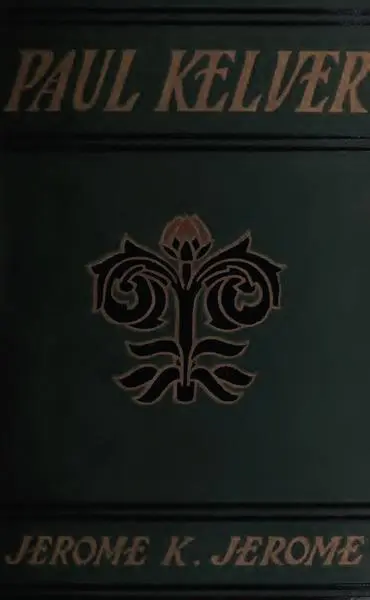
- Название:Paul Kelver
- Автор:
- Издательство:Dodd, Mead & Company
- Жанр:
- Год:1902
- Город:New York
- ISBN:нет данных
- Рейтинг книги:3 / 5. Голосов: 1
-
Избранное:Добавить в избранное
- Отзывы:
-
Ваша оценка:
Paul Kelver: краткое содержание, описание и аннотация
Предлагаем к чтению аннотацию, описание, краткое содержание или предисловие (зависит от того, что написал сам автор книги «Paul Kelver»). Если вы не нашли необходимую информацию о книге — напишите в комментариях, мы постараемся отыскать её.
Paul Kelver — читать онлайн бесплатно полную книгу (весь текст) целиком
Ниже представлен текст книги, разбитый по страницам. Система сохранения места последней прочитанной страницы, позволяет с удобством читать онлайн бесплатно книгу «Paul Kelver», без необходимости каждый раз заново искать на чём Вы остановились. Поставьте закладку, и сможете в любой момент перейти на страницу, на которой закончили чтение.
Интервал:
Закладка:
So the old house held us to its dismal bosom; and not until within its homely but unlovely arms, first my aunt, and later on my mother had died, and I had said good-bye to Amy, crying in the midst of littered emptiness, did I leave it.
My aunt died as she had lived, grumbling.
“You will be glad to get rid of me, all of you!” she said, dropping for the first and last time I can recollect into the retort direct; “and I can't say I shall be very sorry to go myself. It hasn't been my idea of life.”
Poor old lady! That was only a couple of weeks before the end. I do not suppose she guessed it was so certain or perhaps she might have been more sentimental.
“Don't be foolish,” said my mother, “you're not going to die!”
“What's the use of talking like an idiot,” retorted my aunt, “I've got to do it some time. Why not now, when everything's all ready for it. It isn't as if I was enjoying myself.”
“I am sure we do all we can for you,” said my mother. “I know you do,” replied my aunt. “I'm a burden to you. I always have been.”
“Not a burden,” corrected my mother.
“What does the woman call it then,” snapped back my aunt. “Does she reckon I've been a sunbeam in the house? I've been a trial to everybody. That's what I was born for; it's my metier.”
My mother put her arms about the poor old soul and kissed her. “We should miss you very much,” she said.
“I'm sure I hope they all will!” answered my aunt. “It's the only thing I've got to leave 'em, worth having.”
My mother laughed.
“Maybe it's been a good thing for you, Maggie,” grumbled my aunt; “if it wasn't for cantankerous, disagreeable people like me, gentle, patient people like you wouldn't get any practice. Perhaps, after all, I've been a blessing to you in disguise.”
I cannot honestly say we ever wished her back; though we certainly did miss her—missed many a joke at her oddities, many a laugh at her cornery ways. It takes all sorts, as the saying goes, to make a world. Possibly enough if only we perfect folk were left in it we would find it uncomfortably monotonous.
As for Amy, I believe she really regretted her.
“One never knows what's good for one till one's lost it,” sighed Amy.
“I'm glad to think you liked her,” said my mother.
“You see, mum,” explained Amy, “I was one of a large family; and a bit of a row now and again cheers one up, I always think. I'll be losing the power of my tongue if something doesn't come along soon.”
“Well, you are going to be married in a few weeks now,” my mother reminded her.
But Amy remained despondent. “They're poor things, the men, at a few words, the best of them,” she replied. “As likely as not just when you're getting interested you turn round to find that they've put on their hat and gone out.”
My mother and I were very much alone after my aunt's death. Barbara had gone abroad to put the finishing touches to her education—to learn the tricks of the Nobs' trade, as old Hasluck phrased it; and I had left school and taken employment with Mr. Stillwood, without salary, the idea being that I should study for the law.
“You are in luck's way, my boy, in luck's way,” old Mr. Gadley had assured me. “To have commenced your career in the office of Stillwood, Waterhead and Royal will be a passport for you anywhere. It will stamp you, my boy.”
Mr. Stillwood himself was an extremely old and feeble gentleman—so old and feeble it seemed strange that he, a wealthy man, had not long ago retired.
“I am always meaning to,” he explained to me one day soon after my advent in his office. “When your poor father came to me he told me very frankly the sad fact—that he had only a few more years to live. 'Mr. Kelver,' I answered him, 'do not let that trouble you, so far as I am concerned. There are one or two matters in the office I should like to see cleared up, and in these you can help me. When they are completed I shall retire! Yet, you see, I linger on. I am like the old hackney coach horse, Mr. Weller—or is it Mr. Jingle—tells us of; if the shafts were drawn away I should probably collapse. So I jog on, I jog on.'”
He had married late in life a common woman much younger than himself, who had brought to him a horde of needy and greedy relatives, and no doubt, as a refuge from her noisy neighbourhood, the daily peace of Lombard Street was welcome to him. We saw her occasionally. She was one of those blustering, “managing” women who go through life under the impression that making a disturbance is somehow “putting things to rights.” Ridiculously ashamed of her origin, she sought to hide it under what her friends assured her was the air of a duchess, but which, as a matter of fact, resembled rather the Sunday manners of an elderly barmaid. Mr. Gadley alone was not afraid of her; but, on the contrary, kept her always very much in fear of him, often speaking to her with refreshing candour. He had known her in the days it was her desire should be buried in oblivion, and had always resented as a personal insult her entry into the old established aristocratic firm of Stillwood & Co.
Her history was peculiar. Mr. Stillwood, when a blase man about town, verging on forty, had first seen her, then a fair-haired, ethereal-looking child, in spite of her dirt, playing in the gutter. To his lasting self-reproach it was young Gadley himself, accompanying his employer home from Westminster, who had drawn Mr. Stillwood's attention to the girl by boxing her ears for having, as he passed, slapped his face with a convenient sprat. Stillwood, acting on the impulse of the moment, had taken the child by the hand and dragged her, unwilling, to her father's place of business—a small coal shed in the Horseferry Road. The arrangement he there made amounted practically to the purchase of the child. She was sent abroad to school and the coal shed closed. On her return, ten years later, a big, handsome young woman, he married her, and learned at leisure the truth of the old saying, “what's bred in the bone will come out in the flesh,” scrub it and paint it and hide it away under fine clothes as you will.
Her constant complaint against her husband was that he was only a solicitor, a profession she considered vulgar; and nothing “riled” old Gadley more than hearing her views upon this point.
“It's not fair to the gals,” I once heard her say to him. I was working in the next room, with the door not quite closed, added to which she talked at the top of her voice on all subjects. “What real gentleman, I should like to know, is going to marry the daughter of a City attorney? As I told him years ago, he ought to have retired and gone into the House.”
“The very thing your poor father used to talk of doing whenever things were going a bit queer in the retail coal and potato business,” grunted old Gadley.
Mrs. Stillwood called him a “low beast” in her most aristocratic tones, and swept out of the room.
Not that old Stillwood himself ever expressed fondness for the law.
“I am not at all sure, Kelver,” I remember his saying to me on one occasion, “that you have done wisely in choosing the law. It makes one regard humanity morally as the medical profession regards it physically:—as universally unsound. You suspect everybody of being a rogue. When people are behaving themselves, we lawyers hear nothing of them. All we hear of is roguery, trickery and hypocrisy. It deteriorates the character, Kelver. We live in a perpetual atmosphere of transgression. I sometimes fancy it may be infectious.”
“It does not seem to have infected you, sir,” I replied; for, as I think I have already mentioned, the firm of Stillwood, Waterhead and Royal was held in legal circles as the synonym for rectitude of dealing quite old-fashioned.
Читать дальшеИнтервал:
Закладка:
Похожие книги на «Paul Kelver»
Представляем Вашему вниманию похожие книги на «Paul Kelver» списком для выбора. Мы отобрали схожую по названию и смыслу литературу в надежде предоставить читателям больше вариантов отыскать новые, интересные, ещё непрочитанные произведения.









Обсуждение, отзывы о книге «Paul Kelver» и просто собственные мнения читателей. Оставьте ваши комментарии, напишите, что Вы думаете о произведении, его смысле или главных героях. Укажите что конкретно понравилось, а что нет, и почему Вы так считаете.