Jerome Jerome - Paul Kelver
Здесь есть возможность читать онлайн «Jerome Jerome - Paul Kelver» весь текст электронной книги совершенно бесплатно (целиком полную версию без сокращений). В некоторых случаях можно слушать аудио, скачать через торрент в формате fb2 и присутствует краткое содержание. Город: New York, Год выпуска: 1902, Издательство: Dodd, Mead & Company, Жанр: Классическая проза, на английском языке. Описание произведения, (предисловие) а так же отзывы посетителей доступны на портале библиотеки ЛибКат.
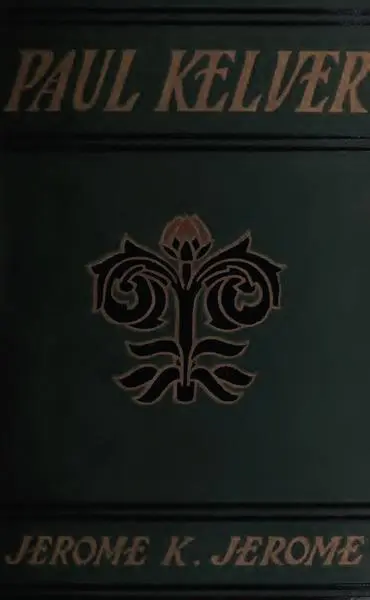
- Название:Paul Kelver
- Автор:
- Издательство:Dodd, Mead & Company
- Жанр:
- Год:1902
- Город:New York
- ISBN:нет данных
- Рейтинг книги:3 / 5. Голосов: 1
-
Избранное:Добавить в избранное
- Отзывы:
-
Ваша оценка:
Paul Kelver: краткое содержание, описание и аннотация
Предлагаем к чтению аннотацию, описание, краткое содержание или предисловие (зависит от того, что написал сам автор книги «Paul Kelver»). Если вы не нашли необходимую информацию о книге — напишите в комментариях, мы постараемся отыскать её.
Paul Kelver — читать онлайн бесплатно полную книгу (весь текст) целиком
Ниже представлен текст книги, разбитый по страницам. Система сохранения места последней прочитанной страницы, позволяет с удобством читать онлайн бесплатно книгу «Paul Kelver», без необходимости каждый раз заново искать на чём Вы остановились. Поставьте закладку, и сможете в любой момент перейти на страницу, на которой закончили чтение.
Интервал:
Закладка:
“Well, it would depend upon whether you knew it was coming,” Wakeham would reply kindly, not wishing to discourage me.
We abandoned the scheme by mutual consent at about the end of a fortnight.
“I suppose it's something that you've got to have inside you,” I suggested to Wakeham in consolation.
“I don't think the roof of your mouth can be quite the right shape for it,” concluded Wakeham.
My success as story-teller, commentator, critic, jester, revived my childish ambition towards authorship. My first stirrings in this direction I cannot rightly place. I remember when very small falling into a sunk dust-bin—a deep hole, rather, into which the gardener shot his rubbish. The fall twisted my ankle so that I could not move; and the time being evening and my prison some distance from the house, my predicament loomed large before me. Yet one consolation remained with me: the incident would be of value to me in the autobiography upon which I was then engaged. I can distinctly recollect lying on my back among decaying leaves and broken glass, framing my account. “On this day a strange adventure befell me. Walking in the garden, all unheeding, I suddenly”—I did not want to add the truth—“tumbled into a dust-hole, six feet square, that any one but a moon calf might have seen.” I puzzled to evolve a more dignified situation. The dust-bin became a cavern, the entrance to which had been artfully concealed; the six or seven feet I had really fallen, “an endless descent, terminating in a vast and gloomy chamber.” I was divided between opposing desires: One, for rescue followed by sympathy and supper; the other, for the alarming experience of a night of terror where I lay. Nature conquering Art, I yelled; and the episode terminated prosaically with a warm bath and arnica. But from it I judge that desire for the woes and perils of authorship was with me somewhat early.
Of my many other dreams I would speak freely, discussing them at length with sympathetic souls, but concerning this one ambition I was curiously reticent. Only to two—my mother and a grey-bearded Stranger—did I ever breathe a word of it. Even from my father I kept it a secret, close comrades in all else though we were. He would have talked of it much and freely, dragged it into the light of day; and from this I shrank.
My talk with the Stranger came about in this wise. One evening I had taken a walk to Victoria Park—a favourite haunt of mine at summer time. It was a fair and peaceful evening, and I fell a-wandering there in pleasant reverie, until the waning light hinted to me the question of time. I looked about me. Only one human being was in sight, a man with his back towards me, seated upon a bench overlooking the ornamental water.
I drew nearer. He took no notice of me, and interested—though why, I could not say—I seated myself beside him at the other end of the bench. He was a handsome, distinguished-looking man, with wonderfully bright, clear eyes and iron-grey hair and beard. I might have thought him a sea captain, of whom many were always to be met with in that neighbourhood, but for his hands, which were crossed upon his stick, and which were white and delicate as a woman's. He turned his face and glanced at me. I fancied that his lips beneath the grey moustache smiled; and instinctively I edged a little nearer to him.
“Please, sir,” I said, after awhile, “could you tell me the right time?”
“Twenty minutes to eight,” he answered, looking at his watch. And his voice drew me towards him even more than had his beautiful strong face. I thanked him, and we fell back into silence.
“Where do you live?” he turned and suddenly asked me.
“Oh, only over there,” I answered, with a wave of my arm towards the chimney-fringed horizon behind us. “I needn't be in till half-past eight. I like this Park so much,” I added, “I often come and sit here of an evening.”
“Why do you like to come and sit here?” he asked. “Tell me.”
“Oh, I don't know,” I answered. “I think.”
I marvelled at myself. With strangers generally I was shy and silent; but the magic of his bright eyes seemed to have loosened my tongue.
I told him my name; that we lived in a street always full of ugly sounds, so that a gentleman could not think, not even in the evening time, when Thought goes a-visiting.
“Mamma does not like the twilight time,” I confided to him. “It always makes her cry. But then mamma is—not very young, you know, and has had a deal of trouble; and that makes a difference, I suppose.”
He laid his hand upon mine. We were sitting nearer to each other now. “God made women weak to teach us men to be tender,” he said. “But you, Paul, like this 'twilight time'?”
“Yes,” I answered, “very much. Don't you?”
“And why do you like it?” he asked.
“Oh,” I answered, “things come to you.”
“What things?”
“Oh, fancies,” I explained to him. “I am going to be an author when I grow up, and write books.”
He took my hand in his and shook it gravely, and then returned it to me. “I, too, am a writer of books,” he said.
And then I knew what had drawn me to him.
So for the first time I understood the joy of talking “shop” with a fellow craftsman. I told him my favourite authors—Scott, and Dumas, and Victor Hugo; and to my delight found they were his also; he agreeing with me that real stories were the best, stories in which people did things.
“I used to read silly stuff once,” I confessed, “Indian tales and that sort of thing, you know. But mamma said I'd never be able to write if I read that rubbish.”
“You will find it so all through life, Paul,” he replied. “The things that are nice are rarely good for us. And what do you read now?”
“I am reading Marlowe's Plays and De Quincey's Confessions just now,” I confided to him.
“And do you understand them?”
“Fairly well,” I answered. “Mamma says I'll like them better as I go on. I want to learn to write very, very well indeed,” I admitted to him; “then I'll be able to earn heaps of money.”
He smiled. “So you don't believe in Art for Art's sake, Paul?”
I was puzzled. “What does that mean?” I asked.
“It means in our case, Paul,” he answered, “writing books for the pleasure of writing books, without thinking of any reward, without desiring either money or fame.”
It was a new idea to me. “Do many authors do that?” I asked.
He laughed outright this time. It was a delightful laugh. It rang through the quiet Park, awaking echoes; and caught by it, I laughed with him.
“Hush!” he said; and he glanced round with a whimsical expression of fear, lest we might have been overheard. “Between ourselves, Paul,” he continued, drawing me more closely towards him and whispering, “I don't think any of us do. We talk about it. But I'll tell you this, Paul; it is a trade secret and you must remember it: No man ever made money or fame but by writing his very best. It may not be as good as somebody else's best, but it is his best. Remember that, Paul.”
I promised I would.
“And you must not think merely of the money and the fame, Paul,” he added the next moment, speaking more seriously. “Money and fame are very good things, and only hypocrites pretend to despise them. But if you write books thinking only of money, you will be disappointed. It is earned easier in other ways. Tell me, that is not your only idea?”
I pondered. “Mamma says it is a very noble calling, authorship,” I remembered, “and that any one ought to be very proud and glad to be able to write books, because they give people happiness and make them forget things; and that one ought to be very good if one is going to be an author, so as to be worthy to help and teach others.”
Читать дальшеИнтервал:
Закладка:
Похожие книги на «Paul Kelver»
Представляем Вашему вниманию похожие книги на «Paul Kelver» списком для выбора. Мы отобрали схожую по названию и смыслу литературу в надежде предоставить читателям больше вариантов отыскать новые, интересные, ещё непрочитанные произведения.

Обсуждение, отзывы о книге «Paul Kelver» и просто собственные мнения читателей. Оставьте ваши комментарии, напишите, что Вы думаете о произведении, его смысле или главных героях. Укажите что конкретно понравилось, а что нет, и почему Вы так считаете.