Jerome Jerome - Paul Kelver
Здесь есть возможность читать онлайн «Jerome Jerome - Paul Kelver» весь текст электронной книги совершенно бесплатно (целиком полную версию без сокращений). В некоторых случаях можно слушать аудио, скачать через торрент в формате fb2 и присутствует краткое содержание. Город: New York, Год выпуска: 1902, Издательство: Dodd, Mead & Company, Жанр: Классическая проза, на английском языке. Описание произведения, (предисловие) а так же отзывы посетителей доступны на портале библиотеки ЛибКат.
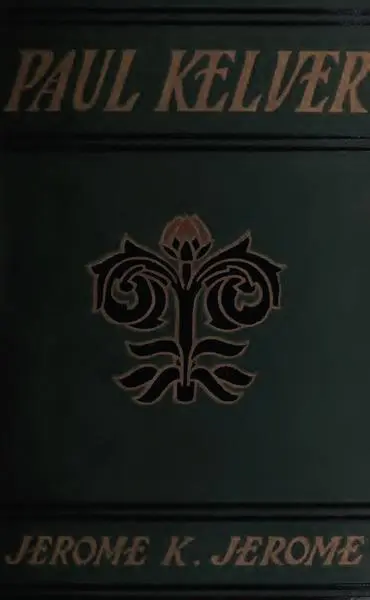
- Название:Paul Kelver
- Автор:
- Издательство:Dodd, Mead & Company
- Жанр:
- Год:1902
- Город:New York
- ISBN:нет данных
- Рейтинг книги:3 / 5. Голосов: 1
-
Избранное:Добавить в избранное
- Отзывы:
-
Ваша оценка:
Paul Kelver: краткое содержание, описание и аннотация
Предлагаем к чтению аннотацию, описание, краткое содержание или предисловие (зависит от того, что написал сам автор книги «Paul Kelver»). Если вы не нашли необходимую информацию о книге — напишите в комментариях, мы постараемся отыскать её.
Paul Kelver — читать онлайн бесплатно полную книгу (весь текст) целиком
Ниже представлен текст книги, разбитый по страницам. Система сохранения места последней прочитанной страницы, позволяет с удобством читать онлайн бесплатно книгу «Paul Kelver», без необходимости каждый раз заново искать на чём Вы остановились. Поставьте закладку, и сможете в любой момент перейти на страницу, на которой закончили чтение.
Интервал:
Закладка:
“Still, I think I should like to have a look at one, just to see what it is like,” argued my father; “one cannot judge of a thing that one knows nothing about.”
I imagine it was his first argument rather than his second that convinced my mother.
“That is true,” she answered. “I remember how shocked my poor father was when he found me one night at the bedroom window reading Sir Walter Scott by the light of the moon.”
“What about the boy?” said my father, for I had been included in the invitation.
“We will all be wicked together,” said my mother.
So an evening or two later the four of us stood at the corner of Pigott Street waiting for the 'bus.
“It is a close evening,” said my father; “let's go the whole hog and ride outside.”
In those days for a lady to ride outside a 'bus was as in these days for a lady to smoke in public. Surely my mother's guardian angel must have betaken himself off in a huff.
“Will you keep close behind and see to my skirt?” answered my mother, commencing preparations. If you will remember that these were the days of crinolines, that the “knife-boards” of omnibuses were then approached by a perpendicular ladder, the rungs two feet apart, you will understand the necessity for such precaution.
Which of us was the most excited throughout that long ride it would be difficult to say. Barbara, feeling keenly her responsibility as prompter and leader of the dread enterprise, sat anxious, as she explained to us afterwards, hoping there would be nothing shocking in the play, nothing to belie its innocent title; pleased with her success so far, yet still fearful of failure, doubtful till the last moment lest we should suddenly repent, and stopping the 'bus, flee from the wrath to come. My father was the youngest of us all. Compared with him I was sober and contained. He fidgeted: people remarked upon it. He hummed. But for the stern eye of a thin young man sitting next to him trying to read a paper, I believe he would have broken out into song. Every minute he would lean across to enquire of my mother: “How are you feeling—all right?” To which my mother would reply with a nod and a smile, She sat very silent herself, clasping and unclasping her hands. As for myself, I remember feeling so sorry for the crowds that passed us on their way home. It was sad to think of the long dull evening that lay before them. I wondered how they could face it.
Our seats were in the front row of the upper circle. The lights were low and the house only half full when we reached them.
“It seems very orderly and—and respectable,” whispered my mother. There seemed a touch of disappointment in her tone.
“We are rather early,” replied Barbara; “it will be livelier when the band comes in and they turn up the gas.”
But even when this happened my mother was not content. “There is so little room for the actors,” she complained.
It was explained to her that the green curtain would go up, that the stage lay behind.
So we waited, my mother sitting stiffly on the extreme edge of her seat, holding me tightly by the hand; I believe with some vague idea of flight, should out of that vault-scented gloom the devil suddenly appear to claim us for his own. But before the curtain was quite up she had forgotten him.
You poor folk that go to the theatre a dozen times a year, perhaps oftener, what do you know of plays? You see no drama, you see but middle-aged Mr. Brown, churchwarden, payer of taxes, foolishly pretending to be a brigand; Miss Jones, daughter of old Jones the Chemist, making believe to be a haughty Princess. How can you, a grown man, waste money on a seat to witness such tomfoolery! What we saw was something very different. A young and beautiful girl—true, not a lady by birth, being merely the daughter of an honest yeoman, but one equal in all the essentials of womanhood to the noblest in the land—suffered before our very eyes an amount of misfortune that, had one not seen it for oneself, one would never have believed Fate could have accumulated upon the head of any single individual. Beside her woes our own poor troubles sank into insignificance. We had used to grieve, as my mother in a whisper reminded my father, if now and again we had not been able to afford meat for dinner. This poor creature, driven even from her wretched attic, compelled to wander through the snow without so much as an umbrella to protect her, had not even a crust to eat; and yet never lost her faith in Providence. It was a lesson, as my mother remarked afterwards, that she should never forget. And virtue had been triumphant, let shallow cynics say what they will. Had we not proved it with our own senses? The villain—I think his Christian name, if one can apply the word “Christian” in connection with such a fiend, was Jasper—had never really loved the heroine. He was incapable of love. My mother had felt this before he had been on the stage five minutes, and my father—in spite of protests from callous people behind who appeared to be utterly indifferent to what was going on under their very noses—had agreed with her. What he was in love with was her fortune—the fortune that had been left to her by her uncle in Australia, but about which nobody but the villain knew anything. Had she swerved a hair's breadth from the course of almost supernatural rectitude, had her love for the hero ever weakened, her belief in him—in spite of damning evidence to the contrary—for a moment wavered, then wickedness might have triumphed. How at times, knowing all the facts but helpless to interfere, we trembled, lest deceived by the cruel lies the villain told her; she should yield to importunity. How we thrilled when, in language eloquent though rude, she flung his false love back into his teeth. Yet still we feared. We knew well that it was not the hero who had done the murder. “Poor dear,” as Amy would have called him, he was quite incapable of doing anything requiring one-half as much smartness. We knew that it was not he, poor innocent lamb! who had betrayed the lady with the French accent; we had heard her on the subject and had formed a very shrewd conjecture. But appearances, we could not help admitting, were terribly to his disfavour. The circumstantial evidence against him would have hanged an Archbishop. Could she in face of it still retain her faith? There were moments when my mother restrained with difficulty her desire to rise and explain.
Between the acts Barbara would whisper to her that she was not to mind, because it was only a play, and that everything would be sure to come right in the end.
“I know, my dear,” my mother would answer, laughing, “it is very foolish of me; I forget. Paul, when you see me getting excited, you must remind me.”
But of what use was I in such case! I, who only by holding on to the arms of my seat could keep myself from swarming down on to the stage to fling myself between this noble damsel and her persecutor—this fair-haired, creamy angel in whose presence for the time being I had forgotten even Barbara.
The end came at last. The uncle from Australia was not dead. The villain—bungler as well as knave—had killed the wrong man, somebody of no importance whatever. As a matter of fact, the comic man himself was the uncle from Australia—had been so all along. My mother had had a suspicion of this from the very first. She told us so three times, to make up, I suppose, for not having mentioned it before. How we cheered and laughed, in spite of the tears in our eyes.
By pure accident it happened to be the first night of the piece, and the author, in response to much shouting and whistling, came before the curtain. He was fat and looked commonplace; but I deemed him a genius, and my mother said he had a good face, and waved her handkerchief wildly; while my father shouted “Bravo!” long after everybody else had finished; and people round about muttered “packed house,” which I didn't understand at the time, but came to later.
Читать дальшеИнтервал:
Закладка:
Похожие книги на «Paul Kelver»
Представляем Вашему вниманию похожие книги на «Paul Kelver» списком для выбора. Мы отобрали схожую по названию и смыслу литературу в надежде предоставить читателям больше вариантов отыскать новые, интересные, ещё непрочитанные произведения.





Обсуждение, отзывы о книге «Paul Kelver» и просто собственные мнения читателей. Оставьте ваши комментарии, напишите, что Вы думаете о произведении, его смысле или главных героях. Укажите что конкретно понравилось, а что нет, и почему Вы так считаете.