Mark Twain - A Tramp Abroad
Здесь есть возможность читать онлайн «Mark Twain - A Tramp Abroad» весь текст электронной книги совершенно бесплатно (целиком полную версию без сокращений). В некоторых случаях можно слушать аудио, скачать через торрент в формате fb2 и присутствует краткое содержание. Жанр: Классическая проза, Юмористическая проза, на английском языке. Описание произведения, (предисловие) а так же отзывы посетителей доступны на портале библиотеки ЛибКат.
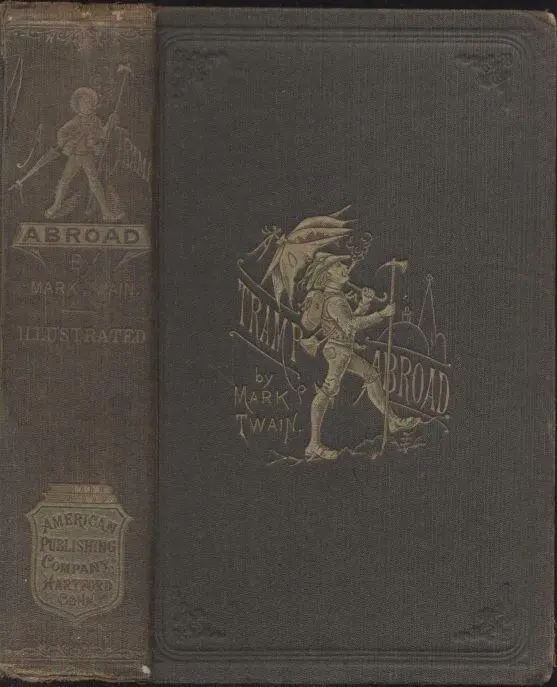
- Название:A Tramp Abroad
- Автор:
- Жанр:
- Год:неизвестен
- ISBN:нет данных
- Рейтинг книги:5 / 5. Голосов: 1
-
Избранное:Добавить в избранное
- Отзывы:
-
Ваша оценка:
A Tramp Abroad: краткое содержание, описание и аннотация
Предлагаем к чтению аннотацию, описание, краткое содержание или предисловие (зависит от того, что написал сам автор книги «A Tramp Abroad»). Если вы не нашли необходимую информацию о книге — напишите в комментариях, мы постараемся отыскать её.
A Tramp Abroad — читать онлайн бесплатно полную книгу (весь текст) целиком
Ниже представлен текст книги, разбитый по страницам. Система сохранения места последней прочитанной страницы, позволяет с удобством читать онлайн бесплатно книгу «A Tramp Abroad», без необходимости каждый раз заново искать на чём Вы остановились. Поставьте закладку, и сможете в любой момент перейти на страницу, на которой закончили чтение.
Интервал:
Закладка:
Now, the true charm of pedestrianism does not lie in the walking, or in the scenery, but in the talking. The walking is good to time the movement of the tongue by, and to keep the blood and the brain stirred up and active; the scenery and the woodsy smells are good to bear in upon a man an unconscious and unobtrusive charm and solace to eye and soul and sense; but the supreme pleasure comes from the talk. It is no matter whether one talks wisdom or nonsense, the case is the same, the bulk of the enjoyment lies in the wagging of the gladsome jaw and the flapping of the sympathetic ear.
And what motley variety of subjects a couple of people will casually rake over in the course of a day's tramp! There being no constraint, a change of subject is always in order, and so a body is not likely to keep pegging at a single topic until it grows tiresome. We discussed everything we knew, during the first fifteen or twenty minutes, that morning, and then branched out into the glad, free, boundless realm of the things we were not certain about.
Harris said that if the best writer in the world once got the slovenly habit of doubling up his "haves" he could never get rid of it while he lived. That is to say, if a man gets the habit of saying "I should have liked to have known more about it" instead of saying simply and sensibly, "I should have liked to know more about it," that man's disease is incurable. Harris said that his sort of lapse is to be found in every copy of every newspaper that has ever been printed in English, and in almost all of our books. He said he had observed it in Kirkham's grammar and in Macaulay. Harris believed that milk-teeth are commoner in men's mouths than those "doubled-up haves."
I do not know that there have not been moments in the course of the present session when I should have been very glad to have accepted the proposal of my noble friend, and to have exchanged parts in some of our evenings of work.—[From a Speech of the English Chancellor of the Exchequer, August, 1879.]
That changed the subject to dentistry. I said I believed the average man dreaded tooth-pulling more than amputation, and that he would yell quicker under the former operation than he would under the latter. The philosopher Harris said that the average man would not yell in either case if he had an audience. Then he continued:
"When our brigade first went into camp on the Potomac, we used to be brought up standing, occasionally, by an ear-splitting howl of anguish. That meant that a soldier was getting a tooth pulled in a tent. But the surgeons soon changed that; they instituted open-air dentistry. There never was a howl afterward—that is, from the man who was having the tooth pulled. At the daily dental hour there would always be about five hundred soldiers gathered together in the neighborhood of that dental chair waiting to see the performance—and help; and the moment the surgeon took a grip on the candidate's tooth and began to lift, every one of those five hundred rascals would clap his hand to his jaw and begin to hop around on one leg and howl with all the lungs he had! It was enough to raise your hair to hear that variegated and enormous unanimous caterwaul burst out!
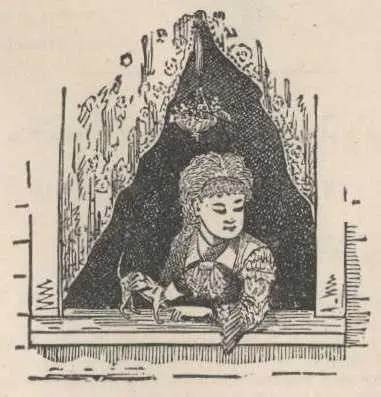
With so big and so derisive an audience as that, a sufferer wouldn't emit a sound though you pulled his head off. The surgeons said that pretty often a patient was compelled to laugh, in the midst of his pangs, but that they had never caught one crying out, after the open-air exhibition was instituted."
Dental surgeons suggested doctors, doctors suggested death, death suggested skeletons—and so, by a logical process the conversation melted out of one of these subjects and into the next, until the topic of skeletons raised up Nicodemus Dodge out of the deep grave in my memory where he had lain buried and forgotten for twenty-five years. When I was a boy in a printing-office in Missouri, a loose-jointed, long-legged, tow-headed, jeans-clad countrified cub of about sixteen lounged in one day, and without removing his hands from the depths of his trousers pockets or taking off his faded ruin of a slouch hat, whose broken rim hung limp and ragged about his eyes and ears like a bug-eaten cabbage leaf, stared indifferently around, then leaned his hip against the editor's table, crossed his mighty brogans, aimed at a distant fly from a crevice in his upper teeth, laid him low, and said with composure:
"Whar's the boss?"
"I am the boss," said the editor, following this curious bit of architecture wonderingly along up to its clock-face with his eye.
"Don't want anybody fur to learn the business, 'tain't likely?"
"Well, I don't know. Would you like to learn it?"
"Pap's so po' he cain't run me no mo', so I want to git a show somers if I kin, 'taint no diffunce what—I'm strong and hearty, and I don't turn my back on no kind of work, hard nur soft."
"Do you think you would like to learn the printing business?"
"Well, I don't re'ly k'yer a durn what I DO learn, so's I git a chance fur to make my way. I'd jist as soon learn print'n's anything."
"Can you read?"
"Yes—middlin'."
"Write?"
"Well, I've seed people could lay over me thar."
"Cipher?"
"Not good enough to keep store, I don't reckon, but up as fur as twelve-times-twelve I ain't no slouch. 'Tother side of that is what gits me."
"Where is your home?"
"I'm f'm old Shelby."
"What's your father's religious denomination?"
"Him? Oh, he's a blacksmith."
"No, no—I don't mean his trade. What's his RELIGIOUS DENOMINATION?"
"OH—I didn't understand you befo'. He's a Freemason."
"No, no, you don't get my meaning yet. What I mean is, does he belong to any CHURCH?"
"NOW you're talkin'! Couldn't make out what you was a-tryin' to git through yo' head no way. B'long to a CHURCH! Why, boss, he's ben the pizenest kind of Free-will Babtis' for forty year. They ain't no pizener ones 'n what HE is. Mighty good man, pap is. Everybody says that. If they said any diffrunt they wouldn't say it whar I wuz—not MUCH they wouldn't."
"What is your own religion?"
"Well, boss, you've kind o' got me, there—and yit you hain't got me so mighty much, nuther. I think 't if a feller he'ps another feller when he's in trouble, and don't cuss, and don't do no mean things, nur noth'n' he ain' no business to do, and don't spell the Saviour's name with a little g, he ain't runnin' no resks—he's about as saift as he b'longed to a church."
"But suppose he did spell it with a little g—what then?"
"Well, if he done it a-purpose, I reckon he wouldn't stand no chance—he OUGHTN'T to have no chance, anyway, I'm most rotten certain 'bout that."
"What is your name?"
"Nicodemus Dodge."
"I think maybe you'll do, Nicodemus. We'll give you a trial, anyway."
"All right."
"When would you like to begin?"
"Now."
So, within ten minutes after we had first glimpsed this nondescript he was one of us, and with his coat off and hard at it.
Beyond that end of our establishment which was furthest from the street, was a deserted garden, pathless, and thickly grown with the bloomy and villainous "jimpson" weed and its common friend the stately sunflower. In the midst of this mournful spot was a decayed and aged little "frame" house with but one room, one window, and no ceiling—it had been a smoke-house a generation before. Nicodemus was given this lonely and ghostly den as a bedchamber.
Читать дальшеИнтервал:
Закладка:
Похожие книги на «A Tramp Abroad»
Представляем Вашему вниманию похожие книги на «A Tramp Abroad» списком для выбора. Мы отобрали схожую по названию и смыслу литературу в надежде предоставить читателям больше вариантов отыскать новые, интересные, ещё непрочитанные произведения.










Обсуждение, отзывы о книге «A Tramp Abroad» и просто собственные мнения читателей. Оставьте ваши комментарии, напишите, что Вы думаете о произведении, его смысле или главных героях. Укажите что конкретно понравилось, а что нет, и почему Вы так считаете.