Robert Walser - Berlin Stories
Здесь есть возможность читать онлайн «Robert Walser - Berlin Stories» весь текст электронной книги совершенно бесплатно (целиком полную версию без сокращений). В некоторых случаях можно слушать аудио, скачать через торрент в формате fb2 и присутствует краткое содержание. Год выпуска: 2012, ISBN: 2012, Издательство: NYRB Classics, Жанр: Классическая проза, на английском языке. Описание произведения, (предисловие) а так же отзывы посетителей доступны на портале библиотеки ЛибКат.
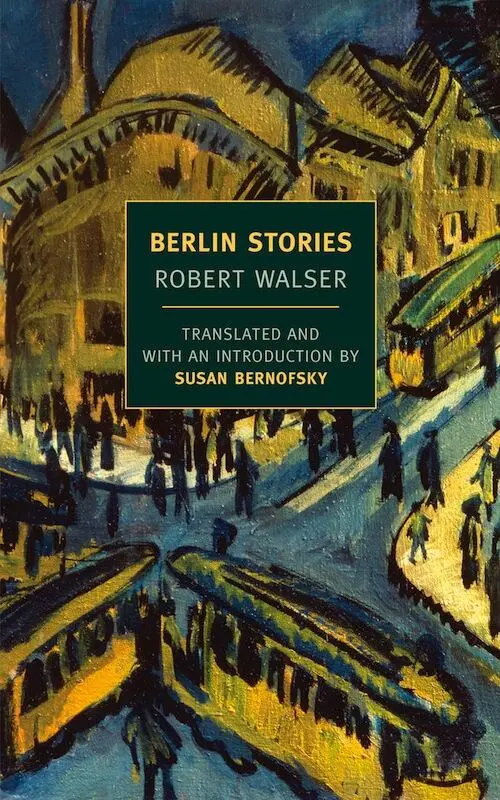
- Название:Berlin Stories
- Автор:
- Издательство:NYRB Classics
- Жанр:
- Год:2012
- ISBN:978-1590174548
- Рейтинг книги:4 / 5. Голосов: 1
-
Избранное:Добавить в избранное
- Отзывы:
-
Ваша оценка:
Berlin Stories: краткое содержание, описание и аннотация
Предлагаем к чтению аннотацию, описание, краткое содержание или предисловие (зависит от того, что написал сам автор книги «Berlin Stories»). Если вы не нашли необходимую информацию о книге — напишите в комментариях, мы постараемся отыскать её.
collects his alternately celebratory, droll, and satirical observations on every aspect of the bustling German capital, from its theaters, cabarets, painters’ galleries, and literary salons, to the metropolitan street, markets, the Tiergarten, rapid-service restaurants, and the electric tram. Originally appearing in literary magazines as well as the feuilleton sections of newspapers, the early stories are characterized by a joyous urgency and the generosity of an unconventional guide. Later pieces take the form of more personal reflections on the writing process, memories, and character studies. All are full of counter-intuitive images and vignettes of startling clarity, showcasing a unique talent for whom no detail was trivial, at grips with a city diving headlong into modernity.
Berlin Stories — читать онлайн бесплатно полную книгу (весь текст) целиком
Ниже представлен текст книги, разбитый по страницам. Система сохранения места последней прочитанной страницы, позволяет с удобством читать онлайн бесплатно книгу «Berlin Stories», без необходимости каждый раз заново искать на чём Вы остановились. Поставьте закладку, и сможете в любой момент перейти на страницу, на которой закончили чтение.
Интервал:
Закладка:
As for flower days in general, I would have to be a heartless rascal not to grasp at once the noble purport on which they rest, and therefore I leap forward as rapidly as possible and exclaim aloud: Yes, it is true, flower days are heavenly. They are not comical in the least, but have, to my feeling, a thoroughly noble and earnest character. Among us blokes or fellow beings, of course, there are still a few isolated and, it would seem, obstinate people who would scorn to wear, on a flower day, a day of peace and joy, a pleasure flower in their soul-buttonhole. We might hope that such people may soon learn better and nobler ways. As for me, as I may fortunately declare, I am radiant on flower days, with sheer flowery and flowerish satisfaction, and I am one of the most flower-encrusted persons among all those who are beautified, adorned, and beflowered. In a word, on such a Day of Plants I am like a swaying, tender plant, and on the charming Violet Day that soon is coming I shall, this I know for certain, appear in the world myself as a modest and secluded violet. For some magnanimous purpose I might even be able to transform myself into a daisy. In future, let anyone, I would here heartily plead, stick and wedge his buttercup between his lips, whether they be opened or grimly tight shut. Ears, too, are excellent props for flowers. On Cornflower Day I had stuck a cornflower behind each of my three ears, and it was most becoming. Ravishing, too, are roses, and the Rose Days soon to come. Let them descend upon me, those distinctive days, and I shall embellish my home with roses, and, sure as I’m a modern man and understand my epoch, I shall stick a rose in my nose. I can warm to Daisy Days most animatedly too, since any random fashion, absolutely any, makes of me a servant, a slave, or subject. Yet I am happy so.
Well, even then, such odd people, who lack character, have also to exist. The main thing is: I mean to enjoy my morsel of life as well and as long as I can, and if a person finds it amusing he’ll heartily go along with any kind of nonsense; but now I turn to the most beautiful subject of all — to women. For them, for them alone, the gracious flower days were invented, composed, poeticized. If a man wallows in flowers, it’s a bit unnatural; but in every way it befits a woman to put flowers in her hair and bring flowers to a man. Such a lady or virgin flower has only to make a sign, a gesture, and at once I hurl myself at her feet, ask her, my whole body trembling with joy, how much the flower costs, and I buy it from her. Then all pale in the face I breathe a glowing kiss upon her roguish little hand, and am prepared to surrender my life for her. Yes, indeed, in this manner, and others to match, I do behave on flower days. From time to time, to refresh myself, I plunge, it is true, into a snack hall and gulp down, there and then, a potted-meat sandwich. I adore potted meat, but I adore flowers too. There are now many things that I adore. All the same, one has to do one’s duty as a citizen, nobody should make a face, nobody think he has a right to pass the flower days off with a quiet smile. They are a fact of life; but one should respect facts. Should one really?
1911
Translated by Christopher Middleton
Fire
Even in a large city, the streets after a certain advanced hour of night are relatively still. What one hears and sees are apparitions and sounds to which both our eyes and our ears have long since grown accustomed. There are none of the usual sounds. People are at home, sitting around the cozy family table, or else in bars hunkered over their beers and political discussions, or in the concert hall, reverently listening to the pieces of music being performed, or at the theater, following the suspenseful goings-on upon the brightly lit stage, or else they are standing in pairs, or in groups of three or seven on some melancholy street corner, delving into profundities, or else perhaps aimlessly walking in some direction or other. “Hey there, car!” another cries out, and somewhere there might be a poet buried in his isolated room, drunkards wandering in wretched bliss from one still to another, bawling and harassing the passersby; perhaps a horse pulling a hackney cab is collapsing somewhere, a woman fainting, a scoundrel being apprehended by the always vigilant and safety-restoring police force — and suddenly someone shouts: “ Fire! ” Quite close by, it seems, a fire has broken out. People were just standing around, indecisive and bored, about to accuse the hour of lacking all interest and in any case starting to feel chilled, and suddenly here’s this great novelty being presented, something unexpected to kindle our enthusiasm. Everyone lurches forward and without realizing it has already begun a conversation with whoever happens to be standing alongside, cheeks are glowing, and now people are even starting to leap and run. They’re suddenly doing something they haven’t tried in a good two years. All at once the world appears changed, expanded, thicker, and more tangible.
A metropolis is a giant spiderweb of squares, streets, bridges, buildings, gardens, and wide, long avenues. When a fire breaks out, only the neighbors closest to the scene of the fire know of the conflagration. Indeed, in a huge city like this there can be three, four, or even five large fires in the course of a single night, far apart from one another, each one representing a disaster in its own right, an “event,” without one having even the slightest impact on the others: five suspenseful chapters of a novel, each of them self-contained, without links to the other. A metropolis is a wave-filled ocean that for the most part is still largely unknown to its own inhabitants, an impenetrable forest, an opulent, overgrown, huge, forgotten, or half-forgotten park, a thing that has been built up too extensively for it to ever again be oriented within itself. But now dozens of people are hurriedly racing to the scene of the fire. They now know approximately where the blaze is.
And now you turn a corner and the fire is right in front of you, it looks as if it wants to leap forward to greet you; an entire street is brightly, garishly lit up by it, it resembles a sunset in the distant south, ten evenings ablaze, a host of suns setting in unison. You see the façades of buildings looking like pale-yellow paper, and the bright red glow of the fire approaches, a thick, glowing, wounded red, and beside it the street lanterns look like feebly burning damp matches. And cries ring out. It seems as if trumpets are sounding everywhere, but this is a false impression, everything is relatively quiet, it’s just that you are running, and beside you, before you and behind, others are now loping as well, and hackney cabs are trotting past, and the electric tram passes by. There is something ordinary about all of this, yet at the same time something incomprehensible. Suddenly everyone stops short as if standing before a fairy tale. What now appears resembles a bomb effect dreamed up by an enterprising theater director.
A thick, seemingly incessant rain of small, light sparks and embers flies out of the dark air and down into the crowded street, sowing a crop of glowing snow. At just this moment a commuter train rolls past, and it too is soon entirely covered with this peculiar snow. People are standing there incautiously gazing up into the red-dotted sky without considering that a glowing, scalding hot snowflake might strike them in the eye. The coat of a gentleman who is just riding past on the tram catches fire. This tiny conflagration, however, causes no serious harm. Still it goes on raining in this unfamiliar, unprecedented way. Involuntarily you sense how very fortunate you are to still be capable of believing in a miracle out of the Thousand and One Nights . And indeed: we feel we have suddenly been transported to the Orient and the Arabian nights when we glimpse, right in front of us, a rosily shimmering fairy palace. It is perhaps a building whose architecture has been repeatedly criticized. But at this moment it isn’t clear which is more deserving of admiration: the charm of the Venetian illumination or the unsurpassedly beautiful architecture. This fiery glow is the consummate architect.
Читать дальшеИнтервал:
Закладка:
Похожие книги на «Berlin Stories»
Представляем Вашему вниманию похожие книги на «Berlin Stories» списком для выбора. Мы отобрали схожую по названию и смыслу литературу в надежде предоставить читателям больше вариантов отыскать новые, интересные, ещё непрочитанные произведения.










Обсуждение, отзывы о книге «Berlin Stories» и просто собственные мнения читателей. Оставьте ваши комментарии, напишите, что Вы думаете о произведении, его смысле или главных героях. Укажите что конкретно понравилось, а что нет, и почему Вы так считаете.