Gabriel Chevallier - Fear
Здесь есть возможность читать онлайн «Gabriel Chevallier - Fear» весь текст электронной книги совершенно бесплатно (целиком полную версию без сокращений). В некоторых случаях можно слушать аудио, скачать через торрент в формате fb2 и присутствует краткое содержание. Город: New York, Год выпуска: 2014, Издательство: New York Review Books, Жанр: Классическая проза, на английском языке. Описание произведения, (предисловие) а так же отзывы посетителей доступны на портале библиотеки ЛибКат.
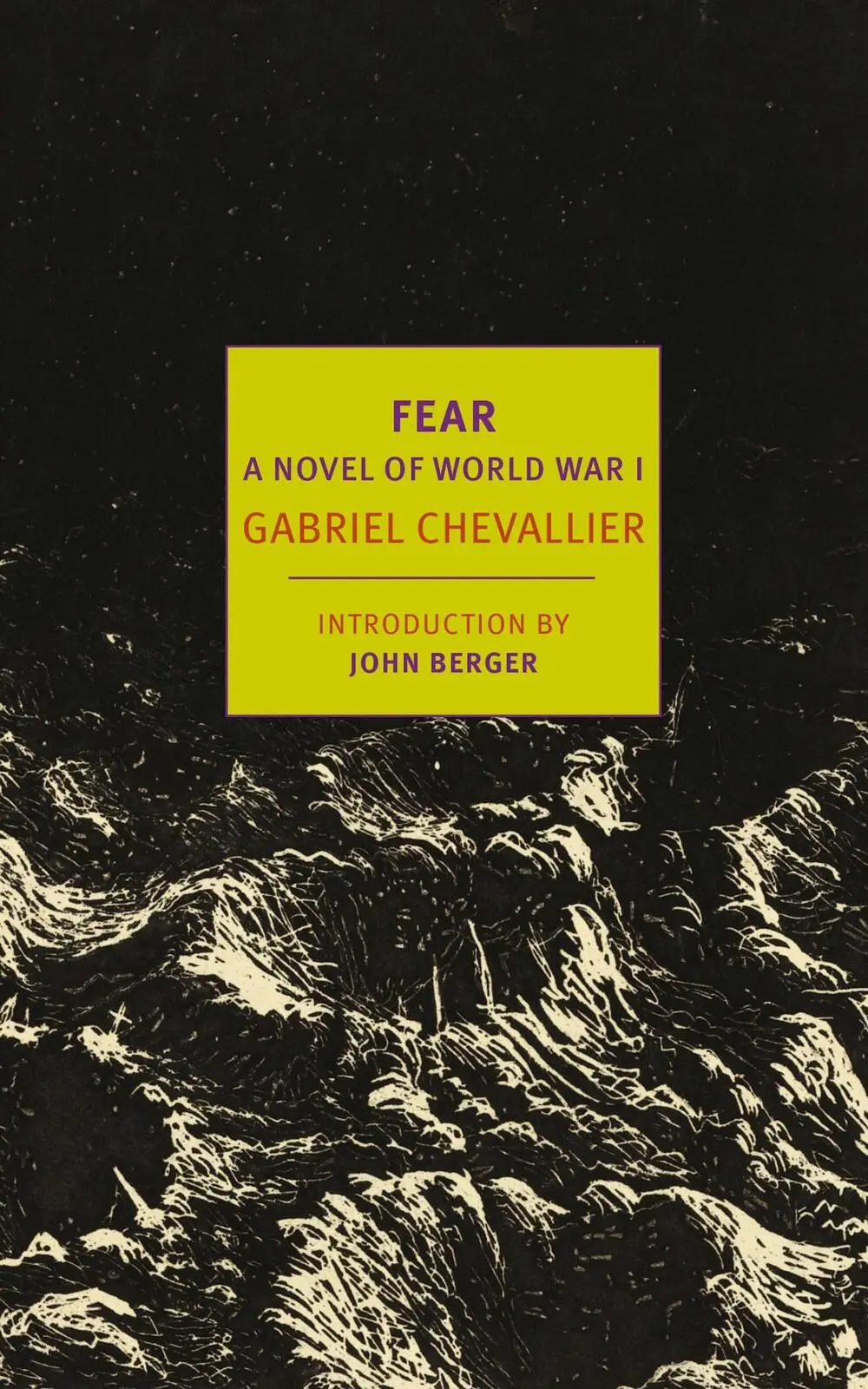
- Название:Fear
- Автор:
- Издательство:New York Review Books
- Жанр:
- Год:2014
- Город:New York
- ISBN:нет данных
- Рейтинг книги:3 / 5. Голосов: 1
-
Избранное:Добавить в избранное
- Отзывы:
-
Ваша оценка:
Fear: краткое содержание, описание и аннотация
Предлагаем к чтению аннотацию, описание, краткое содержание или предисловие (зависит от того, что написал сам автор книги «Fear»). Если вы не нашли необходимую информацию о книге — напишите в комментариях, мы постараемся отыскать её.
1915: Jean Dartemont heads off to the Great War, an eager conscript. The only thing he fears is missing the action. Soon, however, the vaunted “war to end all wars” seems like a war that will never end: whether mired in the trenches or going over the top, Jean finds himself caught in the midst of an unimaginable, unceasing slaughter. After he is wounded, he returns from the front to discover a world where no one knows or wants to know any of this. Both the public and the authorities go on talking about heroes — and sending more men to their graves. But Jean refuses to keep silent. He will speak the forbidden word. He will tell them about fear.
John Berger has called
“a book of the utmost urgency and relevance.” A literary masterpiece, it is also an essential and unforgettable reckoning with the terrible war that gave birth to a century of war.
Fear — читать онлайн бесплатно полную книгу (весь текст) целиком
Ниже представлен текст книги, разбитый по страницам. Система сохранения места последней прочитанной страницы, позволяет с удобством читать онлайн бесплатно книгу «Fear», без необходимости каждый раз заново искать на чём Вы остановились. Поставьте закладку, и сможете в любой момент перейти на страницу, на которой закончили чтение.
Интервал:
Закладка:
Now there is a second German in front of me, gaping with fear, open hands raised to his shoulders. OK, good, he’s surrendering, leave him be. Perhaps I should not have hurt the other one but he was taking aim at me when I was already only twenty metres away, the fool! And it all happened so fast!
I stare at the prisoner, my fury suddenly calmed, not knowing what to do. At that moment, a bayonet, forcefully thrust from above on the plain, goes through his throat, and sticks into the side of the trench, so that the rifle’s sights bang against the parapet. One of our men follows the weapon. The German remains suspended there, knees bent, mouth open, tongue hanging out, blocking the trench. It is ghastly. The one I stamped on is groaning. I step over him without looking down and get away as fast and far as I can.
Our assault wave has swarmed into the trench screaming. The poilus are like wild beasts in a cage. Chassignole shouts:
‘There’s one, over there! Let’s give him a lesson!’
Another soldier grabs at my arm, pulls me along and, pointing at a corpse, tells me proudly:
‘Look, that one was mine !’
It is an instinctive reaction, joyful savagery born of extreme stress. Fear has made us cruel. We need to kill to comfort ourselves and take revenge. Yet those Germans who escaped the first blows will come out of this unscathed. We cannot set upon unarmed enemies. We concentrate on rounding them up. From one sap where they had thought they’d die, twenty of them emerge, jabbering ‘ Kamerad !’ We notice their skin, green from terror and grey from malnutrition, their shifty, nervous glances like those of animals accustomed to ill-treatment, their excessive submissiveness. Our men push them about a bit, not with malice any more but with the astonished pride of conquerors. Naturally, we go through their pockets. We feel a degree of contempt for these pathetic enemies, a contempt that protects them:
‘So that’s all there is to the Boche!’
‘We really got the drop on them!’
The poilus all crowd round, eagerly searching for a bit of booty to calm their overexcitement. We expected more resistance and our fury suddenly has no object.
Lieutenant Larcher comes into the trench and gives orders to the sergeants:
‘Set up lookout positions straight away and post sentries. We must prepare to meet the counter-attack.’
‘Let them try, the bastards!’
Success has given us enormous strength and confidence. We feel extraordinarily resilient, which comes from our desire to live and our fierce will to defend ourselves. Our blood is up and right now, in broad daylight, we fear no man.
Our artillery is striking hard in front of us, to wipe out any reaction from the enemy. The German batteries haven’t shortened their range and continue to pound away at the positions we left. We are in a quiet zone. We take advantage of this to organise ourselves. Our fervour diminishes bit by bit, our courage vanishes like a drunkard’s stupor, anxiety about the future returns. The men demand to be relieved, since they have done what was expected of them. We are hoping we will be withdrawn from here tonight. But a lot of things can happen before nightfall.
The exhausted artillery has more or less ceased fire and there is no sign of the enemy. We take advantage of the calm to escort the prisoners to the rear. There are four of us to take fifty of them. They offer no resistance at all and on the contrary seem very happy with the way things have turned out, and keen to get safely under cover at last. No sap leads from the captured trench back to our positions. We have to cross the plain, in full view of the Germans, but we are shielded by their own men on whom they will not fire. This protection allows us to take a look around.
On ground that is still smoking, our men, who regained consciousness of reality along with pain, are lying, howling like beasts. They are pleading not to be left to die alone on this plateau that is now bathed by the warm rays of the sun, shining joyfully for men who are whole and happy. But we cannot help them before nightfall. Those who are less severely wounded drag themselves along on their broken limbs with desperate energy, driven by the horror of the battlefield and the lack of aid. In a shell-hole one of them manages to use his knife to cut off the last strips of flesh holding his foot, which is hampering his progress by getting caught in the rough terrain. We take him with us. The gravely wounded have their hands clenched over the gashes in their bodies from which their lives are pouring in fountains of blood, lives whose memories they are replaying behind closed eyes, talking to themselves in the gathering fog of death. Others lie stretched out and still, calmed, of no importance: dead, just identity tags that we remove from their wrists to add to the lists. We also find scattered limbs, an arm, a leg, inert objects. A grimacing head has rolled off on its own. Mechanically, we look around for a body with which to join it in our thoughts.
When we are about twenty metres from our trench, we signal to the prisoners to pick up and carry some of the wounded. Those at least will be saved if there is still enough life in them. Shells start to fall again in our vicinity.
Confusion reigns at the command post, the chaos that comes with critical moments. There is a constant coming and going of runners, stretcher-bearers and officers, everyone swopping contradictory news, good or awful, based on whatever remarks distracted men have made on the hoof and which the general anxiety has quickly twisted and exaggerated. The sap has been swamped by a unit of reinforcements, detached from another battalion, making a lot of racket because they are afraid they’ll have to join the battle. We push our way through this mob and get asked the same question as anyone who comes from outside:
‘Much damage?’
We reach the adjutant and give him Lieutenant Larcher’s report and the list of losses: a quarter of the men. We recognise the voice of the commandant, who has not left his little dugout; he is phoning through to tell of our success, his success. We find our comrades again. They tell us that Ricci is dead, and in a corner we see Pasquino, completely dazed, struck dumb by shell shock, sobbing hysterically, making sounds rather like a muffled kazoo from his throat, and waving his arms around to signify the unbearable, like an idiot.
We ask to take the Germans to the colonel ourselves. Permission is granted. Together with Frondet we set off quickly, bringing Pasquino along so we can leave him at the first-aid post. After passing over the wounded to stretcher-bearers, we take the main trench on the opposite slope. Mortar shells are landing on the plateau and shrapnel whistles over our heads. The prisoners flatten themselves on the ground, jostling each other and emitting guttural cries. We force them to get up and march calmly. We have no wish to show fear in front of them, especially as we envy their luck: the war is over for them and they will be better nourished with us than they were before. We also know we are in a dead angle and not in much danger.
The shellfire increases. 210s are methodically hammering the ravine and the access routes; the enemy is trying to cut off our communications.
At last we reach the colonel’s command post. We herd the prisoners into the cave where they are immediately surrounded by curious onlookers, and we go to tell an NCO of their arrival. Then we make ourselves scarce as fast as we can so no one can give us a mission that would oblige us to go out again during the intensifying bombardment. We are trying to gain time, as much time as possible.
We find the corner where all the cyclists, batmen and cooks from HQ are waiting. They ask us questions, give us food and drink, offer us cigarettes; they cover us in kindness, atoning for the safety that they are lucky enough to have. Their company has a soporific affect on us. We listen to the distant noise of shells above the thick vault that protects us: the thought of going back out there frightens us terribly. We shuffle about indecisively for a couple of hours, waiting for a lull, and sometimes approach the exit then go back in again. The cave is packed with men like us who have found shelter here and are putting off the moment when they must expose themselves once more. You can tell them by their worried air.
Читать дальшеИнтервал:
Закладка:
Похожие книги на «Fear»
Представляем Вашему вниманию похожие книги на «Fear» списком для выбора. Мы отобрали схожую по названию и смыслу литературу в надежде предоставить читателям больше вариантов отыскать новые, интересные, ещё непрочитанные произведения.







Обсуждение, отзывы о книге «Fear» и просто собственные мнения читателей. Оставьте ваши комментарии, напишите, что Вы думаете о произведении, его смысле или главных героях. Укажите что конкретно понравилось, а что нет, и почему Вы так считаете.