Sandor Marai - The Rebels
Здесь есть возможность читать онлайн «Sandor Marai - The Rebels» весь текст электронной книги совершенно бесплатно (целиком полную версию без сокращений). В некоторых случаях можно слушать аудио, скачать через торрент в формате fb2 и присутствует краткое содержание. Год выпуска: 2004, ISBN: 2004, Издательство: Knopf Doubleday Publishing Group, Жанр: Классическая проза, на английском языке. Описание произведения, (предисловие) а так же отзывы посетителей доступны на портале библиотеки ЛибКат.
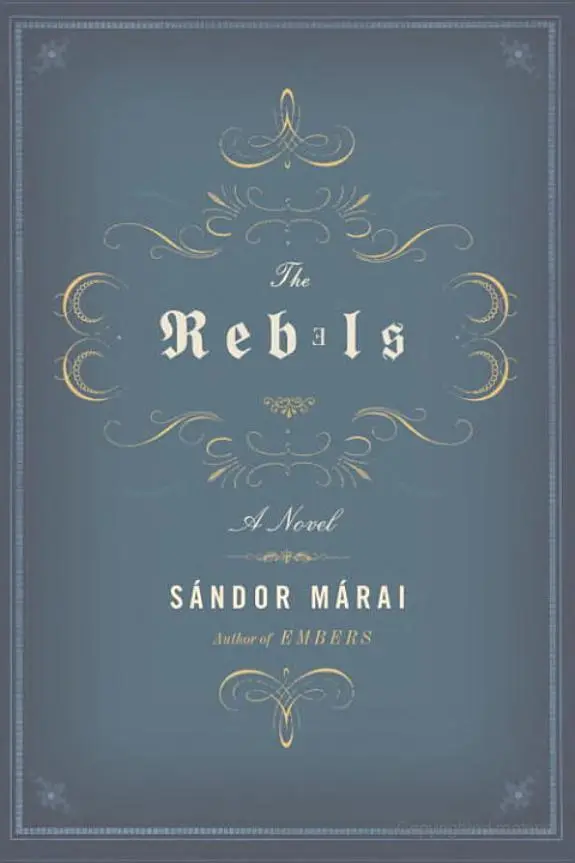
- Название:The Rebels
- Автор:
- Издательство:Knopf Doubleday Publishing Group
- Жанр:
- Год:2004
- ISBN:9780307267405
- Рейтинг книги:3 / 5. Голосов: 1
-
Избранное:Добавить в избранное
- Отзывы:
-
Ваша оценка:
The Rebels: краткое содержание, описание и аннотация
Предлагаем к чтению аннотацию, описание, краткое содержание или предисловие (зависит от того, что написал сам автор книги «The Rebels»). Если вы не нашли необходимую информацию о книге — напишите в комментариях, мы постараемся отыскать её.
is a haunting story of a group of alienated boys on the cusp of adult life—and possibly death—during World War I.
It is the summer of 1918, and four boys approaching graduation are living in a ghost town bereft of fathers, uncles, and older brothers, who are off fighting at the front. The boys know they will very soon be sent to join their elders, and in their final weeks of freedom they begin acting out their frustrations and fears in a series of subversive games and petty thefts. But when they attract the attention of a stranger in town—an actor with a traveling theater company—their games, and their lives, begin to move in a direction they could not have predicted and cannot control, and one that reveals them to be strangers to one another. Resisting and defying adulthood, they find themselves still subject to its baffling power even in their attempted rebellion.
The Rebels — читать онлайн бесплатно полную книгу (весь текст) целиком
Ниже представлен текст книги, разбитый по страницам. Система сохранения места последней прочитанной страницы, позволяет с удобством читать онлайн бесплатно книгу «The Rebels», без необходимости каждый раз заново искать на чём Вы остановились. Поставьте закладку, и сможете в любой момент перейти на страницу, на которой закончили чтение.
Интервал:
Закладка:
“You have aged, my child. You have distinctly aged recently. Suffering adds years.”
He carefully brushed the wig into a center parting.
“I thought it might be appropriate as a kind of valedictory gesture,” he said. “We could, of course, go and visit the girls too. Or make our way over to the Petõfi café.”
He wound a little cotton wool round the end of a match and looked for some glasses.
“Now face the mirror. I’m beginning to see what you will look like in thirty years’ time. Remember me then.”
With a sudden movement he clapped the wig onto Ábel’s head the way a hypnotist might put to sleep some volunteer from the audience using no more than a simple hand gesture. Ábel was immediately transformed. An old man stared back at him and the rest of the gang from the mirror. Aged brows clouded over startled eyes. The actor began to attend to the eye region with his stick of charcoal.
“What I’ve imagined is a little celebration…a celebration of us all that you won’t forget. We did once talk of appearing on stage together in full costume, and everyone would say whatever came into his head. A kind of show for art lovers only…with everyone taking responsibility for himself. We’ll give them a proper show all right.”
So saying he stuck a small graying goatee on Ábel’s chin, tore it off again, and tried muttonchop whiskers instead.
“The moment is here. You can have the run of the entire costume cupboard. We have the stage complete with scenery. The auditorium is empty. We are performing only for ourselves. I have ensured that we will be left in peace till the morning.”
He gave a smile of mild amusement. He settled on the muttonchops and stuck two gray streaks of hair next to the ears. The sweet smell of mastic filled the room.
“Well, one could do worse,” he said examining his work on Ábel with satisfaction. “The lips are narrow…let’s add a little disappointment. And some doubt. And here…do excuse me, darling, I’m almost done…a little pride, a little canniness.”
Each time his hand moved Ábel changed a little more, becoming ever less recognizable. They stood behind him and watched.
“It’s not magic, it’s not witchcraft,” the actor declared as with a few very rapid strokes of the brush and the charcoal he emphasized one or two features and blurred some sharp lines.
“We haven’t sold our souls to the devil…”
He ran a brush right through the eyebrows.
“It’s just manual skill and expertise. Wind the clock forward thirty years and…here we are!”
He stuck the towel under his arm and the comb by his ear and made a great bow, like Figaro in the opera.
“My compliments to you, gentlemen. Next please.”
Ábel stood up uncertainly. The little circle behind him backed away. The actor was already considering Ernõ.
“Cold heart, green bile,” he chanted. “Sting of conspirator, serpent’s tongue, you can already see the vague trace of a hump on his back. You will always be freckled.”
He pressed Ernõ into the chair in front of the mirror. Ábel stood in a corner, his arms folded. He felt a great calm. He was wearing a mask and that was reassuring. A man could live behind a mask and think what he liked. Tibor watched him with a superior smile. They laughed and surrounded him, the one-armed one sniffing curiously at Ábel, taking a tour of him. The mask looked solid and reliable. Tibor stared at him with round eyes. Ábel laughed and he could see from his friends’ faces that his laugh had changed too: they were looking at him with serious expressions, with genuine admiration.
“Let us hurry nature on a bit,” said the actor, who was giving his full attention to Ernõ now. “Let us correct her. That’s all it is. I merely bring out what is mature in you,” he said, fitting a red wig on Ernõ’s head. “If he looks like an adult, well, let him be an adult,” and so saying he covered the freckled band above Ernõ’s upper lip with a deep-red mustache.
“Let him bear the consequences of his adulthood. The brush in a master’s hand is led by instinct, but he has his three advisers: Learning, Observation, and Experience. You are a hunchback, I tell you.” With both hands he seized Ernõ’s temples, bent his head back, and stared deep into his eyes.
“The head of a monster. I shall now strip you of your skin and replace it with a new one, the shed skin of a snake.” He pressed down Ernõ’s eyelids with his thumbs and gave the rest of the gang a wink in the mirror.
AS ONE AFTER ANOTHER THE ACTORS RETIRED TOthe “dressing room,” they examined each other suspiciously, but not one stood in front of the mirror. It is extraordinary how quickly people get used to their new appearances. It was a shame the costumes didn’t quite fit them: some were too big and their hands and feet were lost in the folds of their garments. But within a few moments they had grown taller and fatter. Ernõ stood at the table, leaning on his stick. His sharp hump rose under his ample old-fashioned cloak; his red hair fell in straggly locks across his brow from beneath his tall top hat; his old-fashioned frock coat and silk knee breeches hung awkwardly on his thin frame. Next to his nose a thick, hairy wart sprouted. His heavily ringed tiny eyes danced nervously, blending confusion, resentment, and obstinacy, and his mouth was twisted into a bitter grimace of suffering.
“Life has taught me to prize truth, the truth above all,” said Ábel, his voice low and severe.
“Button your trousers,” replied Ernõ.
They had dressed somewhat carelessly in their hurry. Ábel drew the red robe close around him. Béla, a half-naked Spanish sailor with a headscarf and locks flirtatiously plastered next to his ears, sat on the windowsill, hands on hips. The one-armed one was lost in the folds of his toga. He sat on the table, dangling his bare sandaled feet, a band round his head. He stared straight ahead, with a haughty, wounded look, and the pride of Mucius Scaevola who had sacrificed one arm for the state but had his own independent opinion on everything.
“To me, Rome is…,” he was saying.
They paced restlessly up and down in their narrow cage. They were puzzling out their as yet unknown roles and trying hard not to notice Tibor.
Colonel Prockauer’s son was leaning into the mirror, as charmed by what he saw there as Narcissus had once been. Two long blond bunches of hair hung in front of his shoulders, the high-waisted silk dress tight around him as he raised the long loose train skirt with one hand and crossed his silk-stockinged legs with their lacquer-shod feet. Under the deep décolletage his well-formed breasts, created by the actor out of two towels, heaved and rose with each breath he took. His arms, his neck, and chest were sticky with thick white powder. The actor’s fingers had magically elongated his eyelashes, and his adolescent spots were masked by a pink blusher the actor had gently brushed and puffed across his cheeks.
You couldn’t really tell, not at a glance anyway, whether he was woman or girl. Ernõ circled him warily, raising his top hat and muttering incomprehensible compliments to him. Tibor responded with a smile, then immediately turned back to re-enter the spell of the mirror. He tried a few steps, holding his skirt high. The wig was hot and smelled foul.
“I’m sweating like a pig,” he declared in a deep voice that was not his own.
Ernõ offered his arm. The one-armed one cut in.
“I have only one arm, sweet damsel,” he said, “but it is strong and you can cling to it.”
Ábel opened the window. Hot air poured in along with the heavy milky scent of earth. They stood silently, the open window reminding them of reality, of the houses in the square, and of people who might be spying on them from afar. They looked at each other and couldn’t bring themselves to laugh. They were overwhelmed by the consciousness of their utter complicity, the tremulous joy of belonging, the delight of pulling a huge ridiculous face at the sleeping world, behind its unsuspecting back, perhaps for the last time. For the last time perhaps the actor held together the ropes that bound them. Their shared memories, the spirit of rebellion, everything that united them: their common hatred of a world as incomprehensible and unlikely as their own, as ignorant of itself and as false, all flashed before their eyes. And the ties of friendship too: its anxieties and longings, the sad effects of such anxiety still evident in their eyes. Tibor raised his skirt and spun round, astonished at himself.
Читать дальшеИнтервал:
Закладка:
Похожие книги на «The Rebels»
Представляем Вашему вниманию похожие книги на «The Rebels» списком для выбора. Мы отобрали схожую по названию и смыслу литературу в надежде предоставить читателям больше вариантов отыскать новые, интересные, ещё непрочитанные произведения.





Обсуждение, отзывы о книге «The Rebels» и просто собственные мнения читателей. Оставьте ваши комментарии, напишите, что Вы думаете о произведении, его смысле или главных героях. Укажите что конкретно понравилось, а что нет, и почему Вы так считаете.