Pearl Buck - Bridge for Passing
Здесь есть возможность читать онлайн «Pearl Buck - Bridge for Passing» весь текст электронной книги совершенно бесплатно (целиком полную версию без сокращений). В некоторых случаях можно слушать аудио, скачать через торрент в формате fb2 и присутствует краткое содержание. Год выпуска: 2013, Издательство: Open Road Media, Жанр: Классическая проза, Биографии и Мемуары, на английском языке. Описание произведения, (предисловие) а так же отзывы посетителей доступны на портале библиотеки ЛибКат.
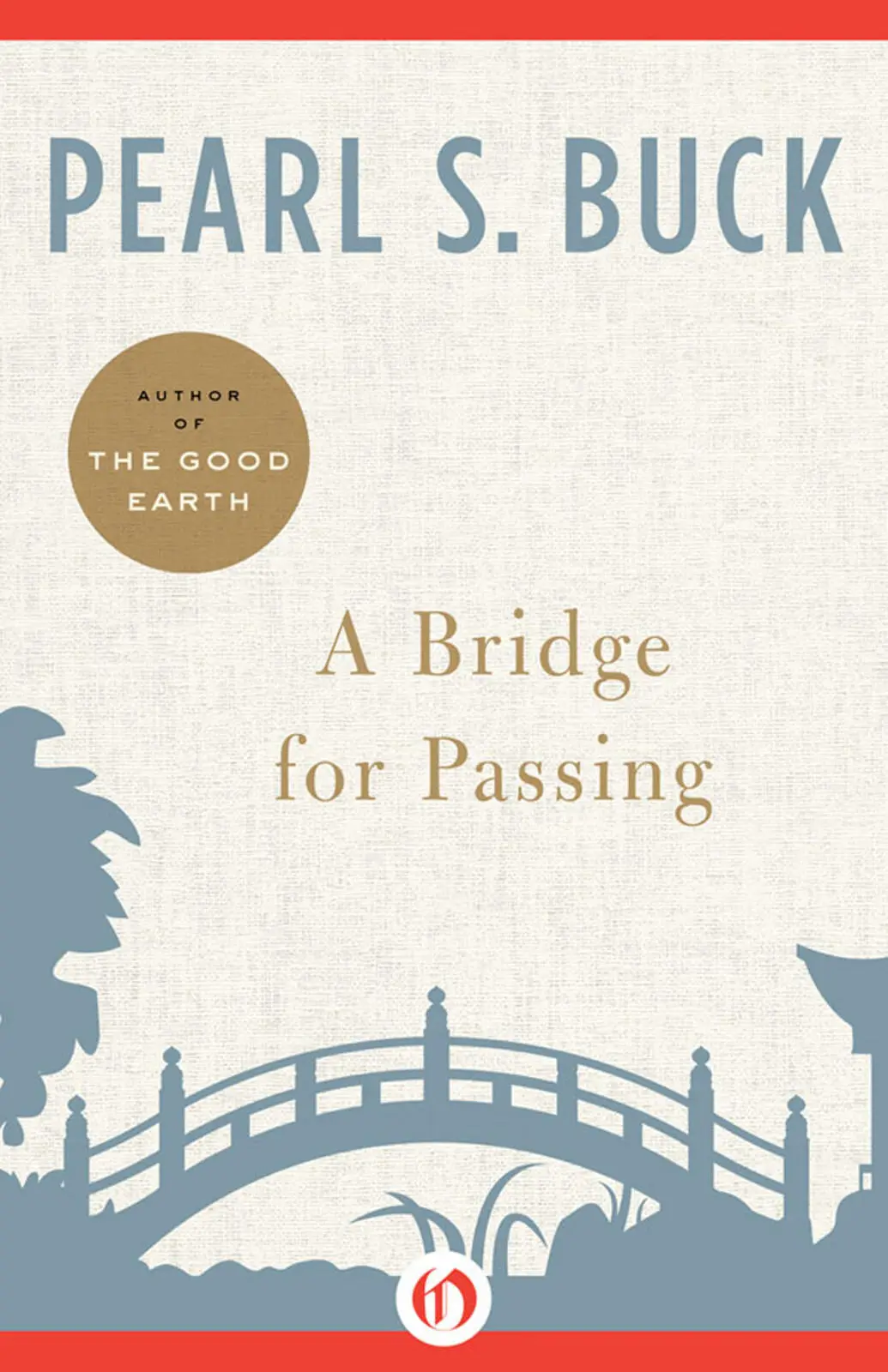
- Название:Bridge for Passing
- Автор:
- Издательство:Open Road Media
- Жанр:
- Год:2013
- ISBN:нет данных
- Рейтинг книги:3 / 5. Голосов: 1
-
Избранное:Добавить в избранное
- Отзывы:
-
Ваша оценка:
Bridge for Passing: краткое содержание, описание и аннотация
Предлагаем к чтению аннотацию, описание, краткое содержание или предисловие (зависит от того, что написал сам автор книги «Bridge for Passing»). Если вы не нашли необходимую информацию о книге — напишите в комментариях, мы постараемся отыскать её.
Bridge for Passing — читать онлайн бесплатно полную книгу (весь текст) целиком
Ниже представлен текст книги, разбитый по страницам. Система сохранения места последней прочитанной страницы, позволяет с удобством читать онлайн бесплатно книгу «Bridge for Passing», без необходимости каждый раз заново искать на чём Вы остановились. Поставьте закладку, и сможете в любой момент перейти на страницу, на которой закончили чтение.
Интервал:
Закладка:
The immense stage, the enormous cast, the splendor of the costumes and the extraordinary lighting made me realize again in contrast the cramped and narrow stage of Broadway. Year by year theater there has been compressed and diminished simply because of the cost of putting on a play. A great art is being strangled by craftsmen and mechanics in unions. Playwrights, directors and actors have offered a cut in their earnings but there is no such willingness on the part of the union workmen. I lingered after the play in the Kabuki Theater that evening and talked about it with Japanese friends over a bowl of tea. They had visited New York and they maintained that Japanese theater could never suffer such disaster. “We love art too well,” they said. “We realize the spiritual and emotional benefits of art. Even our workmen realize this, and they would never destroy such an important part of our life merely for the sake of personal greed.”
I hope they are right.
It was long past midnight when I reached my hotel rooms. When I was ready for bed, I went to the window as is my habit wherever I am in the world before I sleep, and looked out over the quiet city. An old moon hung crookedly in the sky, and its pale light shone down upon the roofs. At this moment, I felt again the deep inner quiver of an earthquake. It began as a tremor and then rose into a rolling motion. A picture fell, books slipped from the desk, a bowl of flowers crashed to the floor. I clung to the window sill and felt my heart pound against my ribs. Was this to be dangerous …? No. … The earth grew still again. Only the moon hung there, unchanged and fixed. I waited a few minutes more, then put the books into place and filled the bowl with water for the flowers.
It was long before I could sleep. The earth tremor had somehow shaken the roots of my temporary world. I recognize the need in myself for roots. I suppose it is the result of my childhood in China. Well as I loved that country and must always so love it, nevertheless I was at the same time always aware of the turmoil over which we lived, the possibility that at any moment the angers and discontents existing for centuries against the western peoples might flame into crises in which we, innocent as we were individually, might lose our lives, as indeed we very nearly did and more than once. Perhaps this childhood remembrance of ever present uncertainty, over which I had no more control than a leaf in a storm, has always haunted me — or did until he came. Now that he was gone, the old subterranean awareness of danger returned again.
He had no such dark shadows. Resolutely cheerful, naturally gay, he never expected or suspected catastrophe. When compelled by the fact, he had an odd habit of deciding when he would face it. The method was simple but absolute. He marshaled all the blackest possibilities and wrote them down in his clear firm handwriting. Then he took from his desk his father’s large gold watch and decided upon the day and the hour when he would attack the total problem. It was always at the last possible moment. Until it came, he was his usual charming self. He always found solution, or at least escape, and if the latter, it was not by any of the Chinese thirty-six ways. He never ran away.
I had come to depend very much on his genius for dealing with the improbable, for solving the insoluble and achieving the impossible and this always without the help of friends. He had friends beyond number, high and low, some of them among the wealthiest men in the world, others poor. The wealthy did not help him in the two financial crises of his life. He weathered his crises alone and triumphantly. The poor borrowed money from him without shame. To my indignation, distributed on rich and poor alike, he maintained a smiling indifference.
“They mean no harm,” he would say.
I hated the earthquake. It roused old fears and old fears reminded me again that his unshakable good humor, his cheerful pessimism, his flashes of impatience, his affectionate cynicism toward mankind, above all his gay acceptance of life as he found it were now no more. The old uncertainty was with me again, and forever.
The most modern theater, by way of contrast to Kabuki, was more of a shock than even I could take. It came about in this manner. We went one day to the production manager with a list of our tentative characters. We entered his office, preceded by a pretty girl, and found him that morning businesslike and dignified. The jovial man about town had totally disappeared. He delayed a proper time to show how busy he was and perhaps how important, and we knew he was both busy and important and we sat waiting. Tea appeared but the production manager was still busy. Finally he joined us and we gave him our list of actors. He pointed immediately to two doubtful names. He could not speak English at all that morning, it seemed. The pretty girl interpreting, he said that he merely suggested, he was not directing — this with a bitter look at the American — but we should make better choices for the two leading men than we had done. We agreed promptly but reminded him that the man we wanted most had not been released to us by his firm. Hearing this, he got up, walked around, rubbed his head, groaned loudly several times and talked through three telephones at once. Nothing happened except no — no — no — from three directions. He attached a pretty girl to a fourth telephone, sat behind his desk, and twisted his hair in both hands and groaned again. Then he knocked himself on the head with clenched fists and turned to us, beaming. He had an idea. The final performance of Japanese rock-and-roll singers and musicians was taking place at that very instant in his own rock-and-roll theater. He would accompany us there, we could see all the best rock-and-roll young men and we could then take our choice. He would command any whom we chose to be our actors. They would listen to him. “I am big producer,” he said loudly and now in English.
We agreed with alacrity, he plunged ahead, a behemoth but amiable, and we followed to be packed into cars and delivered at the theater. It was a huge place, and when I was led to a seat in a box, the last and only seat in the enormous theater and reserved, of course, for the production manager himself, I was simply stunned by what I saw. All the teen-agers in Japan were assembled there, or so it seemed, certainly thousands and thousands of them.
I sat and stared at stage and audience alike. This was indeed a Japan new to me, rock-and-roll, dancing girls and singing boys, American songs, western songs sung in English, and only a very few Japanese songs. The girls screamed just as they do in my own country, and they sounded just as silly. What is this affliction of the young, spreading from land to land? Thousands upon thousands of young Japanese — oh, very young — the performers are in their teens or barely out of them, and very young girls in skirts and blouses ran out from the audience to hang wreaths of paper flowers and paper streamers on their male favorites. Only one girl sang, a handsome girl of eighteen with an excellent voice.
“What do the parents think of this?” I asked the production manager.
“It disgusts them,” he said, “but what can they do?” What can they do indeed, here or anywhere! Our business, however, was to find actors. After the grand finale we went downstairs into a small hot room and interviewed three or four young men viewed on the stage through opera glasses as possibilities. We were hopeful, for they sang in English so well that we were led to think they might speak English. Such was not the case. The only sentence they spoke well was the same one. “I cannot speak English,” and they had each studied English six years in school. Then we found one bright exception, a gentle-faced boy who is called the Eddie Fisher of Japan. He spoke beautiful English. The explanation was that his mother was half-English and he had learned at home. We asked him to come the next morning for an audition.
Читать дальшеИнтервал:
Закладка:
Похожие книги на «Bridge for Passing»
Представляем Вашему вниманию похожие книги на «Bridge for Passing» списком для выбора. Мы отобрали схожую по названию и смыслу литературу в надежде предоставить читателям больше вариантов отыскать новые, интересные, ещё непрочитанные произведения.











Обсуждение, отзывы о книге «Bridge for Passing» и просто собственные мнения читателей. Оставьте ваши комментарии, напишите, что Вы думаете о произведении, его смысле или главных героях. Укажите что конкретно понравилось, а что нет, и почему Вы так считаете.