William Faulkner - Mosquitoes
Здесь есть возможность читать онлайн «William Faulkner - Mosquitoes» весь текст электронной книги совершенно бесплатно (целиком полную версию без сокращений). В некоторых случаях можно слушать аудио, скачать через торрент в формате fb2 и присутствует краткое содержание. Год выпуска: 2012, ISBN: 2012, Издательство: HarperCollins Canada, Жанр: Классическая проза, на английском языке. Описание произведения, (предисловие) а так же отзывы посетителей доступны на портале библиотеки ЛибКат.
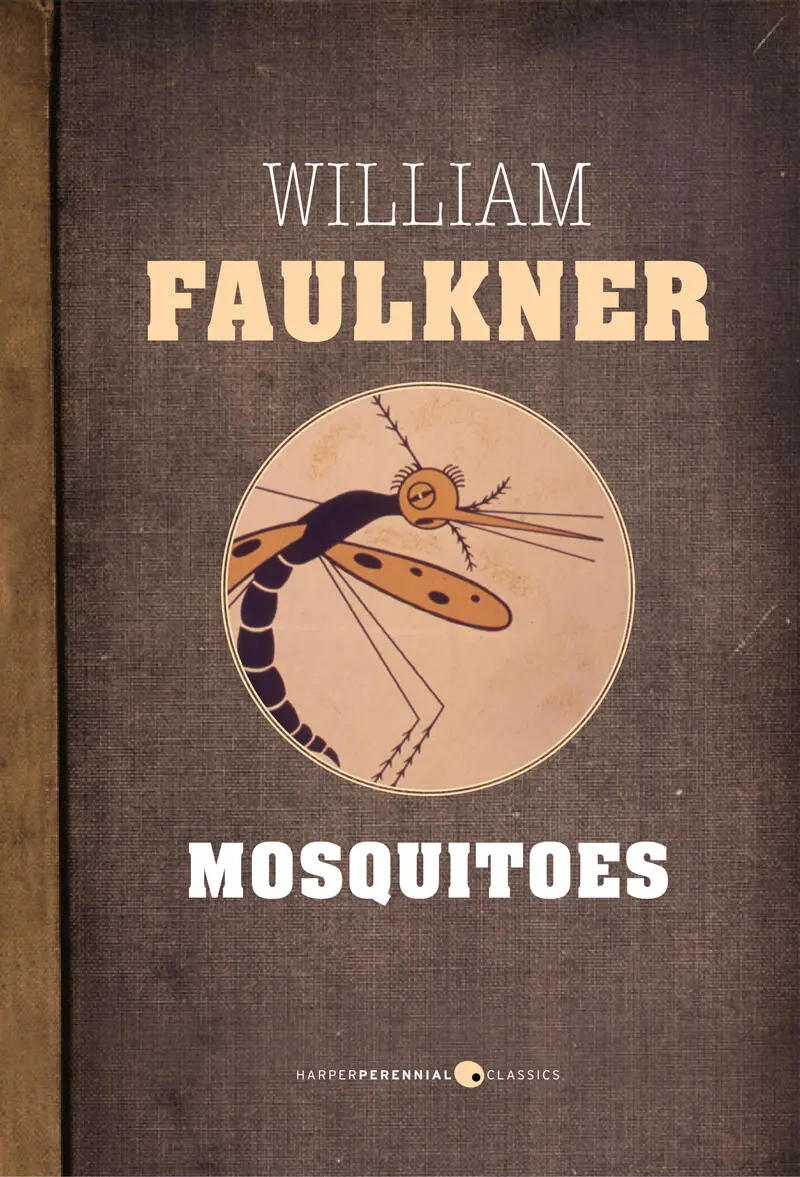
- Название:Mosquitoes
- Автор:
- Издательство:HarperCollins Canada
- Жанр:
- Год:2012
- ISBN:9781443421157
- Рейтинг книги:3 / 5. Голосов: 1
-
Избранное:Добавить в избранное
- Отзывы:
-
Ваша оценка:
Mosquitoes: краткое содержание, описание и аннотация
Предлагаем к чтению аннотацию, описание, краткое содержание или предисловие (зависит от того, что написал сам автор книги «Mosquitoes»). Если вы не нашли необходимую информацию о книге — напишите в комментариях, мы постараемся отыскать её.
explores gender and societal roles, sexual tension, and unrequited love as Faulkner delves into what it means to be an artist.
Faulkner’s second novel,
was first published in 1927, but did not receive any critical response until his literary reputation was well-established.
Mosquitoes — читать онлайн бесплатно полную книгу (весь текст) целиком
Ниже представлен текст книги, разбитый по страницам. Система сохранения места последней прочитанной страницы, позволяет с удобством читать онлайн бесплатно книгу «Mosquitoes», без необходимости каждый раз заново искать на чём Вы остановились. Поставьте закладку, и сможете в любой момент перейти на страницу, на которой закончили чтение.
Интервал:
Закладка:
“Well, I just mentioned it because I promised,” the niece repeated soothingly.
* * *
Mrs. Maurier, Jenny, and the niece had disappeared, to Mr. Talliaferro’s mixed relief. They still had two left, however. They took turn about with them.
Major Ayers, Fairchild, and the Semitic man rushed below again. Mr. Talliaferro following openly this time, and a trifle erratically.
“How’s it coming along?” Fairchild asked, poising the bottle. Mr. Talliaferro made a wet deprecating sound, glancing at the other two. They regarded him with kindly interest. “Oh, they’re all right,” Fairchild reassured him. “They are as anxious to see you put it over as I am.” He set the bottle down well within reach, and gulped at his glass. “I tell you what, it’s boldness that does the trick with women, ain’t it, Major?”
“Right you are. Boldness: dash in; take ’em by storm.”
“Sure. That’s what you want to do. Have another drink.” He filled Mr. Talliaferro’s glass.
“That’s my plan, exactly. Boldness. Boldness. Boldness.” Mr. Talliaferro stared at the other glassily. He tried to wink. “Didn’t you see me dancing with her?”
“Yes, but that ain’t bold enough. If I were you, if I were doing it, I’d turn the trick tonight, now. Say, Julius, you know what I’d do? I’d go right to her room: walk right in. He’s been dancing with her and talking to her: ground already broken, you see. I bet she’s in there right now, waiting for him, hoping he is bold enough to come in to her. He’ll feel pretty cheap tomorrow when he finds he missed his chance, won’t he? You never have but one chance with a woman, you know. If you fail her then, she’s done with you — the next man that comes along gets her without a struggle. It ain’t the man a woman cares for that reaps the harvest of passion, you know: it’s the next man that comes along after she’s lost the other one. I’d sure hate to think I’d been doing work for somebody else to get the benefit of. Wouldn’t you?”
Mr. Talliaferro stared at him. He swallowed twice. “But suppose, just suppose, that she isn’t expecting me.”
“Oh, sure. Of course, you’ve got to take that risk. It would take a bold man, anyway, to walk right in her room, walk right in without knocking and go straight to the bed. But how many women would resist? I wouldn’t, if I were a woman. If you were her, Talliaferro, would you resist? I’ve found,” he went on, “that boldness gets pretty near anything, in this world, especially women. But it takes a bold man. . Say, I bet Major Ayers would do it.”
“Right you are. I’d walk right in, by Jove. . I say, I think I shall, anyway. Which one is it? Not the old one?”
“All right. That is, if Talliaferro don’t want to do it. He has first shot, you know: he’s done all the heavy preparatory work. But it takes a bold man.”
“Oh, Talliaferro’s bold as any man,” the Semitic man said.
“But, really,” Mr. Talliaferro repeated, “suppose she isn’t expecting me. Suppose she were to call out — No, no.”
“Yes, Talliaferro ain’t bold enough. We better let Major Ayers go, after all. No necessity for disappointing the girl, at least.”
“Besides,” Mr. Talliaferro added quickly, “she is in a room with someone else.”
“No, she ain’t. She’s in a room to herself, now; that one at the end of the hall.”
“That’s Mrs. Maurier’s room,” Mr. Talliaferro said, staring at him.
“No, no; she changed. That room has a broken screen, so she changed. Julius and I were helping her move this afternoon. Weren’t we, Julius? That’s how I happen to know Jenny’s in there now.”
“But, really—” Mr. Talliaferro swallowed again. “Are you sure that’s her room? This is a serious matter, you know.”
“Have another drink,” Fairchild said.
TWELVE O’CLOCK
The deck was deserted. Fairchild and Major Ayers halted and gazed about in pained astonishment. The Victrola was hooded and mute, smugly inscrutable. They held a hurried council, then they set forth to beat up stragglers. There were no stragglers.
“Put on a record,” Fairchild suggested at last. “Maybe that’ll get ’em up here. They must have thought we’d gone to bed.”
The Semitic man started the Victrola again, and again Major Ayers and Fairchild combed the deck in vain. The moon had risen, its bony erstwhile disc was thumbed into the sky like a coin after too much handling.
* * *
Mrs. Maurier routed out the captain and together they repaired to Fairchild’s room. “Find it all,” she directed, “every single one.” The captain found it all. “Now, open that window.”
She gave the captain further directions, when they had finished, and she returned to her room and sat again on the edge of her bed. Moonlight came into the room level as a lance through the port, like a marble pencil shattering and filling the room with a thin silver dust, as of marble. “It has come, at last,” she whispered, aware of her body, heavy and soft with years. I should feel happy, I should feel happy, she told herself, but her limbs felt chill and strange to her and within her a terrible thing was swelling, a thing terrible and poisonous and released, like water that has been dammed too long: it was as though there were waking within her comfortable, long familiar body a thing that abode there dormant and which she had harbored unaware.
She sat on the edge of her bed, feeling her strange chill limbs, while that swelling thing within her unfolded like an intricate poisonous flower, an intricate slow convolvulae of petals that grew and faded, died and were replaced by other petals huger and more implacable. Her limbs were strange and cold: they were trembling. That dark flower of laughter, that secret hideous flower grew and grew until that entire world which was herself was become a slow implacable swirling of hysteria that rose in her throat and shook it as though with a myriad small hands while from overhead there came a thin saccharine strain spaced off by a heavy thumping of feet, where Fairchild was teaching Major Ayers the Charleston.
And soon, another sound; and the Nausikaa trembled and pulsed, girding herself with motion.
* * *
Mr. Talliaferro stood in the bows, letting the wind blow upon his face, amid his hair. The worn moon had risen and she spread her boneless hand upon the ceaseless water, and the cold remote stars swung overhead, cold and remote and incurious: what cared they for the haggard despair in his face, for the hushed despair in his heart? They had seen too much of human moiling and indecision and astonishments to be concerned over the fact that Mr. Talliaferro had got himself engaged to marry again.
. . Soon, a sound; and the Nausikaa trembled and pulsed, girding herself with motion.
* * *
Suddenly Fairchild stopped, raising his hand for silence.
“What’s that?” he asked.
“What’s what?” responded Major Ayers, pausing also and staring at him.
“I thought I heard something fall into the water.” He crossed to the rail and leaned over it. Major Ayers followed him and they listened. But the dark restless water was untroubled by any foreign sound, the night was calm, islanding the worn bland disc of the moon.
“Steward throwing out grapefruit,” Major Ayers suggested at last. They turned away.
“Hope so,” Fairchild said. “Start her up again, Julius.”
And, soon, another sound; and the Nausikaa trembled and pulsed, girding herself with motion.
Epilogue
1
Lake water had done strange things to Jenny’s little green dress. It was rough-dried and draggled, and it had kind of sagged here and drawn up there. The skirt in the back, for instance; because now between the gracious miniature ballooning of its hem and the tops of her dingy stockings, you saw pink flesh.
Читать дальшеИнтервал:
Закладка:
Похожие книги на «Mosquitoes»
Представляем Вашему вниманию похожие книги на «Mosquitoes» списком для выбора. Мы отобрали схожую по названию и смыслу литературу в надежде предоставить читателям больше вариантов отыскать новые, интересные, ещё непрочитанные произведения.





Обсуждение, отзывы о книге «Mosquitoes» и просто собственные мнения читателей. Оставьте ваши комментарии, напишите, что Вы думаете о произведении, его смысле или главных героях. Укажите что конкретно понравилось, а что нет, и почему Вы так считаете.