William Faulkner - Mosquitoes
Здесь есть возможность читать онлайн «William Faulkner - Mosquitoes» весь текст электронной книги совершенно бесплатно (целиком полную версию без сокращений). В некоторых случаях можно слушать аудио, скачать через торрент в формате fb2 и присутствует краткое содержание. Год выпуска: 2012, ISBN: 2012, Издательство: HarperCollins Canada, Жанр: Классическая проза, на английском языке. Описание произведения, (предисловие) а так же отзывы посетителей доступны на портале библиотеки ЛибКат.
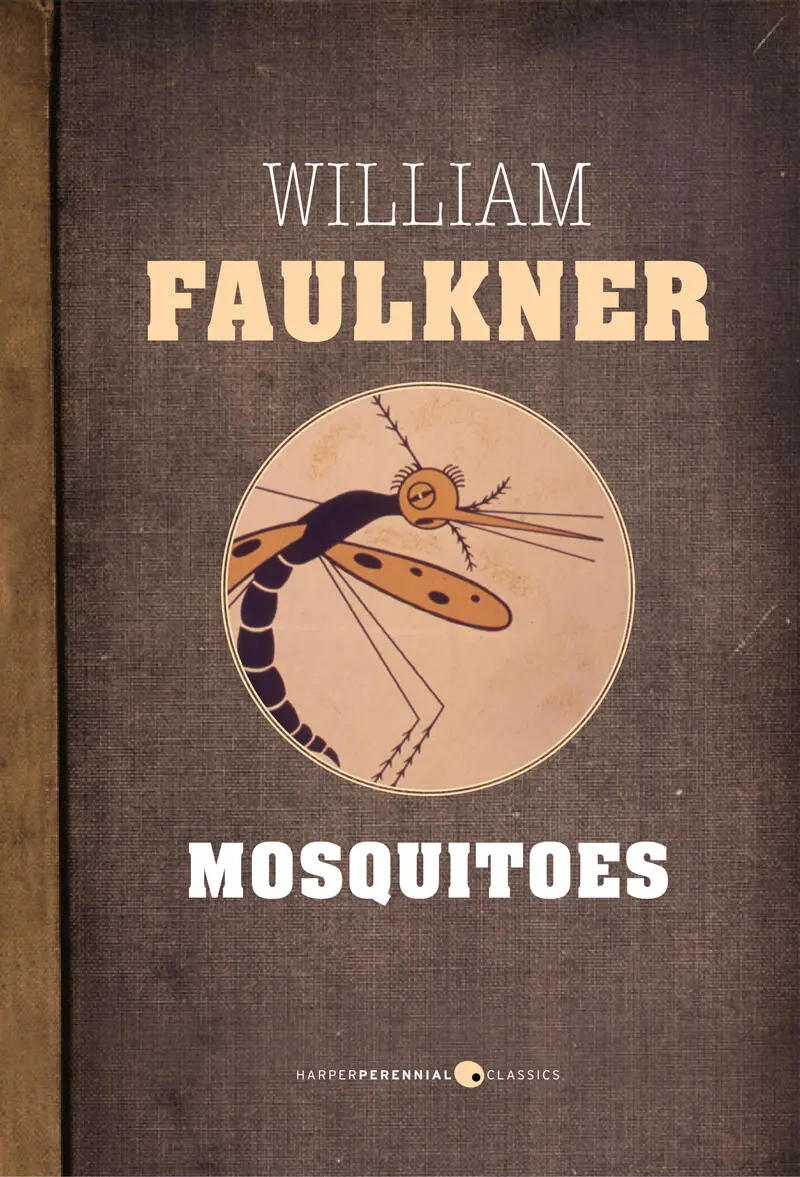
- Название:Mosquitoes
- Автор:
- Издательство:HarperCollins Canada
- Жанр:
- Год:2012
- ISBN:9781443421157
- Рейтинг книги:3 / 5. Голосов: 1
-
Избранное:Добавить в избранное
- Отзывы:
-
Ваша оценка:
Mosquitoes: краткое содержание, описание и аннотация
Предлагаем к чтению аннотацию, описание, краткое содержание или предисловие (зависит от того, что написал сам автор книги «Mosquitoes»). Если вы не нашли необходимую информацию о книге — напишите в комментариях, мы постараемся отыскать её.
explores gender and societal roles, sexual tension, and unrequited love as Faulkner delves into what it means to be an artist.
Faulkner’s second novel,
was first published in 1927, but did not receive any critical response until his literary reputation was well-established.
Mosquitoes — читать онлайн бесплатно полную книгу (весь текст) целиком
Ниже представлен текст книги, разбитый по страницам. Система сохранения места последней прочитанной страницы, позволяет с удобством читать онлайн бесплатно книгу «Mosquitoes», без необходимости каждый раз заново искать на чём Вы остановились. Поставьте закладку, и сможете в любой момент перейти на страницу, на которой закончили чтение.
Интервал:
Закладка:
But soon she was content to float on her back and recover breath, while he trod water beside her. Little hands of water lapped at her, in her hair and upon her face, and she breathed deeply, closing hereyes against the bland waning moon.
“I’ll hold you up a while,” he offered, putting his hand under the small of her back.
“You sure can,” she said, holding herself motionless. “Is it hard to do? Let me see if I can hold you up. This water is different from seawater: you don’t hardly sink in seawater if you want to.” She let her legs sink and he lay obediently on his back. “I can hold you up, can’t I? Say, can you carry somebody in the water, like lifesavers?”
“A little,” he admitted and she rolled again onto her back, and he showed her how it was done. Then she must try it herself, and he submitted with dubious resignation. Her hard young arm gripped him chokingly across his throat, jamming his wind-pipe, and she plunged violently forward, threshing her legs. He jerked up his arms to remove her strangling elbow and his head went under, openmouthed. He fought free of her and reappeared gasping. Her concerned face came to him and she tried to hold him up, unneccessarily.
“I’m so sorry: I didn’t mean to duck you.”
“It’s all right,” he said, coughing and strangling.
“I didn’t do it right, did I? Are you all right now?” She watched him anxiously, trying to support him.
“I’m all right,” he repeated. “You had the wrong hold,” he explained, treading water. “You had me around the neck.”
“Gee, I thought I was doing it right: I’ll do it right this time.”
“I guess we better wait and practice it in shallow water sometime,” he demurred quickly.
“Why. . all right,” she agreed. “I think I know how, now. I guess I had better learn good, first, though. I’m awful sorry I strangled you.”
“It don’t hurt any more. I don’t notice it.”
“But it was such a dumb thing to do. I’ll learn it good next time.”
“You know how now, all right. You just got the wrong hold that time. Try it again: see if you don’t know it.”
“You don’t mind?” she said with quick joy. “I won’t catch you wrong this time. . No, no: I might duck you again. I’d better learn it first.”
“Sure you won’t,” he said. “You know how now. You won’t hurt me. Try it.” He turned onto his back.
“Gee, David,” she said. She slid her arm carefully across his chest and beneath his opposite arm. “That’s right? Now, I’m going.”
She held him carefully, intent on doing it correctly, while he encouraged her. But their progress was maddeningly slow: the boat seemed miles away, and so much of her effort was needed to keep her own head above water. Soon she was breathing faster, gulping air and then closing her mouth against the water her thrusting arm swirled up against her face. I will do it, I will do it, she told herself, but it was so much harder than it had looked. The skiff rose and fell against the stars, and mooned water bubbled about her. It would take more effort or she’d have to give up. And she’d drown before that.
The arm that held him was numb, and she swam harder, shifting her grip, and again her hard elbow shut with strangling force upon his windpipe. But he was expecting it and without moving his body he twisted his head aside and filled his lungs and shut his mouth and eyes. . Soon she ceased swimming and her arm slid down again, holding him up, and he emptied his lungs and opened his eyes to remark the gunwale of the tender rising and falling against the sky above his head.
“I did make it,” she gasped. “I did make it. Are you all right?” she asked, panting. “I sure did it, David. I knew I could.” She clung to the skiff, resting her head upon her hands. “I thought for a while, when I had to change my hold, that I was doing it wrong again. But I did it right, didn’t I?” The remote chill stars swung over them, and the decaying disc of the moon, over the empty world in which they clung by their hands, side by side. “I’m pretty near all in,” she admitted.
“It’s pretty hard,” he agreed, “until you’ve practiced a lot. I’ll hold you up until you get your breath.” He put his arm around her under the water.
“I’m not all the way winded,” she protested, but by degrees she relaxed until he supported her whole weight, feeling her heart thumping against his palm, while she clung to the gun-wale resting her bowed head upon her hands; and it was like he had been in a dark room and all of a sudden the lights had come on: simple, like that.
It was like one morning when he was in a bunch of hoboes riding a freight into San Francisco and the bulls had jumped them and they had had to walk in. Along the water-front it was, and there were a lot of boats in the water, kind of rocking back and forth at anchor: he could see reflections of boats and of the piles of the wharves in the water, wavering back and forth; and after a while dawn had come up out of the smoke of the city, like a sound you couldn’t hear, and a lot of yellow and pink had come onto the water where the boats were rocking, and around the piles of the wharf little yellow lines seemed to come right up out of the water; and pretty soon there were gulls looking like they had pink and yellow feathers, slanting and wheeling around.
And it was like there was a street in a city, a street with a lot of trash in it, but pretty soon he was out of the street and in a place where trees were. It must be spring because the trees were not exactly bare, and yet they didn’t exactly have leaves on them, and there was a wind coming through the trees and he stopped and heard music somewhere; it was like he had just waked up and a wind with music in it was coming across green hills brave in a clean dawn. Simple, like that.
She moved at last against his arm. “Maybe I can climb in now. You better gimme a push, I guess.” His hand found her knee slid down, and she raised her foot to his palm. He saw her flat boy’s body against the stars rising, and she was in the boat, leaning down to him. “Catch my hands,” she said, extending them, but for a time he didn’t move at all, but only clung to the gunwale and looked up at her with an utter longing, like that of a dog.
* * *
Mrs. Maurier lay in bed in her darkened room. There was a port just over the bed and a long pencil of moonlight came slanting through it, shattering upon the floor and filling the room with a cold, disseminated radiance. Upon the chair, vaguely, her clothes: a shapeless, familiar mass, comforting; and about her the intimate familiarity of her own possessions — her toilet things, her clothing, her very particular odor with which she had grown so familiar that she no longer noticed it at all.
She lay in bed — her bed, especially built for her, was the most comfortable on board — surrounded, lapped in security and easeful things, walled and secure within the bland, hushed planes of the bulkheads. A faint, happy sound came in to her: little tongues of water lapping ceaselessly alongside the yacht, against her yacht — that island of security that was always waiting to transport her comfortably beyond the rumors of the world and its sorrows; and beyond the yacht, space: water and sky and darkness and silence; a worn cold moon neither merry nor sad. . Mrs. Maurier lay in her easy bed, within her comfortable room, weeping long shuddering sobs: a passive terrible hysteria without a sound.
The Third Day
This morning waked in a quiet fathomless mist. It was upon the world of water unstirred; soon the first faint wind of morning would thin it away, but now it was about the Nausikaa timelessly: the yacht was a thick jewel swaddled in soft gray wool, while in the wool somewhere dawn was like a suspended breath. The first morning of Time might well be beyond this mist, and trumpets preliminary to a golden flourish; and held in suspension in it might be heard yet the voices of the Far Gods on the first morning saying, It is well: let there be light. A short distance away, a shadow, a rumor, a more palpable thickness: this was the shore. The water fading out of the mist became as a dark metal in which the Nausikaa was rigidly fixed, and the yacht was motionless, swaddled in mist like a fat jewel.
Читать дальшеИнтервал:
Закладка:
Похожие книги на «Mosquitoes»
Представляем Вашему вниманию похожие книги на «Mosquitoes» списком для выбора. Мы отобрали схожую по названию и смыслу литературу в надежде предоставить читателям больше вариантов отыскать новые, интересные, ещё непрочитанные произведения.





Обсуждение, отзывы о книге «Mosquitoes» и просто собственные мнения читателей. Оставьте ваши комментарии, напишите, что Вы думаете о произведении, его смысле или главных героях. Укажите что конкретно понравилось, а что нет, и почему Вы так считаете.