William Faulkner - Mosquitoes
Здесь есть возможность читать онлайн «William Faulkner - Mosquitoes» весь текст электронной книги совершенно бесплатно (целиком полную версию без сокращений). В некоторых случаях можно слушать аудио, скачать через торрент в формате fb2 и присутствует краткое содержание. Год выпуска: 2012, ISBN: 2012, Издательство: HarperCollins Canada, Жанр: Классическая проза, на английском языке. Описание произведения, (предисловие) а так же отзывы посетителей доступны на портале библиотеки ЛибКат.
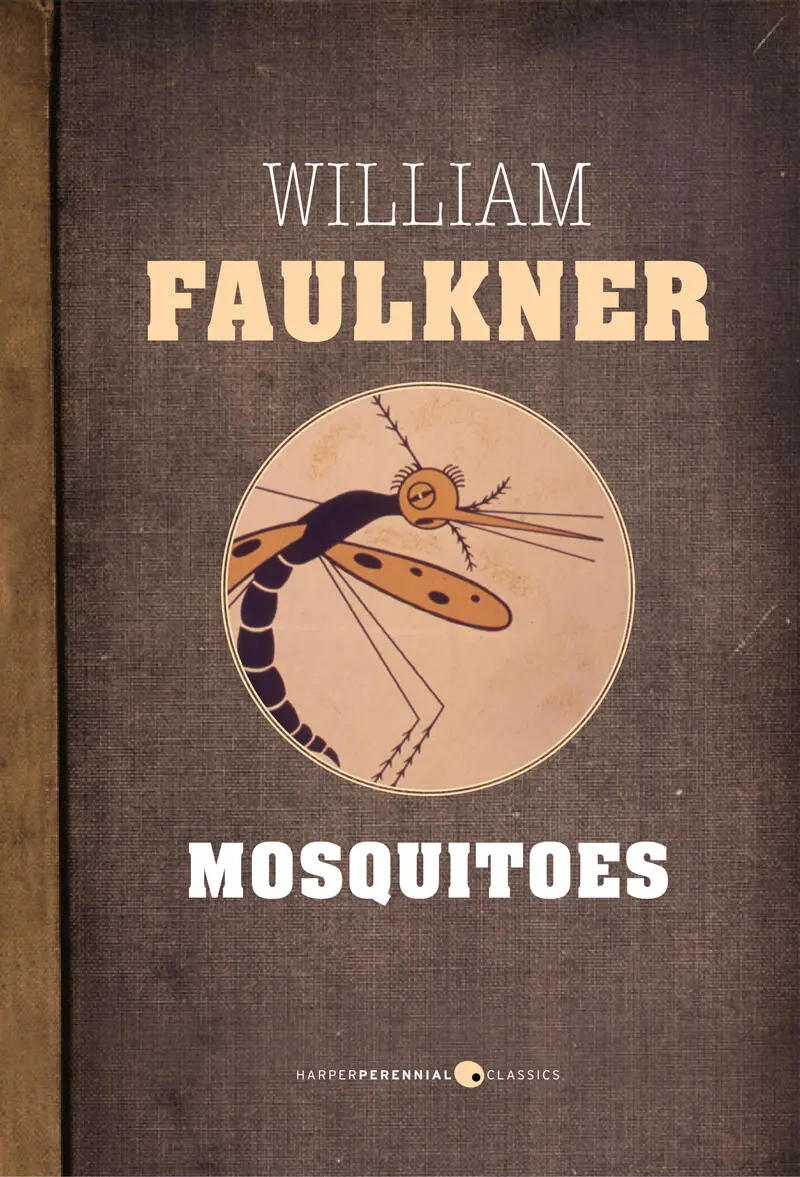
- Название:Mosquitoes
- Автор:
- Издательство:HarperCollins Canada
- Жанр:
- Год:2012
- ISBN:9781443421157
- Рейтинг книги:3 / 5. Голосов: 1
-
Избранное:Добавить в избранное
- Отзывы:
-
Ваша оценка:
Mosquitoes: краткое содержание, описание и аннотация
Предлагаем к чтению аннотацию, описание, краткое содержание или предисловие (зависит от того, что написал сам автор книги «Mosquitoes»). Если вы не нашли необходимую информацию о книге — напишите в комментариях, мы постараемся отыскать её.
explores gender and societal roles, sexual tension, and unrequited love as Faulkner delves into what it means to be an artist.
Faulkner’s second novel,
was first published in 1927, but did not receive any critical response until his literary reputation was well-established.
Mosquitoes — читать онлайн бесплатно полную книгу (весь текст) целиком
Ниже представлен текст книги, разбитый по страницам. Система сохранения места последней прочитанной страницы, позволяет с удобством читать онлайн бесплатно книгу «Mosquitoes», без необходимости каждый раз заново искать на чём Вы остановились. Поставьте закладку, и сможете в любой момент перейти на страницу, на которой закончили чтение.
Интервал:
Закладка:
Mrs. Maurier sat up slowly, as a very old person moves. The younger woman bent down to her, quickly solicitous. “You don’t feel well, do you?”
“Is it time to go below?” Mrs. Maurier asked, raising herself more briskly. “Our bridge game—”
“You all had beat us too badly. But can’t I—”
“No, no,” Mrs. Maurier objected quickly, a trifle testily. “It’s nothing: I was just sitting here enjoying the moonlight.”
“We thought Mr. Gordon was with you.” Mrs. Maurier shuddered.
“These terrible men,” she said with an attempt at lightness. “These artists!”
“Gordon, too? I thought he had escaped Dawson and Julius.”
“Gordon, too,” Mrs. Maurier replied. She rose. “Come, I think we’d better go to bed.” She shuddered again, as with cold: her flesh seemed to shake despite her, and she took the younger woman’s arm, clinging to it. “I do feel a little tired,” she confessed. “The first few days are always trying, don’t you think? But we have a very nice party, don’t you think so?”
“An awfully nice party,” the other agreed without irony. “But we are all tired: we’ll all feel better tomorrow, I know.”
Mrs. Maurier descended the stairs slowly, heavily. The other steadied her with her strong hand, and opening Mrs. Maurier’s door she reached in and found the light button. “There. Would you like anything before you go to bed?”
“No, no,” Mrs. Maurier answered, entering and averting her face quickly. She crossed the room and busied herself at the dressing table, keeping her back to the other. “Thank you, nothing. I shall go to sleep at once, I think. I always sleep well on the water. Good night.”
Mrs. Wiseman closed the door. I wonder what it is, she thought, I wonder what happened to her? She went on along the passage to her own door. Something did, something happened to her, she repeated, putting her hand on the door and turning the knob.
TWELVE O’CLOCK
The moon had got higher, that worn and bloodless one, old and a little weary and shedding her tired silver on yacht and water and shore; and the yacht, the deck and its fixtures, was passionless as a dream upon the shifting silvered wings of water when she appeared in her bathing suit. She stood for a moment in the doorway until she saw movement and his white shirt where he half turned on the coil of rope where he sat. Her lifted hand blanched slimly in the hushed treachery of the moon: a gesture, and her bare feet made no sound on the deck.
“Hello, David. I’m on time, like I said. Where’s your bathing suit?”
“I didn’t think you would come,” he said, looking up at her, “I didn’t think you meant it.”
“Why not?” she asked. “Good Lord, what’d I want to tell you I was for, if I wasn’t?”
“I don’t know. I just thought — You sure are brown, seeing it in the moonlight.”
”Yes, I’ve got a good one,” she agreed. “Where’s your bathing suit? Why haven’t you got it on?”
“You were going to get one for me, you said.”
She stared at his face in consternation. “That’s right: I sure was. I forgot it. Wait, maybe I can wake Josh up and get it. It won’t take long. You wait here.”
He stopped her. “It’ll be all right. Don’t bother about it tonight. I’ll get it some other time.”
“No, I’ll get it. I want somebody to go in with me. You wait.”
“No, never mind: I’ll row the boat for you.”
“Say, you still don’t believe I meant it, do you?” She examined him curiously. “All right, then. I guess I’ll have to go in by myself. You can row the boat, anyway. Come on.”
He fetched the oars and they got in the tender and cast off. “Only I wish you had a bathing suit,” she repeated from the stern. “I’d rather have somebody to go in with me. Couldn’t you go in in your clothes or something? Say, I’ll turn my back, and you take off your clothes and jump in: how about that?”
“I guess not,” he answered in alarm. “I guess I better not do that.”
“Shucks, I wanted somebody to go swimming with me. It’s not any fun, by myself. . Take off your shirt and pants, then, and go in your underclothes. That’s almost like a bathing suit. I went in yesterday in Josh’s.”
“I’ll row the boat for you while you go in,” he repeated. The niece said Shucks again. David pulled steadily on upon the mooned and shifting water. Little waves slapped the bottom of the boat lightly as it rose and fell, and behind them the yacht was pure and passionless as a dream against the dark trees.
“I just love tonight,” the niece said. “It’s like we owned everything.” She lay flat on her back on the stern seat, propping her heels against the gunwale. David pulled rhythmically, the motion of the boat was a rhythm that lent to the moon and stars swinging up and down beyond the tapering simplicity of her propped knees a motion slow and soothing as a huge tree in a wind.
“How far do you want to go?” he asked presently.
“I don’t care,” she answered, gazing into the sky. He rowed on, the oarlocks thumping and measured, and she turned onto her belly, dragging her arm in the water while small bubbles of silver fire clung to her arm, broke away reluctantly and swam slowly to the surface, disappeared. . Little casual swells slapped the bottom of the boat, lightly, and slid along beside the hull, mooned with bubbling fire. She slid her legs overside and swung from the stern of the boat, dragging through the water. He pulled on a few strokes.
“I can’t row with you hanging there,” he said. Her two hands vanished from the gunwale and her dark head vanished, but when he slewed the boat sharply and half rose, she reappeared, whipping a faint shower of silver drops from her head. The moon slid and ran on her alternate arms and before her spread a fan of silver lines, shifting and spreading and fading.
“Gee,” she said. Her voice came low along the water, not loud but still distinct: little waves lapped at it. “It’s grand: warm as warm. You better come in.” Her head vanished again, he saw her sickling legs as they vanished, and once more she rayed shattered silver from her flung head. She swam up to the boat. “Come on in, David,” she insisted. “Take off your shirt and pants and jump in. I’ll swim out and wait for you. Come on, now,” she commanded.
So he removed his outer garments, sitting in the bottom of the boat, and slid quickly and modestly into the water. “Isn’t it grand?” she called to him. “Come on out here.”
We better not get too far from the boat,” he said cautiously, “she ain’t got any anchor, you know.”
“We can catch it. It won’t drift fast. Come on out here, and I’ll race you back to it.”
He swam out to where her dark wet head awaited him. “I bet I beat you,” she challenged. “Are you ready? One. Two. Three — Go!” And she did beat him and with a single unceasing motion she slid upward and into the tender, and stood erect for the moonlight to slide over her in hushed silver.
“I’ll plunge for distance with you,” she now challenged. David hung by his hands, submerged to his neck. She waited for him to get into the skiff, then she said, “You can dive, can’t you?” But he still clung to the gunwale, looking up at her. “Come on, David,” she said sharply. “Are you timid, or what? I’m not going to look at you, if you don’t want me to.” So he got into the boat, modestly keeping his back to her, but even his wet curious garment could not make ridiculous the young lean splendor of him.
“I don’t see what you are ashamed of. You’ve got a good physique,” she told him. “Tall and hard looking. . Are you ready? One. Two. Three — Go!”
Читать дальшеИнтервал:
Закладка:
Похожие книги на «Mosquitoes»
Представляем Вашему вниманию похожие книги на «Mosquitoes» списком для выбора. Мы отобрали схожую по названию и смыслу литературу в надежде предоставить читателям больше вариантов отыскать новые, интересные, ещё непрочитанные произведения.






Обсуждение, отзывы о книге «Mosquitoes» и просто собственные мнения читателей. Оставьте ваши комментарии, напишите, что Вы думаете о произведении, его смысле или главных героях. Укажите что конкретно понравилось, а что нет, и почему Вы так считаете.