William Faulkner - Mosquitoes
Здесь есть возможность читать онлайн «William Faulkner - Mosquitoes» весь текст электронной книги совершенно бесплатно (целиком полную версию без сокращений). В некоторых случаях можно слушать аудио, скачать через торрент в формате fb2 и присутствует краткое содержание. Год выпуска: 2012, ISBN: 2012, Издательство: HarperCollins Canada, Жанр: Классическая проза, на английском языке. Описание произведения, (предисловие) а так же отзывы посетителей доступны на портале библиотеки ЛибКат.
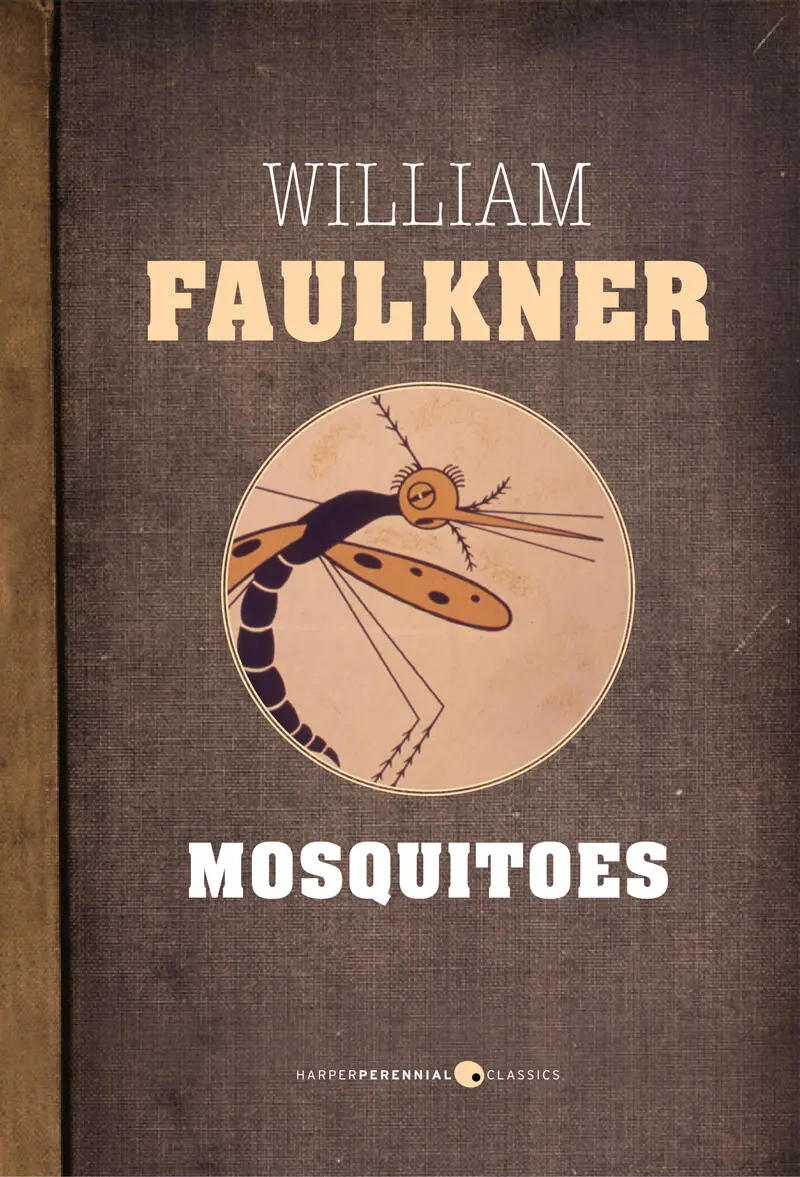
- Название:Mosquitoes
- Автор:
- Издательство:HarperCollins Canada
- Жанр:
- Год:2012
- ISBN:9781443421157
- Рейтинг книги:3 / 5. Голосов: 1
-
Избранное:Добавить в избранное
- Отзывы:
-
Ваша оценка:
Mosquitoes: краткое содержание, описание и аннотация
Предлагаем к чтению аннотацию, описание, краткое содержание или предисловие (зависит от того, что написал сам автор книги «Mosquitoes»). Если вы не нашли необходимую информацию о книге — напишите в комментариях, мы постараемся отыскать её.
explores gender and societal roles, sexual tension, and unrequited love as Faulkner delves into what it means to be an artist.
Faulkner’s second novel,
was first published in 1927, but did not receive any critical response until his literary reputation was well-established.
Mosquitoes — читать онлайн бесплатно полную книгу (весь текст) целиком
Ниже представлен текст книги, разбитый по страницам. Система сохранения места последней прочитанной страницы, позволяет с удобством читать онлайн бесплатно книгу «Mosquitoes», без необходимости каждый раз заново искать на чём Вы остановились. Поставьте закладку, и сможете в любой момент перейти на страницу, на которой закончили чтение.
Интервал:
Закладка:
“Where on earth did you get those garters?” Miss Jameson asked curiously.
“These?” she flipped her skirt down. “Why? Don’t you like ’em?”
“They are a trifle out of the picture, on you.”
“What kind would you suggest for me? Pieces of colored string?”
“You ought to have black ones clasped with natural size red roses,” Mark Frost told her. “That’s what one would expect to find on you.”
“Wrrrong, me good man,” Mrs. Wiseman answered dramatically. “You have wronged me foully. . Where’s Mrs. Maurier, I wonder?”
“She must have caught somebody. That Gordon man, perhaps,” Miss Jameson replied. “I saw him at the rail yonder a while ago.”
“Ah, Mr. Talliaferro!” exclaimed Mrs. Wiseman. “Look out for yourself. Widders and artists, you know. You see how susceptible I am, myself. Wasn’t there ever a fortune teller to warn you of a tall stranger in your destiny?”
“You are a widow only by courtesy,” the poet rejoined, “like the serving maids in sixteenth-century literature.”
“So are some of the artists, my boy,” Mrs. Wiseman replied. “But all the men on board are not even artists. What, Ernest?”
Mr. Talliaferro bridled smugly through the smoke of his cigarette. Mrs. Wiseman consumed hers in an unbroken series of deep draughts and flipped it railward: a twinkling scarlet coal. “I said talk,” she reminded them, “not a few mild disjointed beans of gossip.” She rose. “Come on, let’s go to bed, Dorothy.”
Miss Jameson sat, a humorless inertia. “And leave that moon?”
Mrs. Wiseman yawned, stretching her arms. The moon spread her silver ceaseless hand on the dark water. Mrs. Wiseman turned, spreading her arms in a flamboyant gesture, in silhouette against it. “Ah, Moon, poor weary one. . By yon black moon,” she apostrophized.
“No wonder it looks tired,” the poet remarked hollowly. “Think of how much adultery it’s had to look upon.”
“Or assume the blame for,” Mrs. Wiseman amended. She dropped her arms. “I wish I were in love,” she said. “Why aren’t you and Ernest more — more — Come on, Dorothy, let’s go to bed.”
“Have I got to move?” Miss Jameson said. She rose, however. The men rose also, and the two women departed. When they had gone Mr. Talliaferro gathered up the cards Mrs. Wiseman had scattered. Some of them had fallen to the deck.
ELEVEN O’CLOCK
Mr. Talliaferro tapped diffidently at the door of Fairchild’s room, was bidden, and opening it he saw the Semitic man sitting in the lone chair and Major Ayers and Fairchild on the bunk, holding glasses. “Come in,” Fairchild repeated. “How did you escape? Push her overboard and run?”
Mr. Talliaferro grinned with deprecation, regarding the bottle sitting on a small table, rubbing his hands together with anticipation.
“The human body can stand anything, can’t it?” the Semitic man remarked. “But I imagine Talliaferro is just about at the end of his rope, without outside aid,” he added. Major Ayers glared at him affably with his china-blue eyes.
“Yes, Talliaferro’s sure earned a drink,” Fairchild agreed. “Where’s Gordon? Was he on deck?”
“I think so,” Mr. Talliaferro replied. “I believe he’s with Miss Robyn.”
“Well, more power to him,” Fairchild said. “Hope she won’t handle him as roughly as she did us, hey, Major?”
“You and Major Ayers deserved exactly what you got,” the Semitic man rejoined. “You can’t complain.”
“I guess so. But I don’t like to see a human being arrogating to himself the privileges and pleasures of providence. Quelling nuisances is God’s job.”
“How about instruments of providence?”
“Oh, take another drink,” Fairchild told him. “Stop talking so Talliaferro can have one, anyway. Then we better go up on deck. The ladies might begin to wonder what has become of us.”
“Why should they?” the Semitic man asked innocently. Fairchild heaved himself off the bunk and got Mr. Talliaferro a tumbler. Mr. Talliaferro drank it slowly, unctuously; and pressed, accepted another.
He emptied his glass with a flourish. He grimaced slightly.
They had another drink and Fairchild put the bottle away.
“Let’s go up a while,” he suggested, prodding them to their feet and herding them toward the door. Mr. Talliaferro allowed the others to precede him. Lingering, he touched Fairchild’s arm. The other glanced at his meaningful expression, and paused.
“I want your advice,” Mr. Talliaferro explained. Major Ayers and the Semitic man halted in the passage, waiting.
“Go on, you fellows,” Fairchild told them. “I’ll be along in a moment.” He turned to Mr. Talliaferro. “Who’s the lucky girl this time?”
Mr. Talliaferro whispered a name. “Now, this is my plan of campaign. What do you think—”
“Wait,” Fairchild interrupted, “let’s have a drink on it.” Mr. Talliaferro closed the door again, carefully.
* * *
Fairchild swung the door open.
“And you think it will work?” Mr. Talliaferro repeated, quitting the room.
“Sure, sure; I think it’s airtight: that she might just as well make up her mind to the inevitable.”
“No: really, I want your candid opinion. I have more faith in your judgment of people than anyone I know.”
“Sure, sure,” Fairchild repeated solemnly. “She can’t resist you. No chance, no chance at all. To tell the truth, I kind of hate to think of women and young girls going around exposed to a man like you.”
Mr. Talliaferro glanced over his shoulder at Fairchild, quickly, doubtfully. But the other’s face was solemn, without guile. Mr. Talliaferro went on again: “Well, wish me luck,” he said.
“Sure. The admiral expects every man to do his duty, you know,” Fairchild replied solemnly, following Mr. Talliaferro’s dapper figure up the stairs.
* * *
Major Ayers and the Semitic man awaited them. There were no ladies. Nobody at all, in fact. The deck was deserted.
“Are you sure?” Fairchild insisted. “Have you looked good? I kind of wanted to dance some. Come on, let’s look again.”
At the door of the wheelhouse they came upon the helmsman. He wore only an undershirt above his trousers and he was gazing into the sky. “Fine night,” Fairchild greeted him.
“Fine now,” the helmsman agreed. “Bad weather off there, though.” He extended his arm toward the southwest. “Lake may be running pretty high by morning. We’re on a lee shore, too.” He stared again into the sky.
“Ah, I guess not,” Fairchild replied with large optimism. “Hardly on a clear night like this, do you reckon?”
The helmsman stared into the sky, making no answer. They passed on. “I forgot to tell you the ladies had retired,” Mr. Talliaferro remarked.
“That’s funny,” Fairchild said. “I wonder if they thought we were not coming back?”
“Perhaps they were afraid we were,” the Semitic man suggested.
“Huh,” said Fairchild. . “What time is it, anyway?”
It was twelve o’clock, and the sky toward the zenith was hazed oyer, obscuring the stars. But the moon was still undimmed, bland and chill, affable and bloodless as a successful procuress, bathing the yacht in quiet silver; and across the southern sky went a procession of small clouds, like silver dolphins on a rigid ultramarine wave, like an ancient geographical woodcut.
The Second Day
By three o’clock the storm had blown itself out across the lake and by dawn, when the helmsman waked the captain, the lake, as he had predicted, was running pretty high. The trend was directly inshore; waves came up in endless battalions under a cloudless sky, curling and creaming along the hull, fading and dying as the water shoaled astern of the yacht to a thin white smother against a dark impenetrable band of trees. The Nausikaa rose and fell, bows on, dragging at her taut cables. The helmsman roused the captain and returned swiftly to the wheelhouse.
Читать дальшеИнтервал:
Закладка:
Похожие книги на «Mosquitoes»
Представляем Вашему вниманию похожие книги на «Mosquitoes» списком для выбора. Мы отобрали схожую по названию и смыслу литературу в надежде предоставить читателям больше вариантов отыскать новые, интересные, ещё непрочитанные произведения.




Обсуждение, отзывы о книге «Mosquitoes» и просто собственные мнения читателей. Оставьте ваши комментарии, напишите, что Вы думаете о произведении, его смысле или главных героях. Укажите что конкретно понравилось, а что нет, и почему Вы так считаете.