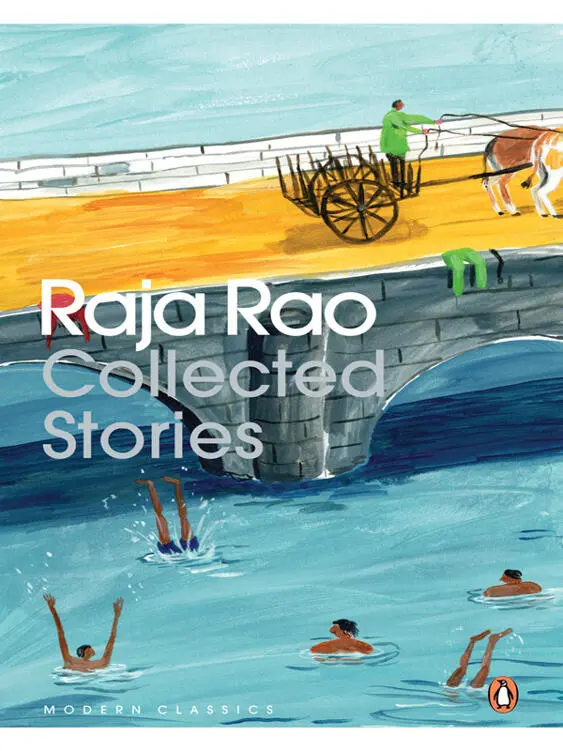
Raja Rao - Collected Stories
Здесь есть возможность читать онлайн «Raja Rao - Collected Stories» весь текст электронной книги совершенно бесплатно (целиком полную версию без сокращений). В некоторых случаях можно слушать аудио, скачать через торрент в формате fb2 и присутствует краткое содержание. Год выпуска: 2014, Издательство: Penguin, Жанр: Классическая проза, на английском языке. Описание произведения, (предисловие) а так же отзывы посетителей доступны на портале библиотеки ЛибКат.
- Название:Collected Stories
- Автор:
- Издательство:Penguin
- Жанр:
- Год:2014
- ISBN:нет данных
- Рейтинг книги:5 / 5. Голосов: 1
-
Избранное:Добавить в избранное
- Отзывы:
-
Ваша оценка:
Collected Stories: краткое содержание, описание и аннотация
Предлагаем к чтению аннотацию, описание, краткое содержание или предисловие (зависит от того, что написал сам автор книги «Collected Stories»). Если вы не нашли необходимую информацию о книге — напишите в комментариях, мы постараемся отыскать её.
Collected Stories — читать онлайн бесплатно полную книгу (весь текст) целиком
Ниже представлен текст книги, разбитый по страницам. Система сохранения места последней прочитанной страницы, позволяет с удобством читать онлайн бесплатно книгу «Collected Stories», без необходимости каждый раз заново искать на чём Вы остановились. Поставьте закладку, и сможете в любой момент перейти на страницу, на которой закончили чтение.
Интервал:
Закладка:
For indeed the story of the red rose is fabular and fantastic. Like the policeman it was born of the atom, became earth, air, ether, fire and water, rolled into a pumpkin, grew into a tree, became a deer and frisked and frolicked in the forests of Vrindavan, became white and a cow, all with stripes and eyes of cinnamon, and took the cowboys playing to the temples of Muttra — sang, suffered and died — died again and again, was born again and again, married a monk, intellectual, army man, was carried off by the Muslims, and was given away in dowry, and head in hand wandered by the Ganges, till it came to a hut and a hearthless man, and sat there, and bewitched by his wisdom and his eyes, remained admonished into death—‘Be a rose,’ cursed the ascetic and so it became a rose of a palace garden in its next life and rode a palanquin. Everybody knew this rose from others, for it carried in its petals a mark red as the kumkum and round like a thumb, for it carried the mark of murderer and monk, and was sometimes called a weeping rose, for the spot on the petal often of an evening looked a teardrop. People gathered it and gave it to the gods — the princes and ministers that sang and serenaded by the palaces saw it and gave away petal and perfume to their lady-love, but the rose always carried the teardrop and smell of the temple garden. When the Magh winds rose and the houses were lit with jessamine-oil, they said, here cometh the red-rose wind for it smelleth of holiness. And when the elder prince married and there was such fuss and festivity about it, the gardener came and dug the roots and gave away the plant and perfume to the princess who went to Amber for marriage-making. There, near the tulasi-vrindavan, was the rose planted — and so it brought gladsome tidings to the desert oasis of Rajputana, and many a princess grew into wor-ship and holiness plucking of it. Ascetics gathered it in their hands and gave it away to the gods, but the tear was always there. Artists came and painted the rose and, the story goes, gave of it to Emperor Akbar, and painted him with it. You can still see this in the British Museum.
I plucked it in a curious way. I had grown ascetic by now and the arms of awkwardness held me in their religious tyranny. I did not like hyacinths for worship, so I placed instead tulasi, chrysanthemum, Shiva’s lip or the rose. I hid my police uniform under ash and loin-cloth and spoke kindly to the rose.
‘O Rose of Compassion,’ I said, ‘come with me.’ It fluttered and said no, it flew with me and said no and no — it circled continents with me and said yes, and said nay again, till the sun and the moon were tired of its tears, and school-girls collected it in their cupped hands and carried it in their satchels and drank it at night that they might have bright bridegrooms. My hands were wet and rotting, my skin had grown the colour of apple and my bones shewed. My meditations had got garnered with the rose and my thoughts tethered to the rose, and whether I be prince or policeman, the rose simply wept with me. Night came, and then the day, then the night again and the sorrow of the rose. Days were filled with a drowsy doom, the world marvelled that I carried the perfume of the rose, and they said I had the malady of the rose. Music suddenly melodied from the wayside tree as I walked, and birds gathered round me, for they loved the music of the rose. Words suddenly rose into their organum and ecstasy, and became parted-lipped and free. The earth’s buildings were muted to the manner of the rose, and silence smelt of the rose. And I, poor creature that had wandered from the virgins of Avignon, had the melody of the rose in my ear. I fretted and frolicked and wept — I sang ditties and sat in mute meditation, but the gods spoke kindly to me and gave me hopes of recompense. They said the malady of the rose is meant for the few and the festival-born — so go poet, go ascetic, they said, and gather flowers for our worship. And so it is that the gods demanded of me the petal of the rose, and I gave it them, I gave it them handfuls and clothfuls, and when the goddesses were adorned and the camphor burnt, so great the flow of rose-water from the rose, the pujari gathered it and gave it as prasad and tirth to the devotee. I also drank of it, and the madder I became, I said, ‘Rose, you Rose in my heart you weep in me, and I place you on the hair of the gods and you weep still. And what shall I do now?’—And there was such silence in answer you could hear the river flow. I fled from that silence, and I wandered continents, alone and my hands rotting with rose-tear. Angry, I cut a tree. It was in Belgium, and a baby was born. I saw the baby and I said, ‘Lovely baby, round-faced baby, I am your father, but I be policeman. How can you bear me?’ It was a ruse. The baby said, ‘Papa, I love you.’ No sooner did the baby say ‘Papa’—I fled. ‘Rose, my baby,’ I thought, ‘O baby of my Rose,’ and I wept. Then did I climb mountains and went strolling athwart the glaciers. It was a time of international disputes, and there were grave questions of war and peace, and I, the policeman, went a-patrolling. And all the mountains smelled of the rose.
Then it was I heard the tingle in the mountain, a tingle-tingle-toe across the mountain, and melody rose and music rose, and in between the chinks of my dream, I saw the magnum of Truth. And as Truth is Travancore I went a-shaking in the South Indian Railway. In Travancore station I descended and said: ‘Take me, please, to the Great-man.’ And they took me to the Maharaja. But I returned to the station and said to the taxi: ‘Take me please to the Retired Police Commissioner,’ and they took me to Truth. Truth has Two-Feet and smelled of many roses the rose. Truth has steps, and once you enter, in the verandah, at the footsteps is the Lotus on which Truth stands. I wash myself of my sins — I peel out skin after skin of my tattered body — I speak to the incarnations of the mind — I float in the magnificence of my dreams, and I tell them, ‘Adieu, adieu, my memories, my medals, my police uniforms. Here, take the bone, you bone-eating cur. Here, take this sinew, you flesh-eating vulture. Here, take this blood, you proud man. I have come to eat butter. I shall live on honey. I shall speak like a nightingale.’ But a great agony rose within me. The smell of the rose rose in me, and brought the tears of destiny to my guttering throat. I choked into exhaustion and woke into a stupor. The stupor lasted many a year and I was fed by the squirrel of the garden— for in the garden of Travancore there are many squirrels — lean ones, and kind small round ones, and musical ones too, and they smelt the malady of the rose, in me, and they too were tear-smitten. Once, I had bathed many and many a time, and my breath smelt of the freshness of dawn, they took, brothers, they took me to the House, and under the mango-leaf and coconut-pandal, and in the flame and flavour of irradiance, I saw the walk of Truth, which no tears can tell. Gold, failing to be gold, was gold there — and so were silk and filigree, and music rose from itself and was heard of by silence, and the banana and the sugar-candy tasted of the honey, and man stood there a monument. The Gandharvas, the Siddhas, the Yakshas and the eighty thousand gods came there to pay homage with flower-hands and folded hands. Rain fell to song, and cattle lowed to music, and rivers parted and poured at the Two-Feet. My medals melted on me and my skin became fresh! My voice became cantation, and my intelligence intimate. I laid my petal of rose at the Lotus of Truth, and I never beheld it again, brother, my brother. And when I woke up I heard them singing:
In between two thoughts is the dance of Truth,
He who’s seen it hath no rebirth.
I was marvelled and tears came to my eyes, and I wept, and I wept for joy. Then did I turn round and round and found my rose had gone from my finger. O my red rose. Under the mango-tree, near the fountain, where I stood listening to Truth, then did I see the white rose-bush. And I knew.
Читать дальшеИнтервал:
Закладка:
Похожие книги на «Collected Stories»
Представляем Вашему вниманию похожие книги на «Collected Stories» списком для выбора. Мы отобрали схожую по названию и смыслу литературу в надежде предоставить читателям больше вариантов отыскать новые, интересные, ещё непрочитанные произведения.








Обсуждение, отзывы о книге «Collected Stories» и просто собственные мнения читателей. Оставьте ваши комментарии, напишите, что Вы думаете о произведении, его смысле или главных героях. Укажите что конкретно понравилось, а что нет, и почему Вы так считаете.