Upton Sinclair - Dragons’s teeth
Здесь есть возможность читать онлайн «Upton Sinclair - Dragons’s teeth» весь текст электронной книги совершенно бесплатно (целиком полную версию без сокращений). В некоторых случаях можно слушать аудио, скачать через торрент в формате fb2 и присутствует краткое содержание. Жанр: Историческая проза, на английском языке. Описание произведения, (предисловие) а так же отзывы посетителей доступны на портале библиотеки ЛибКат.
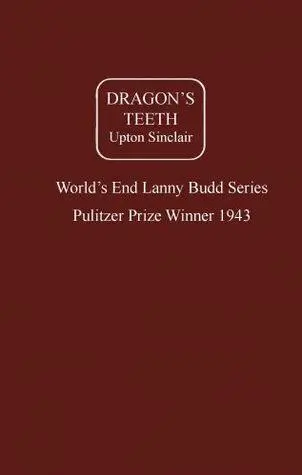
- Название:Dragons’s teeth
- Автор:
- Жанр:
- Год:неизвестен
- ISBN:нет данных
- Рейтинг книги:3 / 5. Голосов: 1
-
Избранное:Добавить в избранное
- Отзывы:
-
Ваша оценка:
Dragons’s teeth: краткое содержание, описание и аннотация
Предлагаем к чтению аннотацию, описание, краткое содержание или предисловие (зависит от того, что написал сам автор книги «Dragons’s teeth»). Если вы не нашли необходимую информацию о книге — напишите в комментариях, мы постараемся отыскать её.
Dragons’s teeth — читать онлайн бесплатно полную книгу (весь текст) целиком
Ниже представлен текст книги, разбитый по страницам. Система сохранения места последней прочитанной страницы, позволяет с удобством читать онлайн бесплатно книгу «Dragons’s teeth», без необходимости каждый раз заново искать на чём Вы остановились. Поставьте закладку, и сможете в любой момент перейти на страницу, на которой закончили чтение.
Интервал:
Закладка:
The list of victims had been prepared in advance, and warrants, each with a photograph of the victim in question. The Count knew that the Marxists were the criminals, he said; and Goring announced that the demented Dutchman who was found in the building with matches and fire-lighters had a Communist party membership card on him. The statement turned out to be untrue, but it served for the moment.
Next day Hitler persuaded Hindenburg to sign a decree "for the safeguarding of the state from the Communist menace," and after that the Nazis had everything their own way. The prisons were filled with suspects, and the setting up of concentration camps began with a rush. The Prussian government, of which Goring was the head, issued a statement concerning the documents found in the raid on Karl Liebknecht Haus three days before the fire. The Communists had been plotting to burn down public buildings throughout Germany, and to start civil war and revolution on the Russian model; looting had been planned to begin right after the fire and terrorist acts were to be committed against persons and property. The publication of these documents was promised, but no one ever saw them, and the story was dropped as soon as it had served its purpose—which was to justify the abolishing of civil liberties throughout what had been the German Republic.
XII
As the evidence began to filter into the newspapers of Britain and France, the young Reds and Pinks spent many an hour trying to make up their minds about one of the great "frame-ups" of history. What brain had conceived it? What hand had carried it out? For the former role their suspicions centered upon a German World War aviator who had fled to Sweden, where he had become a dope addict and had been in a psychopathic institution. Hermann Goring was a great hulk of a man, absurdly vain, with a fondness for gaudy uniforms which was to make him the butt of Berlin wits; he was also a man of immense energy, brutal and unscrupulous, the perfect type of those freebooters who had ravaged the borders of the German empire in medieval times, had given themselves titles, and now had huge white marble statues of themselves in the Siegesallee, known to the Berlin wits as "the Cemetery of Art."
Hermann Goring had got his titles: Minister without Portfolio, Federal Commissioner for Air Transport, Prussian Minister of the Interior. They carried the same grants of power as in the old free-booting days, but unfortunately they were subject to elections; on the following Sunday the proletariat might go to the polls and strip Hermann of his glories—and this would be extremely annoying to a man of aristocratic tastes, a friend of the former Crown Prince and of Thyssen. As it happened, the man of action was in position to act, for his official residence was connected with the Reichstag building by a long underground passage; also he had at his command a well-trained army, eager to execute any command he might give. What did a building amount to, in comparison with the future of the.N.S.D.A.P.?
The man whom the Nazis were finally to convict of the crime was a feeble-minded Dutchman who had been expelled from the Communist party of that country and had been a tramp all over Europe. The police maintained that at his original examination he had told a detailed story of setting fire to the curtains of the restaurant with matches and fire-lighters. But the restaurant wasn’t the only room that burned; there had been a heavy explosion in the session chamber, and that vast place had become a mass of flames and explosive gases. The head of the Berlin fire department had observed trains of gasoline on the floors of the building. Immediately after the fire he announced that the police had carted away a truck-load of unburned incendiary materials from the scene of the fire; and immediately after making this announcement he was dismissed from his post.
Such were the details which the young radicals abroad put together and published in their papers. But the papers which might have spread such news in Germany had all been suppressed; their editors were in prison and many were being subjected to cruel tortures. A sickening thing to know that your comrades, idealists whom you had trusted and followed, were being pounded with rubber hose, danced upon with spiked boots, having their kidneys kicked loose and their testicles crushed. Still more terrible to know that civil rights were being murdered in one of the world’s most highly developed nations; that the homeland of Goethe and Bach was in the hands of men who were capable of planning and perpetrating such atrocities.
XIII
The fire had the intended effect of throwing all Germany into a panic of fear. Not merely the Nazis, but Papen and Hugenberg were denouncing the Red conspirators over the radio. All the new techniques of propaganda were set at work to convince the voters that the Fatherland stood in deadly peril of a Communist revolution. Friday was proclaimed the "Day of the Awakening Nation." The Nazis marched with torchlights, and on the mountain-tops and on high towers in the cities great bonfires burned—fires of liberation, they were called. "O Lord, make us free!" prayed Hitler over the radio, and loud-speakers spread his words in every market-square in every town.
On Sunday the people voted, and the Nazi vote increased from nearly twelve million to more than seventeen million. But the Communists lost only about a million, and the Socialists practically none. The Catholics actually gained, in spite of all the suppressions; so it appeared that the German people were not so easy to stampede after all. The Nazis still didn’t have a majority of the Reichstag deputies, so they couldn’t form a government without the support and approval of the aristocrats. What was going to come out of that?
The answer was that Adi Hitler was going to have his way. He was going right on, day after day, pushing to his goal, and nobody was going to stop him. Objections would be raised in the Cabinet, and he would do what he had done in party conferences—argue, storm, plead, denounce, and threaten. He would make it impossible for anyone else to be heard, raise such a disturbance as could not be withstood, prove that he could outlast any opposition, that his frenzy was uncontrollable, his will irrepressible. But behind this seeming madness would be a watchful eye and a shrewd, calculating brain. Adi would know exactly what he was doing and how far he could go; if the opposition became too strong, he would give way, he would make promises—and then next day it would be discovered that his followers were going right ahead doing what he wanted done, and he would be saying that he couldn’t control them. If it was something serious, like the Reichstag fire, he would know nothing about it, he would be completely taken aback, astounded, horrified; but it would be too late—the building would be burned, the victim would be dead, the die would be cast.
For more than a decade he had been training his followers to these tactics. They must be a band of desperadoes, stopping at nothing to get their way. Nothing on earth or in heaven was sacred except their cause; nothing was wrong that helped their cause and nothing was right that delayed it for a single hour. Individually and collectively they must be the most energetic and capable of criminals, also the most shameless and determined liars. They must be able to say anything, with the most bland and innocent expression, and if they were caught they must admit nothing, but turn the charge against the other fellow; he was the liar, he was the crook, he alone was capable of every wrongdoing. Adolf Hitler had never admitted anything to anybody; he had never told a lie in his life, had never committed any improper action; he was a consecrated soul, who lived and was ready to die for one single cause, the triumph of National Socialism and the liberation of the German Volk.
Читать дальшеИнтервал:
Закладка:
Похожие книги на «Dragons’s teeth»
Представляем Вашему вниманию похожие книги на «Dragons’s teeth» списком для выбора. Мы отобрали схожую по названию и смыслу литературу в надежде предоставить читателям больше вариантов отыскать новые, интересные, ещё непрочитанные произведения.







Обсуждение, отзывы о книге «Dragons’s teeth» и просто собственные мнения читателей. Оставьте ваши комментарии, напишите, что Вы думаете о произведении, его смысле или главных героях. Укажите что конкретно понравилось, а что нет, и почему Вы так считаете.