Джанет Фитч - Chimes of a Lost Cathedral
Здесь есть возможность читать онлайн «Джанет Фитч - Chimes of a Lost Cathedral» весь текст электронной книги совершенно бесплатно (целиком полную версию без сокращений). В некоторых случаях можно слушать аудио, скачать через торрент в формате fb2 и присутствует краткое содержание. Город: New York, Год выпуска: 2019, ISBN: 2019, Издательство: Little, Brown and Company, Жанр: Историческая проза, на английском языке. Описание произведения, (предисловие) а так же отзывы посетителей доступны на портале библиотеки ЛибКат.

- Название:Chimes of a Lost Cathedral
- Автор:
- Издательство:Little, Brown and Company
- Жанр:
- Год:2019
- Город:New York
- ISBN:978-0-316-51006-6
- Рейтинг книги:5 / 5. Голосов: 1
-
Избранное:Добавить в избранное
- Отзывы:
-
Ваша оценка:
Chimes of a Lost Cathedral: краткое содержание, описание и аннотация
Предлагаем к чтению аннотацию, описание, краткое содержание или предисловие (зависит от того, что написал сам автор книги «Chimes of a Lost Cathedral»). Если вы не нашли необходимую информацию о книге — напишите в комментариях, мы постараемся отыскать её.
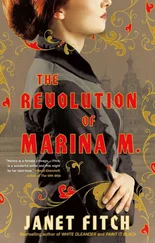
After the events of The Revolution of Marina M., the young Marina Makarova finds herself on her own amid the devastation of the Russian Civil War—pregnant and adrift in the Russian countryside, forced onto her own resourcefulness to find a place to wait out the birth of her child. She finds new strength and self-reliance to fortify her in her sojourn, and to prepare her for the hardships and dilemmas still to come.
When she finally returns to Petrograd, the city almost unrecognizable after two years of revolution, the haunted, half-emptied, starving Capital of Once Had Been, she finds the streets teeming with homeless children, victims of war. Now fully a woman, she takes on the challenge of caring for these civil war orphans, until they become the tool of tragedy from an unexpected direction.
But despite the ordeal of war and revolution, betrayal and privation and unimaginable loss, Marina at last emerges as the poet she was always meant to be.
Chimes of a Lost Cathedral finishes the epic story of Marina’s journey through some of the most dramatic events of the last century—as a woman and an artist, entering her full power, passion, and creativity just as her revolution reveals its true direction for the future.
Chimes of a Lost Cathedral — читать онлайн бесплатно полную книгу (весь текст) целиком
Ниже представлен текст книги, разбитый по страницам. Система сохранения места последней прочитанной страницы, позволяет с удобством читать онлайн бесплатно книгу «Chimes of a Lost Cathedral», без необходимости каждый раз заново искать на чём Вы остановились. Поставьте закладку, и сможете в любой момент перейти на страницу, на которой закончили чтение.
Интервал:
Закладка:
We approached Sestroretsk, dipping the oars quietly, and now I was thankful for the swells, the breaking of the waves on shore. We were close enough to hear a dog bark across the water. Silently now, we pulled. I found a star I could keep the stern of the boat trained on, dead opposite Peter. I saw someone on the dock with the lantern, but they could not see us. It was only after the lights were very small that I dared speak again. “Be careful here on the way back,” I said.
“Across seas, across waves, now here, but tomorrow there,” he sang.
“We can turn the motor on if you like.” Though my hand hurt just thinking of it.
“No, this is nice,” he said. “How much farther?”
“Not far. A few miles.”
“I’ll row. You go sit down, and watch Peter and Queen Marina.”
I handed him the port oar, making sure he had it firmly before I let go, and crawled back to the crates, where I could rest and watch Polaris. He started a new song, an orphan’s song about how everyone hated him, how he would die alone.
I crammed my fox-fur hat deeper onto my head, wrapped my coat tighter, listening to Makar sing, lulled by the rhythm of his rowing.
It was nice like that. I felt free. Just a few last hours in this boat, neither Russia nor Finland, neither past nor future, not here nor there, just me and the kid on the black, star-dotted water. I could hardly imagine how I might remember this hour in the years to come, how I would tell this story.
“Think you’ll stay in Finland?” the orphan asked.
“I don’t know what I’m going to do in twenty-four hours,” I said.
If you’d asked me yesterday, I would have said Buenos Aires wasn’t far enough. But the reality was beginning to set in, the gravity of what I’d done. Never to see Russia again. Everything I knew and loved, behind me. I just pray I’m buried on Russian soil, Avdokia had once said. I didn’t think she got her wish. And I certainly would not see a Russian grave, not Tikhvin Cemetery, not Novodevichy with Iskra.
Russia was a book whose cover was closing, and ahead lay the scent of wormwood and the bread of exile.
I suddenly saw them, our great poets, like a forest of tall trees, just as they’d been the day of Gumilev’s requiem at Kazan Cathedral.
While here, wrecking our youth’s last days
within the blaze’s blinding smoke
we have all steadfastly refused
to dodge a single savage stroke.
I was glad of the dark, that Makar couldn’t see my face right now.
Abandoning Russia. As I had abandoned everything.
I gazed up into the bristling stars, rocking in the waves and the pull of the oars, and wondered if somewhere there was another nursery on another Furshtatskaya Street, where another three girls stood over a different basin of water, and other wax was poured. I wondered what my fate would look like in that other world, whether I’d still be rowing here with Makar, the dead bobbing in my wake, the living going on nobly, holding up the domes of the cathedral without me.
As I fled, to hide in the West, shucking my burden, dodging the blows.
The oars slowed. Makar was tiring. Just as well. No point in arriving before dawn.
“Sing us a song,” he said. “It’s nicer that way.”
What should I sing him?
How about “Do Not Awaken My Memories”? Varvara’s joke that evening outside Belhausen knitwear factory, where we had distributed her illegal pamphlets so long ago. She’d lost her way, trying to steer a straight course by a crooked star.
All my songs died in my mouth, tragedies of parted lovers and faithless ones, women seeing soldiers off to war. How could I sing them now? I would have to break into the vodka and drown myself. All of our songs so bitter. Ironic—how I had once loved to pose as the melancholy girl singing Russia’s soulful tunes. I’d gloried in them—before I myself had felt the sorrow that had given them birth. Now that I felt them truly, I was unable to bring myself to sing them. They were too sharp. They would shed too bright a light now that I had been that woman watching the road, and also the faithless one, had known love’s flashing steel, the spear of longing. I was still bleeding from it.
Fleeing Russia, I was more Russian than I’d ever been.
But why should I allow my grief to rob me of my songs? I argued with myself. These songs were mine. I paid for them. I would own them as I pleased.
Quietly, unsteadily, I began to sing “The Wide Expanse of the Sea.” The splashing of oars matched my voice. “The sea stretches wide, the waves they roll far… Far from our land, far from our land we go.”
I thought of the lucky people somewhere, who’d lived their lives unbroken by circumstance. They must look in the mirror and, seeing themselves old, feel a jolt. Bewildered when grandchildren paged through their albums and laughed at the photographs, the old-fashioned clothes and hairstyles. Those people had become exiles without even knowing it. But I would not be surprised. The doors were already swinging shut, my clothes going out of style on my back.
And I would never return to my own native land, back to the one place that had ever mattered, the fixed point around which my whole life revolved—the House of Arts, that fraternity of the Word, the ship on the Moika Canal. Anton, my friend, lover, editor, in his window. Don’t go, we need you… It would all take place without me, the autumn season at the House, the Blok memorial and all the memorials to come… the new issue of Anvil would have a poem of mine, but after that—nothing. I would never see them again—Kuzmin and Chukovsky, Mandelstam, Inna Gants. New poets would arrive and they would never know my name. And how long until the ones I knew forgot me? Remember that girl who lived on Slezin’s floor, Anton’s girlfriend? Whatever became of her? I would disappear like a rock falling into water, as if I were already dead.
Eventually, inevitably, the stars turned in their great circle, and the shore began its shift, the line of trees not just to the east but also ahead. “We’re almost there,” I told the boy. “Let’s stop here, take a rest.”
I found the anchor in the bow of the boat and gently dropped it, the rope playing out until it caught and held.
Rocking on the swells, wrapped in my sheepskin and scarf, I thought about what Anton had said. Was it true, my life as a poet was over? If so, it was already done. I was cut off and already withering, severed from the living Russian language. Events would take place this fall without me, the writers coming together, that family of art, and I would be alone, more alone than I’d ever been in my life. Without lovers, friends, family, child, country.
When Iskra was coming, the midwife made me say goodbye as if it is your last day on earth. Forgive them.
I said goodbye. To the poets who knew me, and to the generation whose names I would never know, and who wouldn’t know mine. Goodbye to Russia, my native land, Mother Blackearth, with your orphans and your lunatics, your poets and rivers and graveyards. And Petersburg, to your waters and your graces and your sins. Goodbye to the kind ones, who kept my nose above waterline, to those who loved me, the living and the dead. And goodbye to you, my dearest, my fox, my folly, and my fate… I forgive you. We could not be other than what we were. I loved you more than anything, my dear, except freedom.
The boat rocked on. The boy was quiet, sleeping or just thinking his orphan thoughts of fame and manly triumphs. The stars burned on, the sea air rich with the salt of the seven continents, bitter with every tear that had ever been shed, bright with every slice of starlight.
Читать дальшеИнтервал:
Закладка:
Похожие книги на «Chimes of a Lost Cathedral»
Представляем Вашему вниманию похожие книги на «Chimes of a Lost Cathedral» списком для выбора. Мы отобрали схожую по названию и смыслу литературу в надежде предоставить читателям больше вариантов отыскать новые, интересные, ещё непрочитанные произведения.









Обсуждение, отзывы о книге «Chimes of a Lost Cathedral» и просто собственные мнения читателей. Оставьте ваши комментарии, напишите, что Вы думаете о произведении, его смысле или главных героях. Укажите что конкретно понравилось, а что нет, и почему Вы так считаете.