Джанет Фитч - Chimes of a Lost Cathedral
Здесь есть возможность читать онлайн «Джанет Фитч - Chimes of a Lost Cathedral» весь текст электронной книги совершенно бесплатно (целиком полную версию без сокращений). В некоторых случаях можно слушать аудио, скачать через торрент в формате fb2 и присутствует краткое содержание. Город: New York, Год выпуска: 2019, ISBN: 2019, Издательство: Little, Brown and Company, Жанр: Историческая проза, на английском языке. Описание произведения, (предисловие) а так же отзывы посетителей доступны на портале библиотеки ЛибКат.

- Название:Chimes of a Lost Cathedral
- Автор:
- Издательство:Little, Brown and Company
- Жанр:
- Год:2019
- Город:New York
- ISBN:978-0-316-51006-6
- Рейтинг книги:5 / 5. Голосов: 1
-
Избранное:Добавить в избранное
- Отзывы:
-
Ваша оценка:
Chimes of a Lost Cathedral: краткое содержание, описание и аннотация
Предлагаем к чтению аннотацию, описание, краткое содержание или предисловие (зависит от того, что написал сам автор книги «Chimes of a Lost Cathedral»). Если вы не нашли необходимую информацию о книге — напишите в комментариях, мы постараемся отыскать её.
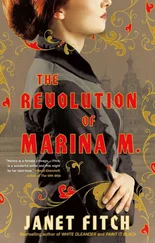
After the events of The Revolution of Marina M., the young Marina Makarova finds herself on her own amid the devastation of the Russian Civil War—pregnant and adrift in the Russian countryside, forced onto her own resourcefulness to find a place to wait out the birth of her child. She finds new strength and self-reliance to fortify her in her sojourn, and to prepare her for the hardships and dilemmas still to come.
When she finally returns to Petrograd, the city almost unrecognizable after two years of revolution, the haunted, half-emptied, starving Capital of Once Had Been, she finds the streets teeming with homeless children, victims of war. Now fully a woman, she takes on the challenge of caring for these civil war orphans, until they become the tool of tragedy from an unexpected direction.
But despite the ordeal of war and revolution, betrayal and privation and unimaginable loss, Marina at last emerges as the poet she was always meant to be.
Chimes of a Lost Cathedral finishes the epic story of Marina’s journey through some of the most dramatic events of the last century—as a woman and an artist, entering her full power, passion, and creativity just as her revolution reveals its true direction for the future.
Chimes of a Lost Cathedral — читать онлайн бесплатно полную книгу (весь текст) целиком
Ниже представлен текст книги, разбитый по страницам. Система сохранения места последней прочитанной страницы, позволяет с удобством читать онлайн бесплатно книгу «Chimes of a Lost Cathedral», без необходимости каждый раз заново искать на чём Вы остановились. Поставьте закладку, и сможете в любой момент перейти на страницу, на которой закончили чтение.
Интервал:
Закладка:
“What are you going to do when you get to Finland?” he shouted out over the engine’s clamor.
“Got an old friend in Kuokkala.” Maybe. I hoped Makar wouldn’t want to come with me. I didn’t want to be responsible for this unpredictable orphan who had just killed two men and stolen their boat. “How about you?”
“Maybe I’ll sell off that vodka and go back to Petrograd, be the new Wolf.”
He made me laugh. In less than an hour he’d gone from panicked weeping to planning to take over the Finn’s bizniss . “Don’t forget the brother in Sestroretsk. They might recognize the boat and come after you.”
“Don’t you worry about me,” he called back, his voice full of swagger. “Fuck the Wolf. And his brother.”
I fingered the ammunition boxes in my pocket as Makar spoke into the wind, feeling his way along the handholds of his imagination. “You know, the Wolf wasn’t going to let me in on anything. Son of a whore just wanted me to be his donkey, sell scumbags in front of the Little Brick. Now his suppliers can talk to me. Or maybe I’ll go to his competitors—even better. That guy you called Saint Peter, he knows things. He can’t even walk. He could use a partner.”
“You be careful.” How could I tell him what I knew about the big man with the salt-and-pepper hair? “That is a really bad man.”
But who could tell what would happen to Makar. Maybe he would end up being the new king of Petrograd—what did I know? Maybe he would become a commissar of foreign trade. I was through with predictions.
“First thing, they’ll try to knock me off,” he shouted. “I’ll need a gun.” He was already planning how to take over the Wolf’s business. “I come back wearing his coat, I’ll need more than talk, you know?”
He wanted my pistol, that’s what he was saying. “No. You’re asking for trouble.”
“I’ve got money now. I’ll go back to Saint Peter.”
What do you want, Marina? Maybe I had a deal for him. “What if we get there—if we get there—I let you have it. The boat, the gun, the whole thing. Just do me a favor when you get back.” If the boat held, if the gas held, if fortune favored.
“You know I will,” he said. “ Stvol or not.”
I thought of Anton, alone there, unprotected, with his ideas about the future. “There’s a man, a poet, his name is Anton Chernikov. He’s one of the eggheads at the House of Arts. Tall, pale, dark hair, grumpy. They’ll be hosting a Blok evening at the end of the month. Find him, and just… be his friend. Will you do that for me? He’ll need a friend, even if he doesn’t know it. Give him a little money, check on him from time to time, agreed?”
“He’s your boyfriend?”
“No. My boyfriend’s the one whose flat we just robbed.”
He started to laugh and I joined him, as the Wolf chased me across the sky.
I leaned against the crates of vodka, gazing up at the stars, thinking how Kolya would feel to see our flat, what I’d done to it—all that was left was the red-and-pink wallpaper. He’d certainly know my answer to what he’d proposed. If he’d loved me less selfishly, I’d be aboard the Haarlem tonight, instead of risking my life out here with the unpredictable Makar, a good chance of drowning before we ever reached Finland.
“Marina, something’s happening. The trees are gone.”
I sat up. I could see stars all the way down to the horizon. A light blinked on shore. I knew where we were. Lisy Nos. The Fox’s Nose. Right across from Kronstadt. If Pasha had run, this was where he would have come ashore. “The coast comes to a bend here,” I shouted. “Turn right. Steer toward Peter. And stay away from the shore.”
We were out of Neva Bay and into the Gulf of Finland, the deep water. When the shoreline turned west again we’d be at Kuokkala.
Now the boat rocked heavily on the swells, rolling in sideways. We wallowed in the troughs, not enough to capsize us but enough to upset our skipper. “This is making me sick,” Makar said. “You steer.” But I couldn’t stand up.
“Just zigzag a bit,” I shouted back. “Try not to let them come at you sideways.”
He did as I asked. The small boat still rose and fell, but more like a horse at a canter, not wallowing in a sick-making way. “You know a lot,” he said. “How come you know so much?”
“Because I’m old,” I said. “You’ll catch on. Maybe you should go back to school. You could go to the Rabfak.” The Workers’ University.
“Eh. Schoolteachers and me don’t get along,” he said.
“Read books. And talk to smart people. That’s school too.”
“Your friend—he’s smart like you?”
“Very smart.” Smart enough not to have come. Anton would have been suicidal by now. The death of the two men on Krestovsky would have been enough to have him running for home. He knew himself, I had to give him that. He knew his limitations, as I never did. I thought to mention that if the boat flipped over, the boy should cling to it, but I figured that would panic him more than help. He had pretty good instincts, except for the quick trigger finger.
The rocking was pretty rough, though, even with him zigzagging into the swells. How far was the shore? I imagined five hundred yards. Less. I could swim that—I hoped. Kick off my boots, lose my sheepskin, and hope there were no odd currents. Appear naked on the shore of what might be Finland or might still be Russia, newborn. Perhaps one of those crates of vodka would float.
“Look,” he said. “Is that it?”
A light, way up ahead, a couple of streetlights, a small town. A lantern moving on shore. Sestroretsk, it had to be. “Cut the motor.” Someone waiting for the Wolf, gazing out to sea.
“How do I do it?”
Oh damn. Carefully, I crawled back, keeping my weight low and in the center, rejoining him in the stern. I didn’t dare touch the motor’s spinning reel. My right hand still throbbed with pain, but I managed to light the lantern, keeping it low, beneath the sides of the boat, shielding it from shore. I pushed the throttle all the way left. It slowed and sputtered but wouldn’t quit. The motor could be heard a quarter mile.
Makar pointed to a square button, a piece of metal painted red. “What’s that?” A wire connected it to a cylinder. I pressed and held it—and merciful Virgin, the engine shut down.
Without the motor roaring, how silent it was. Just the swells and the beat of the waves. “Find an oar,” I said quietly. By the low lantern light I picked up the other, placed it in the starboard oarlock. “Put it in the lock and for God’s sake don’t drop it.” The wind had fallen off. It had been of our own making. Makar took his oar and dropped it into the port lock. He missed, but managed to grab it before it fell. “Sorry.”
“If you have to let go, remember to pull it into the boat first,” I whispered. “I’m going to turn us around now, so don’t row until I say so. Coming about.” I pulled on my oar, turning the boat in the cold and the spray. Then we began rowing, propelling ourselves backward, stroke by stroke. Now I was the one closest to the lights on the shore, my right hand twanging. I wondered if I could really swim to shore if I had to. We were ridiculously off rhythm. If he kept pulling after the waves lifted us, we were going to get nowhere.
“Ti MORryak, ti kraSIvi sam saBOYu…” I started to sing, low. “ You sailor, you are so handsome, and only twenty years old … Sing with me. Love me with all of your soul… ”
“I don’t know it.”
It was such an old song, I thought everyone knew it. But he was an orphan, he knew street songs, the songs of the besprizorniki . In a low voice, I taught him “You, Sailor”—he picked up the refrain right away, the sailor’s part. Across seas, across waves, now here, but tomorrow there .
Читать дальшеИнтервал:
Закладка:
Похожие книги на «Chimes of a Lost Cathedral»
Представляем Вашему вниманию похожие книги на «Chimes of a Lost Cathedral» списком для выбора. Мы отобрали схожую по названию и смыслу литературу в надежде предоставить читателям больше вариантов отыскать новые, интересные, ещё непрочитанные произведения.










Обсуждение, отзывы о книге «Chimes of a Lost Cathedral» и просто собственные мнения читателей. Оставьте ваши комментарии, напишите, что Вы думаете о произведении, его смысле или главных героях. Укажите что конкретно понравилось, а что нет, и почему Вы так считаете.