Джанет Фитч - Chimes of a Lost Cathedral
Здесь есть возможность читать онлайн «Джанет Фитч - Chimes of a Lost Cathedral» весь текст электронной книги совершенно бесплатно (целиком полную версию без сокращений). В некоторых случаях можно слушать аудио, скачать через торрент в формате fb2 и присутствует краткое содержание. Город: New York, Год выпуска: 2019, ISBN: 2019, Издательство: Little, Brown and Company, Жанр: Историческая проза, на английском языке. Описание произведения, (предисловие) а так же отзывы посетителей доступны на портале библиотеки ЛибКат.

- Название:Chimes of a Lost Cathedral
- Автор:
- Издательство:Little, Brown and Company
- Жанр:
- Год:2019
- Город:New York
- ISBN:978-0-316-51006-6
- Рейтинг книги:5 / 5. Голосов: 1
-
Избранное:Добавить в избранное
- Отзывы:
-
Ваша оценка:
Chimes of a Lost Cathedral: краткое содержание, описание и аннотация
Предлагаем к чтению аннотацию, описание, краткое содержание или предисловие (зависит от того, что написал сам автор книги «Chimes of a Lost Cathedral»). Если вы не нашли необходимую информацию о книге — напишите в комментариях, мы постараемся отыскать её.
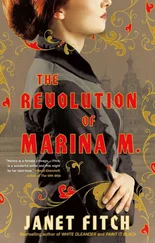
After the events of The Revolution of Marina M., the young Marina Makarova finds herself on her own amid the devastation of the Russian Civil War—pregnant and adrift in the Russian countryside, forced onto her own resourcefulness to find a place to wait out the birth of her child. She finds new strength and self-reliance to fortify her in her sojourn, and to prepare her for the hardships and dilemmas still to come.
When she finally returns to Petrograd, the city almost unrecognizable after two years of revolution, the haunted, half-emptied, starving Capital of Once Had Been, she finds the streets teeming with homeless children, victims of war. Now fully a woman, she takes on the challenge of caring for these civil war orphans, until they become the tool of tragedy from an unexpected direction.
But despite the ordeal of war and revolution, betrayal and privation and unimaginable loss, Marina at last emerges as the poet she was always meant to be.
Chimes of a Lost Cathedral finishes the epic story of Marina’s journey through some of the most dramatic events of the last century—as a woman and an artist, entering her full power, passion, and creativity just as her revolution reveals its true direction for the future.
Chimes of a Lost Cathedral — читать онлайн бесплатно полную книгу (весь текст) целиком
Ниже представлен текст книги, разбитый по страницам. Система сохранения места последней прочитанной страницы, позволяет с удобством читать онлайн бесплатно книгу «Chimes of a Lost Cathedral», без необходимости каждый раз заново искать на чём Вы остановились. Поставьте закладку, и сможете в любой момент перейти на страницу, на которой закончили чтение.
Интервал:
Закладка:
The tiller jutted out from the frame. The skiff’s motor had a kind of spool and a handle—a crank of some sort. The petrol tank was easy to identify, and a flat metal tongue poked out from under the spool. I shifted it from left to right, but nothing happened. I felt like a monkey looking at a gramophone. If it had sails, I could get us to Finland. Damn this kid, and that dead bastard Wolf. All the boy wanted was respect, how hard would that have been, just to include him? They’d both be alive, and we’d be on our way.
The boy knelt in the bottom of the boat, holding the lantern so I could see the motor’s levers and spool and not my own shadow.
Please, Theotokos, help this poor sailor. I grabbed the knob on the spool. Clearly, it was designed to be spun. “Well, here goes.”
It only rotated a half turn, but when it sprung back it cracked my knuckles hard enough to break them. I yelled as the motor sprang to life, the spool racing around like a fishing reel. How noisy it was! The boat lurched and strained against the rope.
“Slip that off,” I said, trying to ignore the fiery pain in my hand. I held on to the boy’s belt as he leaned out and slipped the rope from the mooring. Then we were chugging out into the dark channel of the Little Nevka, the motor spluttering and stinking. He looked down into the water as we left. “We did have a deal, motherfucker.” And he spit into the slow current.
“Kill that lantern,” I said.
He did as he was told. I took the tiller and headed west.
The sea roughened as we left Krestovsky Island and entered the gulf, waves slapping the bottom of the small skiff. “Hey, is it supposed to do this?” Makar grabbed the sides.
“It’s fine,” I said, hoping it was true.
The wind was cold. I was happy for my sheepskin and my hat. I turned north, trying to follow the shore. We struck something, there was an ugly scraping against the hull.
“What’s happening?” Makar cried. “Watch out!” But there was nothing to watch out for on this moonless night, that was the point. I had to do it by feel. I pulled off the rock or whatever it was, turning out deeper into the gulf. All I could see were stars, thick above us, and the dark mass where the trees were pasted against them on the starboard side. As I steered away from the hazards of the shore, I noticed the tree-line shadow diminish. When I came experimentally closer, I watched it rise up again. If I could just follow the line of darkness, I could navigate without running up on anything.
There was a bit of a chop, but it wasn’t terrifying, except when a wave lifted and dropped us unexpectedly, and the boy cried out. I found that by turning the lever to the right I gave the engine more petrol; turning it left slowed us down again. Better to go slow, save fuel, and arrive closer to dawn when I could see the shore better.
There was also the problem of the dead smugglers. And the boy. The liability of him was becoming more clear, and in any case I couldn’t take him to Helsinki with me.
“I never had a leather coat before. It’s so warm.” The Wolf’s pelt, with its blood and bullet holes. “Can I steer?”
I tried not to think bad luck boy. If it hadn’t been for him I wouldn’t be out here tonight, trying to steer by a dark strip against a vast sky of stars. But there was no such thing as luck, only fate, which could not be outrun. “Come over here, then.”
The boat shifted. I heard him fall to the deck. “Careful!”
I wondered if he could even swim. He crawled to me on hands and knees, and I slowly moved over on the bench, gingerly balancing our weight, helping him settle himself. With him and me in the stern, the boat rode differently, nose up, striking the water more forcefully, I could feel the roughness in the tiller. “This is how you steer.” I put his hand on the stick, and my uninjured one—the left—on top. “It goes the opposite of how you think. If you want to go left, push right.”
I guided our hands until he could feel the boat turning, then guided them back to the center. He laughed, as excited as a child. “Look, I’m doing it!” Captain Kidd.
As we bounced along the waves, wind in our ears, I studied the star-filled sky, located the Great Bear, or as they said in the West, the Big Dipper, and counted the five spans from its head and foot up to Polaris, the North Star, as Aristarkh Apollonovich had once taught me. North, off to the left above the line of trees. We were heading west-northwest. “See that star all alone, about halfway up above the trees?”
“Sure,” he shouted back. “Or maybe the one next to it.” Smart-ass.
“See the Great Bear?”
“Sure, they teach us all about that at the Higher Orphan Academy.”
So I taught him the rudiments of navigating by constellations, the certainties of the night sky. Though he was skeptical, he needed me, and the comfort of believing in me outweighed his doubt. I taught him to recognize the Great Bear—“They thought bears had tails?” It didn’t inspire confidence. I taught him that the night sky was like a big wheel, and as the night wore on, the stars would turn, all but Polaris. I drew the wheel on the back of his tiller hand, then traced its turning, like opening a doorknob, then poked the center of the wheel. “That’s the one we steer by. The North Star.”
I taught him to count the distance from the bear’s foot to his ear. “Can we call it a wolf?”
Better the wolf should be up in the star-filled heavens than pulling a knife on us here in the boat. I saw a theme emerging in the poem of our voyage. “Why not?”
Thank God we had the stars, a clear night. I never thought I would have to do this in earnest but the sky proved true, and there was Polaris halfway up the sky, above the starless line of trees. “If you can find it, you’ll never be lost.” A funny thing for me to say, who was more lost than anyone.
“It’s like that statue… the guy on the rock, down by St. Isaac’s. Just sits there, doesn’t change.”
The Bronze Horseman. “That’s Peter the Great.”
“Yeah. Let’s call him Peter.” Peter. It’s what we called Petersburg. My own fixed star, which lay farther and farther behind us.
“Now look to its right. Farther up, see the upside-down M ? That’s Cassiopeia, the queen on her chair.” We were going to devolve back to the first men, who told their stories about the stars. “The Wolf chases the Queen around the North Star.”
“Peter, you mean.”
“So sometimes you’ll see the Wolf upside down, and no Queen, because she’s beneath the horizon. Sometimes you’ll see the Queen and no Wolf. But Peter will always be there. He’s the ringmaster.” Call him Kolya. “Steer a little to the left.” He began steering right. Just like the Bolsheviks. “The other left.”
He corrected course. “Maybe the M ’s Marina.”
Marina, running from the wolf, in an endless circle around the ringmaster? I preferred the other story. “See the space where there aren’t stars? That’s the shoreline, the trees. Keep Peter where he is and we’ll follow that line until we get to Finland. Keep the trees about there, so you can see the stars.”
“You just figured this all out?” His voice awed that someone could observe something so simple and find a way to use it.
“Steady as she goes.” Cradling my damaged hand, I crab-crawled forward and settled in against the crates. Immediately the ride smoothed with the extra weight in the bow. I sat back against the crates and watched the Milky Way, imagining riding that celestial road. The sky was immense and far away, and we were very small in a tiny boat, navigating like ancient men had always done.
Читать дальшеИнтервал:
Закладка:
Похожие книги на «Chimes of a Lost Cathedral»
Представляем Вашему вниманию похожие книги на «Chimes of a Lost Cathedral» списком для выбора. Мы отобрали схожую по названию и смыслу литературу в надежде предоставить читателям больше вариантов отыскать новые, интересные, ещё непрочитанные произведения.







Обсуждение, отзывы о книге «Chimes of a Lost Cathedral» и просто собственные мнения читателей. Оставьте ваши комментарии, напишите, что Вы думаете о произведении, его смысле или главных героях. Укажите что конкретно понравилось, а что нет, и почему Вы так считаете.