Джанет Фитч - Chimes of a Lost Cathedral
Здесь есть возможность читать онлайн «Джанет Фитч - Chimes of a Lost Cathedral» весь текст электронной книги совершенно бесплатно (целиком полную версию без сокращений). В некоторых случаях можно слушать аудио, скачать через торрент в формате fb2 и присутствует краткое содержание. Город: New York, Год выпуска: 2019, ISBN: 2019, Издательство: Little, Brown and Company, Жанр: Историческая проза, на английском языке. Описание произведения, (предисловие) а так же отзывы посетителей доступны на портале библиотеки ЛибКат.
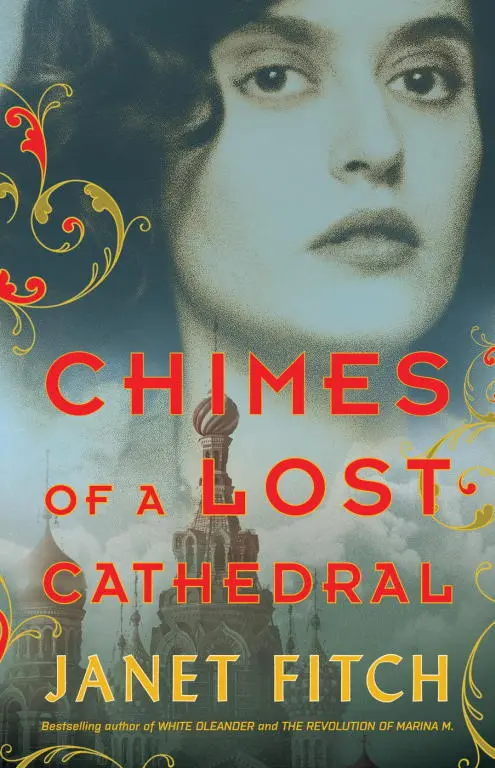
- Название:Chimes of a Lost Cathedral
- Автор:
- Издательство:Little, Brown and Company
- Жанр:
- Год:2019
- Город:New York
- ISBN:978-0-316-51006-6
- Рейтинг книги:5 / 5. Голосов: 1
-
Избранное:Добавить в избранное
- Отзывы:
-
Ваша оценка:
Chimes of a Lost Cathedral: краткое содержание, описание и аннотация
Предлагаем к чтению аннотацию, описание, краткое содержание или предисловие (зависит от того, что написал сам автор книги «Chimes of a Lost Cathedral»). Если вы не нашли необходимую информацию о книге — напишите в комментариях, мы постараемся отыскать её.
After the events of The Revolution of Marina M., the young Marina Makarova finds herself on her own amid the devastation of the Russian Civil War—pregnant and adrift in the Russian countryside, forced onto her own resourcefulness to find a place to wait out the birth of her child. She finds new strength and self-reliance to fortify her in her sojourn, and to prepare her for the hardships and dilemmas still to come.
When she finally returns to Petrograd, the city almost unrecognizable after two years of revolution, the haunted, half-emptied, starving Capital of Once Had Been, she finds the streets teeming with homeless children, victims of war. Now fully a woman, she takes on the challenge of caring for these civil war orphans, until they become the tool of tragedy from an unexpected direction.
But despite the ordeal of war and revolution, betrayal and privation and unimaginable loss, Marina at last emerges as the poet she was always meant to be.
Chimes of a Lost Cathedral finishes the epic story of Marina’s journey through some of the most dramatic events of the last century—as a woman and an artist, entering her full power, passion, and creativity just as her revolution reveals its true direction for the future.
Chimes of a Lost Cathedral — читать онлайн бесплатно полную книгу (весь текст) целиком
Ниже представлен текст книги, разбитый по страницам. Система сохранения места последней прочитанной страницы, позволяет с удобством читать онлайн бесплатно книгу «Chimes of a Lost Cathedral», без необходимости каждый раз заново искать на чём Вы остановились. Поставьте закладку, и сможете в любой момент перейти на страницу, на которой закончили чтение.
Интервал:
Закладка:
Finally alone, I strolled along the cemetery’s narrow, shady paths. I liked how unkempt it was, the untidy rows and heavy trees. Perhaps this was how it was going to be—beauty relegated to the hidden places, to tall weeds and mossy corners. I collected blooming weeds, asters and carrot and Queen Anne’s lace. I remembered walking with Mother in the yard at Maryino, the Queen Anne’s lace waist high. Then I noticed strawberries growing on the graves and along the paths, no bigger than my thumbnail. The longer I looked, the more I saw them. I collected the little heart-shaped berries in my pocket, careful not to bruise them. I wished certain of my charges were with me. I’d already taken a special interest in a few, though it wasn’t right to favor one over another. But that’s how it was in life—you liked certain people, and didn’t we all need to feel singled out by someone as special? Wasn’t that a secret gift I could still give? I’d had the idea I would save the berries for them, but in the end, I ate them all myself, sitting against a tree, watching clouds sail overhead. I could collect more before I left.
A man came strolling up the path, well dressed, wearing a light-colored suit and hat—a foreigner? An Englishman? French? And then the hat tipped back, and the grin. My mouth still full of strawberries.
62 The NEPman
He squatted down in his beautiful suit, not wanting to get grass stains on his trousers. I held out my hand full of berries. He lowered his mouth to my hand and ate them from my palm. The blood of the berries stained his lips as he chewed. It was my heart he was eating, that graveyard fruit. His mouth in my hand, his eyes closed. He had come for me, my Orpheus, to pluck me from the dead. Was he even alive, in his light summer suit and straw hat, shoes of two colors? His laughing eyes, upturned, oh, just like hers .
He took his hat off, his chestnut hair curly, longer than before. Slowly he pulled the scarf from my head, revealing my uncombed locks, which had spent the night in the bushes on the bank of the Pryazhka. His smell, I’d have known it in the last darkness before the grave—honey, and lime. And then we were falling into the grass, the years dissolved like dandelion floss.
A meadowlark cheeeeeed, the little flowers bloomed, and holding his face between my hands, I couldn’t remember what had ever parted us. His weight pinned me to the earth or I might have spun into the blue air. Kolya. His cheek against my hair. Who was that spoiled girl, throwing herself around in self-dramatizing outrage? Three years lost over a poor peasant woman in a cowshed.
I could hear people from the funeral shifting around us, unseen, the leftover song of that choir still hanging in the air, and this, gold and bright, lime and cigars, this secret of secrets. My love had come for me. The fleshy solidity of him, this was real. He’d put on weight. He’d always had a tendency, a chubby child, but had grown hard in the war years. “You saw my poem.”
“One can’t dance it alone,” he sang in my ear as he worked the buttons on my dress. That mouth, the top lip thin, the bottom full. His eyes, very blue and turned up at the corners, eyes made for laughter. His mouth on my neck, his hand under my skirt.
I didn’t believe in salvation. I knew prayer protected no one. But how else to account for this miracle? I could feel him against me, his knees parting my thighs. Were we going to make love in the cemetery? But what was all lovemaking but love in a graveyard under the sad, envious eyes of the dead.
We heard a gasp and looked up. A woman in patched clothing, accompanied by two children, hissed, “Have you no shame?”
“Have you no shame, Comrade?” I asked Kolya, my irrepressible love.
“Honestly, no.” But we stood and brushed ourselves off. I rebuttoned my dress and Kolya retrieved his hat. I retied my kerchief. We began to walk, arms around each other’s waists, like skaters. Our footsteps fell in perfect harmony, as they always did. We passed the poor scandalized woman again—she just couldn’t get clear of us. My face hurt from smiling. He’d come for me, as he’d said he would. I glanced up and down the paths, making sure no one else was watching. If either of us were arrested, it was hard to say who would be in more danger. But my fear seemed to be missing. I couldn’t remember its address. The Cheka would have to catch me on the run. Even they didn’t have the manpower.
From Smolensk Cemetery back to the center of the city was a two-mile walk, but it could have been fifty for all I cared. My head against his, my arm around that solid waist, the scent of his body, we could have walked right off the face of the earth, our feet in step. We stopped at the Sphinx on the Neva Embankment to pay our respects, stood, hip to hip, contemplating the statues—ancient, patient in exile, built for the timeless heat of the desert, and forced to endure the damp and the tedious frost of our northern clime. They seemed to be laughing at our clothing of frail flesh. Stone being the answer to all riddles.
Egypt made me think Gumilev, languishing in the hands of the Cheka, reminding me of the danger—but distantly, like someone shouting from a far shore. No one was paying attention to us, except to eye Kolya in his foreign clothes, glances variously revealing distrust, admiration, or disgust, depending on their outlook on the New Economic Policy, which had spawned a new race of people, the so-called NEPmen—traders and middlemen, gangsters.
But we’d never been able to walk the streets of Petrograd like this before, arm in arm, back when we’d been young and unscarred, when there weren’t ghosts fluttering all around us. There’d always been some reason we had to hide. First I was too young, next I was a boy. Then we were peasants. I laid my head on his shoulder. He didn’t know about Iskra. He didn’t know about Papa. And in the time we’d been apart, what women had he known? Where had he been? Across the river, the yellow blotch of the little mansion’s facade stirred in the water’s mirror.
We stopped beneath the Rostral Columns, the wind fresh in our faces. I thought of the day I almost gave myself to the river. Not even a year ago. And now he’d returned. His hand found my breast, his lips, my neck. His breath buzzed in my ear. “Don’t be sad,” he said. “We’re together.”
We crossed the bridge, the shifting green waters glinting in the summer sun. He glanced up as we passed the yellow mansion, an end and a beginning, and leaned in to rest his cheek on mine. We didn’t say anything, we didn’t dare. There was broken glass everywhere in the space around the present. In Palace Square, the weeds grew up through the stones, and the sculptures atop the General Staff arch watched us enviously, the way chessmen would watch two pieces moving across a board of their own volition.
We leaned against the railing where the Moika met the Fontanka at the foot of the Summer Garden, our faces pressed closer as we peered down into the cool shifting blues and greens. A swan floated by, poking at some duckweed. “Still love me?” he asked. I leaned against him as a horse does when you groom it. “I dreamed this,” he said. “Standing here with you.” Holding his straw hat, he looked like a figure in a French painting. His wristwatch was gold, his necktie soft yellow. There was too much to say. My father saw you in Estonia. They dumped his body on my doorstep. We had a baby, her name was Iskra. Varvara’s dead, I think. There’s no one left but us. He bit me softly where my neck met my shoulder, sending an electric charge through me. I could stay here forever, in the shade of the tossing boughs, an old man painting on a small easel… I felt sleepy, as if I were in a trance.
Читать дальшеИнтервал:
Закладка:
Похожие книги на «Chimes of a Lost Cathedral»
Представляем Вашему вниманию похожие книги на «Chimes of a Lost Cathedral» списком для выбора. Мы отобрали схожую по названию и смыслу литературу в надежде предоставить читателям больше вариантов отыскать новые, интересные, ещё непрочитанные произведения.








Обсуждение, отзывы о книге «Chimes of a Lost Cathedral» и просто собственные мнения читателей. Оставьте ваши комментарии, напишите, что Вы думаете о произведении, его смысле или главных героях. Укажите что конкретно понравилось, а что нет, и почему Вы так считаете.