Джанет Фитч - Chimes of a Lost Cathedral
Здесь есть возможность читать онлайн «Джанет Фитч - Chimes of a Lost Cathedral» весь текст электронной книги совершенно бесплатно (целиком полную версию без сокращений). В некоторых случаях можно слушать аудио, скачать через торрент в формате fb2 и присутствует краткое содержание. Город: New York, Год выпуска: 2019, ISBN: 2019, Издательство: Little, Brown and Company, Жанр: Историческая проза, на английском языке. Описание произведения, (предисловие) а так же отзывы посетителей доступны на портале библиотеки ЛибКат.

- Название:Chimes of a Lost Cathedral
- Автор:
- Издательство:Little, Brown and Company
- Жанр:
- Год:2019
- Город:New York
- ISBN:978-0-316-51006-6
- Рейтинг книги:5 / 5. Голосов: 1
-
Избранное:Добавить в избранное
- Отзывы:
-
Ваша оценка:
Chimes of a Lost Cathedral: краткое содержание, описание и аннотация
Предлагаем к чтению аннотацию, описание, краткое содержание или предисловие (зависит от того, что написал сам автор книги «Chimes of a Lost Cathedral»). Если вы не нашли необходимую информацию о книге — напишите в комментариях, мы постараемся отыскать её.
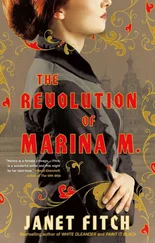
After the events of The Revolution of Marina M., the young Marina Makarova finds herself on her own amid the devastation of the Russian Civil War—pregnant and adrift in the Russian countryside, forced onto her own resourcefulness to find a place to wait out the birth of her child. She finds new strength and self-reliance to fortify her in her sojourn, and to prepare her for the hardships and dilemmas still to come.
When she finally returns to Petrograd, the city almost unrecognizable after two years of revolution, the haunted, half-emptied, starving Capital of Once Had Been, she finds the streets teeming with homeless children, victims of war. Now fully a woman, she takes on the challenge of caring for these civil war orphans, until they become the tool of tragedy from an unexpected direction.
But despite the ordeal of war and revolution, betrayal and privation and unimaginable loss, Marina at last emerges as the poet she was always meant to be.
Chimes of a Lost Cathedral finishes the epic story of Marina’s journey through some of the most dramatic events of the last century—as a woman and an artist, entering her full power, passion, and creativity just as her revolution reveals its true direction for the future.
Chimes of a Lost Cathedral — читать онлайн бесплатно полную книгу (весь текст) целиком
Ниже представлен текст книги, разбитый по страницам. Система сохранения места последней прочитанной страницы, позволяет с удобством читать онлайн бесплатно книгу «Chimes of a Lost Cathedral», без необходимости каждый раз заново искать на чём Вы остановились. Поставьте закладку, и сможете в любой момент перейти на страницу, на которой закончили чтение.
Интервал:
Закладка:
It was fully night when he revealed the flat’s final secret. In the back hall, past a tiny kitchen, a door revealed a miracle. A private bath. Toilet, sink, little clawed tub. He turned on the taps, and water ran. But that wasn’t the end. In a few moments, hot water splashed into the slipper-shaped tub. “Your bath, madame.” He extended his hand, helped me in. I had to suck my teeth as I lowered myself into the steaming tub—the water was that hot, and my body had been thoroughly tenderized. But then, such bliss. Kolya knelt next to me, soaped a washcloth. Pears soap… It brought back my childhood, the English herbs, slightly resinous, Avdokia kneeling by the tub, washing me. I should have gone back for her. Everything could have been different… which wasn’t to say it would have been any better. I had to remember that. There were infinite ways things could go wrong.
But right now, Kolya Shurov was washing my back, the old scars. Shampooing my hair. It was mesmerizing to be so intimately tended, his strong, short fingers rubbing my head, then pouring water through my hair. “It’s grown out,” he said, squeezing it with the side of his hand.
I was a boy the last time he saw me, leaving him at the Tikhvin station, as he’d wept and begged me to come back. I didn’t want to think about that now. Life was giving us another chance. I wouldn’t question it, question what he was doing here or how long he would stay. I could feel he was dying to tell me. He was fat with secrets. I had secrets too, but unlike him, there would be no fun in revealing them.
Kolya scrubbed my feet, my knees and elbows, the water in the tub grew as murky as standing water in a Petrograd courtyard. As he laved me, he sang a song. I didn’t recognize it at first. And then I realized he was singing in English, and though it was somewhat changed, I knew it. “The river’s so empty nowadays. / All the gray horses are gone…” He rinsed out the cloth, hung it on the side of the tub. “ I try to remember the tango, but one can’t dance it alone… Some friends set it to music. Like it? The drowned bell is a little obscure, but it was quite the success.”
“When did you learn English?” I said.
“One does what one must,” he said in English.
I rested my head on the back of the tub. Yes, yes, there was something about him, now it had come up. “That’s where you’ve been, England? Where in England?”
“Different places. Regret is a bell, a secret, / An island carved in the mind. / Brave words once said in a station… ”
My poem had become a song. People in England sang it. “Funny, I pictured you in Paris. At a café, drinking champagne with a flock of attentive mademoiselles.”
“Oh, squadrons of them. Battalions,” he said. He pulled the plug, helped me out of the filthy water. “Unfortunately, there’s not much of a living in drinking champagne, and money doesn’t come floating down the Seine. Many other things, but not money. Paris is stinking with émigrés—they’re driving cabs, waiting tables. Princes and generals.” He wrapped a clean linen towel around me and rubbed my shoulders. “England provided a clearer field. They remember Dmitry Makarov there.”
Oh God.
“There were some interesting prospects—better on a number of levels.” He lit an Egyptian cigarette, oval-shaped, from a box with a bird goddess on the lid.
As I dried my hair, he sat on the edge of the tub and ran a bath for himself. Hot water gushed. I thought of my poor orphans being washed ten to a pail of cold water. He climbed in, set the ashtray on the rim, and sighed as I combed my hair in the mirror, wiping the steam. “Look how domestic we are,” I said to him in the mirror. “Like an old married couple.”
“Married couples don’t fuck like that,” he said.
“How would you know?”
He turned his head to the side to puff on his cigarette. “From keen observation. How is your husband, by the way?”
“Writing propaganda for our masters. How about you? What brings you to our shores? Nostalgia for vobla ?”
He stuck a foot up in the air, twitched it to the left and the right. A squarish foot, not as long as Anton’s nor as shapely as Pashol’s. Funny that the sailor had the aristocrat’s foot, the aristocrat a peasant’s. I picked up the washcloth, knelt and soaped it, scrubbed the wide sole, the sturdy toes.
“England and Russia signed a trade agreement,” he said. “At the end of March.”
Just after Kronstadt. You could never underestimate the duplicity of our masters. They had to have been negotiating it even before the New Economic Policy. At the very moment they were crushing the rebellion, they knew what was coming.
“British labor unions pushed the trade deal through. They knew that the revolution was going to topple unless Lenin got some help—grain for the harvest shortfall, and the restoration of manufacturing. Now he’s offering concessions in exchange for hard currency. Mining, industry. You can’t make this kind of thing up—Western trade unions, pushing for a treaty that’s going to help bloodsucking capitalists get their hooks into Bolshevik Russia. There’s a poem in there somewhere, don’t you think? You could call it ‘ Zholty Dom. ’” Yellow house —another way of saying madhouse. He turned over in a slosh of water like a fleshy seal so I could wash his back, perching his chin on the tub’s rim. “Of course, the capitalists need a little help when it comes to dealing with the Kremlin. Someone with Russian insight, who knows the game. So who happens to be in London just at this very time? Why, our old friend Nikolai Shurov!”
“I’ve heard of him,” I said, smoothing the creamy soap over his shoulders. He still had freckles… like mine. Iskra would have had them too. I kissed them, trying not to think about the new political turn. “Shurov, wasn’t he a speculator, an agent of counterrevolutionary émigré groups?”
He laughed, flicking his ash into the ashtray he’d placed on the floor. “ Biznissman . Old family friend of Dmitry Ivanovich Makarov, Russian liberal and friend to the English.”
And shot in a Cheka cell.
I didn’t know how I felt about Kolya trading on Father’s reputation to find a place for himself in the world. I tried to get over my sense of shock. Of course he would use whatever tool came to hand. He was stateless, a pariah at home, a foreigner abroad. He wasn’t doing anything any of us wouldn’t have done. Though it looked as if he was doing better than we ever would.
“This Shurov, he meets a friend of your father’s, Sir Graham Stanley, owner of coal mines in Wales and a steel factory in Sheffield. Sir Graham is particularly interested in the idea of Russian mineral rights. Oil, specifically. So, they meet with Litvinov and Chicherin, our good Soviet foreign representatives, first in London, then in Moscow, to see what goodies the Bolsheviks might be willing to lease. They even meet with the Great Revolutionary Devil himself.”
“You met Lenin?” It was ludicrous, but I believed him.
“Or a brilliant facsimile.” He ducked his head back into the water, holding his cigarette aloft. He shook the water off his face and hair like a dog. “No doubt he’d read my Cheka file, but nothing was said about that. Nothing must disturb the deal with Sir Graham. Suddenly capitalists are back in vogue. The very thing I would have eaten lead for last year. But this year I’m the honorable Mr. Shurov, of the What-Can-We-Do-for-You Shurovs of St. Petersburg, Moscow, London, and Nottingham, England. Yes, Mr. Shurov. No, Mr. Shurov . Chicherin himself takes my calls. Mr. Shurov calling on behalf of Sir Graham Stanley. Oh yes, Mr. Shurov, what can we do for you? Hang around, you’ll see.”
Читать дальшеИнтервал:
Закладка:
Похожие книги на «Chimes of a Lost Cathedral»
Представляем Вашему вниманию похожие книги на «Chimes of a Lost Cathedral» списком для выбора. Мы отобрали схожую по названию и смыслу литературу в надежде предоставить читателям больше вариантов отыскать новые, интересные, ещё непрочитанные произведения.











Обсуждение, отзывы о книге «Chimes of a Lost Cathedral» и просто собственные мнения читателей. Оставьте ваши комментарии, напишите, что Вы думаете о произведении, его смысле или главных героях. Укажите что конкретно понравилось, а что нет, и почему Вы так считаете.