Elodie Harper - The Wolf Den
Здесь есть возможность читать онлайн «Elodie Harper - The Wolf Den» весь текст электронной книги совершенно бесплатно (целиком полную версию без сокращений). В некоторых случаях можно слушать аудио, скачать через торрент в формате fb2 и присутствует краткое содержание. Город: London, Год выпуска: 2021, ISBN: 2021, Издательство: Head of Zeus, Жанр: Историческая проза, на английском языке. Описание произведения, (предисловие) а так же отзывы посетителей доступны на портале библиотеки ЛибКат.
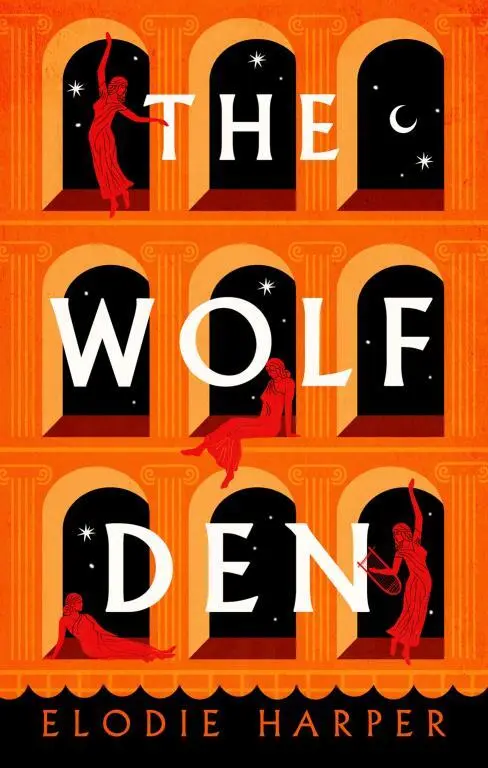
- Название:The Wolf Den
- Автор:
- Издательство:Head of Zeus
- Жанр:
- Год:2021
- Город:London
- ISBN:978-1-83893-353-1
- Рейтинг книги:3 / 5. Голосов: 1
-
Избранное:Добавить в избранное
- Отзывы:
-
Ваша оценка:
The Wolf Den: краткое содержание, описание и аннотация
Предлагаем к чтению аннотацию, описание, краткое содержание или предисловие (зависит от того, что написал сам автор книги «The Wolf Den»). Если вы не нашли необходимую информацию о книге — напишите в комментариях, мы постараемся отыскать её.
The Wolf Den — читать онлайн бесплатно полную книгу (весь текст) целиком
Ниже представлен текст книги, разбитый по страницам. Система сохранения места последней прочитанной страницы, позволяет с удобством читать онлайн бесплатно книгу «The Wolf Den», без необходимости каждый раз заново искать на чём Вы остановились. Поставьте закладку, и сможете в любой момент перейти на страницу, на которой закончили чтение.
Интервал:
Закладка:
The play’s end surprises her. Thais gets to keep both her lovers – the one she likes and the one who pays. She looks at Rufus who is cheering enthusiastically. Perhaps her life will disturb him less than she feared. He turns to her, face lit with excitement. “Did you like it?”
“It was wonderful !” she exclaims. “I cannot think of a happier evening!”
“I’m so glad,” he says, kissing her hand. “I hoped you would.”
They spill back out onto the streets with the rest of the audience. Laughter and conversation warm the evening air. Amara can see a small crowd pressed around Marcella’s bar and instinctively turns away.
“Is there somewhere to entertain privately at your place?” Rufus asks. He has not yet been to the brothel – one of his slaves was sent to collect her.
“Oh!” Amara says, looking horrified. “We couldn’t go there!” She imagines Rufus stepping into the narrow, sooty corridor, greeted by some vomiting laundryman, embracing her to the sound of Victoria’s moaning, the air stagnant with the smell from the latrine. She would never see him again. “It’s a terrible place!”
“But you seem so… lovely,” Rufus replies, looking at the nearly-respectable white dress, her carefully dressed hair.
Amara knows she cannot tell him she is ashamed of the squalor; she must invent a more poetic reason to stay away. “My master is unbelievably cruel,” she replies. “If he thought there was a chance I might be happy with you, even for an hour, he would never let me see you again.”
“Really?” Rufus looks alarmed.
Amara glances at him sidelong, as if too shy to be direct. “If he thought I might care for anyone, he would punish me dreadfully.” Even as she says it, she can imagine Felix laughing. As if he would care about anything other than the money.
Rufus squeezes her hand. “I will take you to my home. My parents are away for the summer.”
They walk to his house, accompanied by a small retinue of slaves who must have had to hang around outside the theatre during the performance. Rufus is still enjoying talking about the play, and together, they amuse themselves imagining what mischief Thais and her lover might make after the action has ended. “And even our eunuch married his girl in the end,” he says about the rapist, “so no harm done.”
The porter lets them in, and Amara feels a flood of relief that they did not go to the brothel. It is a wealthy home, not far from Zoilus’s house, and as Rufus leads her across the atrium, a beautiful marine mosaic beneath their feet, she imagines his horror at the Wolf Den’s baked mud floor. They pass through the courtyard, and he stops to break off a sprig of jasmine.
“This scent always makes me think of you,” he says, giving it to her. “The way you were sitting in that garden! Surrounded by a thousand white stars. I was just thinking to myself I had no idea the admiral had a daughter and then I remembered…” He stops abruptly.
And then you remembered Pliny had hired a whore , Amara thinks. “That’s such a beautiful thing to say,” she whispers, inhaling the flower’s scent before tucking the stem behind her ear. “Thank you.” She doesn’t stop him when he kisses her this time. Why else, after all, is she here?
“A little further,” he says, letting go of her. “My rooms are this way.” One of the slaves has accompanied them, and Rufus turns to him before leading her off. “Some refreshments please, Vitalio.”
Rufus’s rooms are set off the large garden. She smiles to herself to see the paintings on the walls: theatre masks and actors on stage. Rufus offers her a couch, reclining beside her. Vitalio brings them wine and sets down a light supper on a small table by the couch: bread, cheese, dried figs. Then he leaves.
It is clear Rufus has no intention of eating yet. No sooner is Vitalio gone, than he is all over her. Amara finds herself unexpectedly afraid. This feels too familiar, too like the brothel. So much rests on him liking her, and she has no idea how a courtesan might be expected to behave. Should she acquiesce or will he want to chase her?
“Stop!” she says, pushing him off and sitting up. She rearranges her dress to cover herself. Her heart is pounding with anxiety. “Just a moment.”
Rufus is looking at her in surprise. He had not, after all, been violent. And what else is a man meant to do when he has hired a woman for the night?
She thinks of Thais, of the illusion of power she wielded. Rufus believes that is what life is really like. He has all the power, and she has none, but he does not know this. And she cannot let him realize.
She turns to him in anger. “You presume too much.”
They stare at one another in mutual astonishment. The words seemed to come from someone else. It is a part Amara is playing, yet somehow, she just found her own voice. She takes the jasmine flower from her hair, allowing the real anger she always carries inside to catch fire. “So you thought I was the admiral’s daughter,” she says. “And then, because I am not, you decide to treat me as a whore. I told you that this has not always been my life, that I value kindness and respect and you show me none .”
Amara is ready for him to argue, ready to leave him, to blaze out into the night in rage, but Rufus immediately surrenders.
“I’m sorry,” he says, brow creased with remorse. “I didn’t mean to upset you.”
Amara finds, having lit the spark, it is not so easy to extinguish it. “Is that what you think? That you can take without asking?” she demands.
“No! Not at all, I…”
“What about all these plays that mean so much to you? What about love?” Her voice is scathing. “I have enough clients,” she lies. “I thought you were different; I thought you wanted something else.” The anger is starting to take on a momentum beyond Rufus, and she knows she has to stop. She takes a breath, turning her face aside, as if to hide emotion. “I thought you might care for me.” She falls silent, waiting to see if he will accept the role she is offering.
He touches her arm, tentatively at first, then more confidently when she doesn’t move away. “Please,” he says, laying his hand over hers. “I’m very sorry. Let me make it up to you.”
Amara slowly allows herself to be won round. It isn’t a difficult part for her to play. Nobody has ever made such an effort to charm her. Rufus teases her, playfully trying to serve her food, turning all his humour against himself. He smiles and his cheeks dimple like Cupid. Amara accepts the glass of wine he offers, smiles back when he compares himself unfavourably to the ‘eunuch’ in the play they have just seen and, when he finally jokes about the terrifying effect that her anger had on him, widening his eyes in a ridiculous parody of surprise, she finds her laughter is genuine.
“I do so wish I could write for the theatre,” he tells her, once they are clearly friends again. He gestures at her to take a handful of dried figs then, when she has, helps himself. “But I don’t have any talent.”
“I can’t believe that’s true.”
“No, it is. I might be an idiot, but at least I know that I am,” he says. “And besides, my father would hate it. He wants me to run for aedile next year.” He pulls a face. “Can you imagine? All that endless smarming, getting people to vote for you, followed by a year of total tedium listening to everyone drone on about grain distribution. I’d be hopeless at it.”
“Couldn’t you choose the celebrations you threw though?” she says, thinking of Fuscus. “Maybe a free performance at the theatre rather than the usual games at the arena?”
“Yes, I had been thinking that.” His look of surprise reminds her of Pliny when she quoted Herophilos. “Might make the whole thing more bearable.” They smile at each other. He holds her gaze and leans closer, then, when she doesn’t move away, kisses her. There is more sensitivity to him this time; she can tell he is trying not to rush her. “I have to ask you something,” he says, stroking her arm. “I know you are trapped by your life at the… where you live. I know you don’t have a choice. But is your heart free?”
Читать дальшеИнтервал:
Закладка:
Похожие книги на «The Wolf Den»
Представляем Вашему вниманию похожие книги на «The Wolf Den» списком для выбора. Мы отобрали схожую по названию и смыслу литературу в надежде предоставить читателям больше вариантов отыскать новые, интересные, ещё непрочитанные произведения.












Обсуждение, отзывы о книге «The Wolf Den» и просто собственные мнения читателей. Оставьте ваши комментарии, напишите, что Вы думаете о произведении, его смысле или главных героях. Укажите что конкретно понравилось, а что нет, и почему Вы так считаете.