Ken Follett - World Without End
Здесь есть возможность читать онлайн «Ken Follett - World Without End» весь текст электронной книги совершенно бесплатно (целиком полную версию без сокращений). В некоторых случаях можно слушать аудио, скачать через торрент в формате fb2 и присутствует краткое содержание. Жанр: Историческая проза, на английском языке. Описание произведения, (предисловие) а так же отзывы посетителей доступны на портале библиотеки ЛибКат.
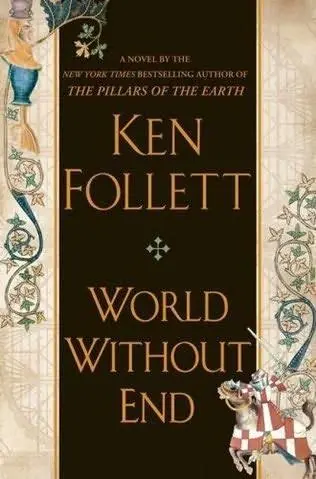
- Название:World Without End
- Автор:
- Жанр:
- Год:неизвестен
- ISBN:нет данных
- Рейтинг книги:5 / 5. Голосов: 1
-
Избранное:Добавить в избранное
- Отзывы:
-
Ваша оценка:
World Without End: краткое содержание, описание и аннотация
Предлагаем к чтению аннотацию, описание, краткое содержание или предисловие (зависит от того, что написал сам автор книги «World Without End»). Если вы не нашли необходимую информацию о книге — напишите в комментариях, мы постараемся отыскать её.
Ken Follett has 90 million readers worldwide. The Pillars of the Earth is his bestselling book of all time. Now, eighteen years after the publication of The Pillars of the Earth, Ken Follett has written the most-anticipated sequel of the year, World Without End.
In 1989 Ken Follett astonished the literary world with The Pillars of the Earth, a sweeping epic novel set in twelfth-century England centered on the building of a cathedral and many of the hundreds of lives it affected. Critics were overwhelmed-"it will hold you, fascinate you, surround you" (Chicago Tribune)-and readers everywhere hoped for a sequel.
World Without End takes place in the same town of Kingsbridge, two centuries after the townspeople finished building the exquisite Gothic cathedral that was at the heart of The Pillars of the Earth. The cathedral and the priory are again at the center of a web of love and hate, greed and pride, ambition and revenge, but this sequel stands on its own. This time the men and women of an extraordinary cast of characters find themselves at a crossroad of new ideas-about medicine, commerce, architecture, and justice. In a world where proponents of the old ways fiercely battle those with progressive minds, the intrigue and tension quickly reach a boiling point against the devastating backdrop of the greatest natural disaster ever to strike the human race-the Black Death.
Three years in the writing, and nearly eighteen years since its predecessor, World Without End breathes new life into the epic historical novel and once again shows that Ken Follett is a masterful author writing at the top of his craft.
World Without End — читать онлайн бесплатно полную книгу (весь текст) целиком
Ниже представлен текст книги, разбитый по страницам. Система сохранения места последней прочитанной страницы, позволяет с удобством читать онлайн бесплатно книгу «World Without End», без необходимости каждый раз заново искать на чём Вы остановились. Поставьте закладку, и сможете в любой момент перейти на страницу, на которой закончили чтение.
Интервал:
Закладка:
Godwyn had expected something like this. Carlus hated furniture to be moved, for then he would stumble over it; and he opposed any other kind of change, out of a parallel anxiety about coping with the unfamiliar.
Theodoric had a quick answer to Carlus. “All the more reason for us to be strict about the rules,” he said. “A man who lives next door to a tavern must be extra careful to avoid drunkenness.”
There was a murmur of pleased agreement: the monks enjoyed a smart riposte. Godwyn gave a nod of approval. The fair-skinned Theodoric blushed with gratification.
Emboldened, a novice called Juley said in a loud whisper: “Women don’t bother Carlus, he can’t see them.” Several monks laughed, though others shook their heads in disapproval.
Godwyn felt it was going well. He seemed to be winning the argument, so far. Then Prior Anthony said: “Exactly what are you proposing, Brother Godwyn?” He had not been to Oxford, but he knew enough to press for his opponent’s real agenda.
Reluctantly, Godwyn put his cards on the table. “We might consider reverting to the position as it was in the time of Prior Philip.”
Anthony persisted: “What do you mean by that, exactly? No nuns?”
“Yes.”
“But where would they go?”
“The nunnery could be removed to another location, and become a remote cell of the priory, like Kingsbridge College, or St-John-in-the-Forest.”
That shocked them. There was a clamour of comment, which the prior suppressed with difficulty. The voice that emerged from the hubbub was that of Joseph, the senior physician. He was a clever man, but proud, and Godwyn was wary of him. “How would we run a hospital without nuns?” he said. His bad teeth caused him to slur his sibilants, making him sound drunk, but he spoke with no less authority. “They administer medicines, change dressings, feed the incapable, comb the hair of senile old men-”
Theodoric said: “Monks could do all that.”
“Then what about childbirth?” Joseph said. “We often deal with women who are having difficulty bringing a baby into the world. How could monks help them without nuns to do the actual… handling?”
Several men voiced their agreement, but Godwyn had anticipated this question, and now he said: “Suppose the nuns removed to the old lazar house?” The leper colony – or lazar house – was on a small island in the river on the south side of the town. In the old days it had been full of sufferers, but leprosy seemed to be dying out, and now there were only two occupants, both elderly.
Brother Cuthbert, who was a wit, muttered: “I wouldn’t want to be the one to tell Mother Cecilia she’s being moved to a leper colony.” There was a ripple of laughter.
“Women should be ruled by men,” said Theodoric.
Prior Anthony said: “And Mother Cecilia is ruled by Bishop Richard. He would have to make a decision such as this.”
“Heaven forbid that he should,” said a new voice. It was Simeon, the treasurer. A thin man with a long face, he spoke against every proposal that involved spending money. “We could not survive without the nuns,” he said.
Godwyn was taken by surprise. “Why not?” he said.
“We don’t have enough money,” Simeon said promptly. “When the cathedral needs repair, who do you think pays the builders? Not us – we can’t afford it. Mother Cecilia pays. She buys supplies for the hospital, parchment for the scriptorium and fodder for the stables. Anything used communally by both monks and nuns is paid for by her.”
Godwyn was dismayed. “How can this be? Why are we dependent on them?”
Simeon shrugged. “Over the years, many devout women have given the nunnery land and other assets.”
That was not the whole story, Godwyn felt sure. The monks also had extensive resources. They collected rent and other charges from just about every citizen of Kingsbridge, and they held thousands of acres of farmland too. The way the wealth was husbanded must be a factor. But there was no point going into that now. He had lost the argument. Even Theodoric was silent.
Anthony said complacently: “Well, that was a most interesting discussion. Thank you, Godwyn, for asking the question. And now let us pray.”
Godwyn was too angry for prayer. He had gained nothing of what he wanted, and he was unsure where he had gone wrong.
As the monks filed out, Theodoric gave him a frightened look and said: “I didn’t know the nuns paid for so much.”
“None of us knew,” Godwyn said. He realized he was glaring at Theodoric, and made amends hastily, adding: “But you were splendid – you debated better than many an Oxford man.”
It was just the right thing to say, and Theodoric looked happy.
This was the hour for monks to read in the library or walk in the cloisters, meditating, but Godwyn had other plans. Something had been nagging him all through dinner and chapter. He had thrust it to the back of his mind, because more important things had intervened, but now it came back. He thought he knew where Lady Philippa’s bracelet might be.
There were few hiding places in a monastery. The monks lived communally: no one but the prior had a room to himself. Even in the latrine they sat side by side over a trough that was continuously flushed by a stream of piped water. They were not permitted to have personal possessions, so no one had his own cupboard or even box.
But today Godwyn had seen a hiding place.
He went upstairs to the dormitory. It was empty. He pulled the blanket cupboard away from the wall and removed the loose stone, but he did not look through the hole. Instead, he put his hand into the gap, exploring. He felt the top, bottom and sides of the hole. To the right there was a small fissure. Godwyn eased his fingers inside and touched something that was neither stone nor mortar. Scrabbling with his fingertips, he drew the object out.
It was a carved wooden bracelet.
Godwyn held it to the light. It was made of some hard wood, probably oak. The inner surface was smoothly polished, but the outside was carved with an interlocking design of bold squares and diagonals, executed with pleasing precision: Godwyn could see why Lady Philippa was fond of it.
He put it back, restored the loose stone and returned the cupboard to its usual position.
What did Philemon want with such a thing? He might be able to sell it for a penny or two, though that would be dangerous because it was so recognizable. But he certainly could not wear it.
Godwyn left the dormitory and went down the stairs to the cloisters. He was in no mood for study or meditation. He needed to talk over the day’s events. He felt the need to see his mother.
The thought made him apprehensive. She might berate him for his failure in chapter. But she would praise him for his handling of Bishop Richard, he felt sure, and he was eager to tell her the story. He decided to go in search of her.
Strictly speaking, this was not allowed. Monks were not supposed to roam about the streets of the town at will. They needed a reason, and in theory they were supposed to ask the prior’s permission before leaving the precincts. But in practice, the obedientiaries – monastic officials – had dozens of excuses. The priory did business constantly with merchants, buying food, cloth, shoes, parchment, candles, garden tools, tack for horses, all the necessities of everyday life. The monks were landlords, owning almost the entire city. And any one of the physicians might be called to see a patient who was unable to walk to the hospital. So it was common to see monks in the streets, and Godwyn, the sacrist, was not likely to be asked to explain what he was doing out of the monastery.
Nevertheless it was wise to be discreet, and he made sure he was not observed as he left the priory. He passed through the busy fair and went quickly along the main street to his Uncle Edmund’s house.
Читать дальшеИнтервал:
Закладка:
Похожие книги на «World Without End»
Представляем Вашему вниманию похожие книги на «World Without End» списком для выбора. Мы отобрали схожую по названию и смыслу литературу в надежде предоставить читателям больше вариантов отыскать новые, интересные, ещё непрочитанные произведения.








Обсуждение, отзывы о книге «World Without End» и просто собственные мнения читателей. Оставьте ваши комментарии, напишите, что Вы думаете о произведении, его смысле или главных героях. Укажите что конкретно понравилось, а что нет, и почему Вы так считаете.