Ken Follett - World Without End
Здесь есть возможность читать онлайн «Ken Follett - World Without End» весь текст электронной книги совершенно бесплатно (целиком полную версию без сокращений). В некоторых случаях можно слушать аудио, скачать через торрент в формате fb2 и присутствует краткое содержание. Жанр: Историческая проза, на английском языке. Описание произведения, (предисловие) а так же отзывы посетителей доступны на портале библиотеки ЛибКат.
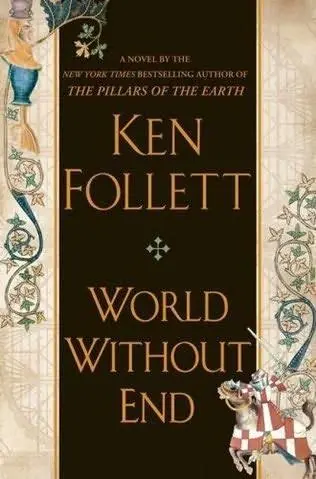
- Название:World Without End
- Автор:
- Жанр:
- Год:неизвестен
- ISBN:нет данных
- Рейтинг книги:5 / 5. Голосов: 1
-
Избранное:Добавить в избранное
- Отзывы:
-
Ваша оценка:
World Without End: краткое содержание, описание и аннотация
Предлагаем к чтению аннотацию, описание, краткое содержание или предисловие (зависит от того, что написал сам автор книги «World Without End»). Если вы не нашли необходимую информацию о книге — напишите в комментариях, мы постараемся отыскать её.
Ken Follett has 90 million readers worldwide. The Pillars of the Earth is his bestselling book of all time. Now, eighteen years after the publication of The Pillars of the Earth, Ken Follett has written the most-anticipated sequel of the year, World Without End.
In 1989 Ken Follett astonished the literary world with The Pillars of the Earth, a sweeping epic novel set in twelfth-century England centered on the building of a cathedral and many of the hundreds of lives it affected. Critics were overwhelmed-"it will hold you, fascinate you, surround you" (Chicago Tribune)-and readers everywhere hoped for a sequel.
World Without End takes place in the same town of Kingsbridge, two centuries after the townspeople finished building the exquisite Gothic cathedral that was at the heart of The Pillars of the Earth. The cathedral and the priory are again at the center of a web of love and hate, greed and pride, ambition and revenge, but this sequel stands on its own. This time the men and women of an extraordinary cast of characters find themselves at a crossroad of new ideas-about medicine, commerce, architecture, and justice. In a world where proponents of the old ways fiercely battle those with progressive minds, the intrigue and tension quickly reach a boiling point against the devastating backdrop of the greatest natural disaster ever to strike the human race-the Black Death.
Three years in the writing, and nearly eighteen years since its predecessor, World Without End breathes new life into the epic historical novel and once again shows that Ken Follett is a masterful author writing at the top of his craft.
World Without End — читать онлайн бесплатно полную книгу (весь текст) целиком
Ниже представлен текст книги, разбитый по страницам. Система сохранения места последней прочитанной страницы, позволяет с удобством читать онлайн бесплатно книгу «World Without End», без необходимости каждый раз заново искать на чём Вы остановились. Поставьте закладку, и сможете в любой момент перейти на страницу, на которой закончили чтение.
Интервал:
Закладка:
Ian Boatman turned up, and Merthin got him to row Megg out with some volunteers, and they began again.
The work was harder today. Everyone was aching from yesterday’s efforts. Every bucket had to be lifted ten feet or more. But the end was in sight. The levels continued to drop, and the volunteers began to glimpse the river bed.
In the middle of the afternoon, the first of the carts arrived back from the quarry. Merthin directed the owner to unload his stone in the pasture and ferry his cart back across the river to the town. A short while later, in Megg’s coffer, the raft bumped the river bed.
There was more to be done. When the last of the water was lifted out, the raft itself had to be dismantled and raised, plank by plank, up the ladders and out. Then dozens of fish were revealed, flapping in muddy pools on the bottom, and they had to be netted and shared out among the volunteers. But, when that was finished, Merthin stood on the ledge, weary but jubilant, and looked down a twenty-foot hole at the flat mud of the river bed.
Tomorrow he would drop several tons of rubble into each hole, and drench the rubble with mortar, forming a massive, immovable foundation.
Then he would start building the bridge.
Wulfric was in a depression.
He ate almost nothing and forgot to wash himself. He got up automatically at daybreak and lay down again when it got dark, but he did not work, and he did not make love to Gwenda in the night. When she asked him what was the matter, he would say: “I don’t know, really.” He answered all questions with such uninformative replies, or just with grunts.
There was little to do in the fields anyway. This was the season when villagers sat by their fires, sewing leather shoes and carving oak shovels, eating salt pork and soft apples and cabbage preserved in vinegar. Gwenda was not worried about how they were going to feed themselves: Wulfric still had money from the sale of his crops. But she was desperately anxious about him.
Wulfric had always lived for his work. Some villagers grumbled constantly and were happy only on rest days, but he was not like that. The fields, the crops, the beasts and the weather were what he cared about. On Sundays he had always been restless until he found some occupation that was not forbidden, and on holidays he had done all he could to circumvent the rules.
She knew she had to get him to return to his normal state of mind. Otherwise he might fall sick with some physical illness. And his money would not last for ever. Sooner or later they must both work.
However, she did not give him her news until two full moons had passed, and she was sure.
Then, one morning in December, she said: “I have something to tell you.”
He grunted. He was sitting at the kitchen table, whittling a stick, and he did not look up from this idle occupation.
She reached across the table and held his wrists, stopping the whittling. “Wulfric, would you please look at me?”
He did so with a surly expression on his face, resentful at being ordered but too lethargic to defy her.
“It’s important,” she said.
He looked at her in silence.
“I’m going to have a baby,” she said.
His expression did not change, but he dropped the knife and stick.
She looked back at him for a long moment. “Do you understand me?” she said.
He nodded. “A baby,” he said.
“Yes. We will have a child.”
“When?”
She smiled. It was the first question he had asked for two months. “Next summer, before the harvest.”
“The child must be cared for,” he said. “You, too.”
“Yes.”
“I must work.” He looked depressed again.
She held her breath. What was coming?
He sighed, then set his jaw. “I’ll go and see Perkin,” he said. “He’ll need help with his winter ploughing.”
“And manuring,” she said happily. “I’ll come with you. He offered to hire us both.”
“All right.” He was still staring at her. “A child,” he said, as if it were a marvel. “Boy or girl, I wonder?”
She got up and walked around the table to sit on the bench next to him. “Which would you prefer?”
“A little girl. It was all boys in my family.”
“I want a boy, a miniature version of you.”
“We might have twins.”
“One of each.”
He put his arm around her. “We should get Father Gaspard to marry us properly.”
Gwenda sighed contentedly and leaned her head on his shoulder. “Yes,” she said. “Perhaps we should.”
Merthin moved out of his parents’ house just before Christmas. He had built a one-room house for himself on Leper Island, which was now his land. He said he needed to guard the growing stockpile of valuable building materials he was keeping on the island – timber, stones, lime, ropes and iron tools.
At the same time, he stopped coming to Caris’s house for meals.
On the last but one day of December, she went to see Mattie Wise.
“No need to tell me why you’re here,” said Mattie. “Three months gone?”
Caris nodded and avoided her eye. She looked around the little kitchen, with its bottles and jars. Mattie was heating something in a small iron pot, and it gave off an acrid smell that made Caris want to sneeze.
“I don’t want to have a baby,” Caris said.
“I wish I had a chicken for every time I’ve heard that said.”
“Am I wicked?”
Mattie shrugged. “I make potions, not judgements. People know the difference between right and wrong – and if they don’t, that’s what priests are for.”
Caris was disappointed. She had been hoping for sympathy. More coolly, she said: “Do you have a potion to get rid of this pregnancy?”
“I do…” Mattie looked uneasy.
“Is there a snag?”
“The way to get rid of a pregnancy is to poison yourself. Some girls drink a gallon of strong wine. I make up a dose with several toxic herbs. Sometimes it works, sometimes it doesn’t. But it always makes you feel dreadful.”
“Is it dangerous? Could I die?”
“Yes, though it’s not as risky as childbirth.”
“I’ll take it.”
Mattie took her pot off the fire and put it on a stone slab to cool. Turning to her scarred old workbench, she took a small pottery bowl from a cupboard and poured into it small quantities of different powders.
Caris said: “What’s the matter? You say you don’t make judgements, but you look disapproving.”
Mattie nodded. “You’re right. I do make judgements, of course; everyone does.”
“And you’re judging me.”
“I’m thinking that Merthin is a good man and you love him, but you don’t seem able to find happiness with him. That makes me sad.”
“You think I should be like other women, and throw myself at the feet of some man.”
“It seems to make them happy. But I chose a different way of life. And so will you, I suppose.”
“Are you happy?”
“I wasn’t born to be happy. But I help people, I make a living, and I’m free.” She poured her mixture into a cup, added some wine and stirred, dissolving the powders. “Have you had breakfast?”
“Just some milk.”
She dripped a little honey into the cup. “Drink this, and don’t bother to eat dinner – you’ll only throw it up.”
Caris took the cup, hesitated, then swallowed the draught. “Thank you.” It had a vilely bitter taste that was only partly masked by the sweetness of the honey.
“It should be all over by tomorrow morning – one way or the other.”
Caris paid her and left. Walking home, she felt an odd mixture of elation and sadness. Her spirits were lifted by having made a decision, after all the weeks of worry; but she also felt a tug of loss, as if she were saying goodbye to someone – Merthin, perhaps. She wondered if their separation would be permanent. She could contemplate the prospect calmly, because she still felt angry with him, but she knew she would miss him terribly. He would find another lover eventually – Bessie Bell, perhaps – but Caris felt sure she would not do the same. She would never love anyone as she had loved Merthin.
Читать дальшеИнтервал:
Закладка:
Похожие книги на «World Without End»
Представляем Вашему вниманию похожие книги на «World Without End» списком для выбора. Мы отобрали схожую по названию и смыслу литературу в надежде предоставить читателям больше вариантов отыскать новые, интересные, ещё непрочитанные произведения.

Обсуждение, отзывы о книге «World Without End» и просто собственные мнения читателей. Оставьте ваши комментарии, напишите, что Вы думаете о произведении, его смысле или главных героях. Укажите что конкретно понравилось, а что нет, и почему Вы так считаете.