Philippa Gregory - Virgin Earth
Здесь есть возможность читать онлайн «Philippa Gregory - Virgin Earth» — ознакомительный отрывок электронной книги совершенно бесплатно, а после прочтения отрывка купить полную версию. В некоторых случаях можно слушать аудио, скачать через торрент в формате fb2 и присутствует краткое содержание. Жанр: Историческая проза, на английском языке. Описание произведения, (предисловие) а так же отзывы посетителей доступны на портале библиотеки ЛибКат.
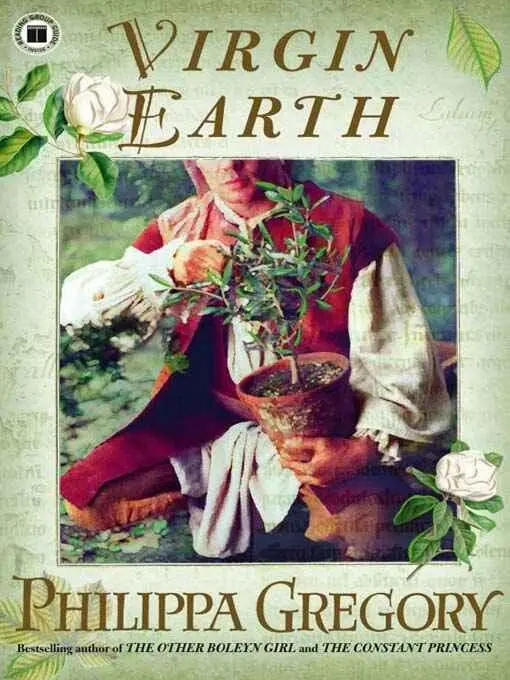
- Название:Virgin Earth
- Автор:
- Жанр:
- Год:неизвестен
- ISBN:нет данных
- Рейтинг книги:4 / 5. Голосов: 1
-
Избранное:Добавить в избранное
- Отзывы:
-
Ваша оценка:
Virgin Earth: краткое содержание, описание и аннотация
Предлагаем к чтению аннотацию, описание, краткое содержание или предисловие (зависит от того, что написал сам автор книги «Virgin Earth»). Если вы не нашли необходимую информацию о книге — напишите в комментариях, мы постараемся отыскать её.
Virgin Earth — читать онлайн ознакомительный отрывок
Ниже представлен текст книги, разбитый по страницам. Система сохранения места последней прочитанной страницы, позволяет с удобством читать онлайн бесплатно книгу «Virgin Earth», без необходимости каждый раз заново искать на чём Вы остановились. Поставьте закладку, и сможете в любой момент перейти на страницу, на которой закончили чтение.
Интервал:
Закладка:
“We left the people who could not keep up with us. We thought perhaps they would be taken up by the hunting party behind us and sent back to Jamestown for servants. But they did not take them for servants, they killed them where they lay in the snow. The white men cut their throats and scalped their heads where they lay. It was…” she sought the word to describe it and found none, “…ugly.
“Attone said we should make a stand and fight the hunting party and then we would be safe to go on. They sent the older women and the babies ahead and the rest of us made a trap, a pit in the road, and we hid in the trees, and waited.” She paused. “It was desperate, digging and trying to hide the pit with branches and fresh snow scattered on top, and knowing they were so close behind.”
“You were there?”
“I was there. I had my bow and my quiver of arrows. I was ready to kill.”
“And?”
“They had horses and guns and dogs,” she said. “They were hunting dogs, they would keep coming even with an arrow in their eye. They got me at the shoulder and pulled me down. I thought they would eat me alive. I could hear the crunch of their jaws on my bone and smell their breath on me.” She swept back her hair and John saw the ragged scars where a deep bite had been gouged out of her neck and shoulder. “It’s odd to feel an animal licking your blood,” she said.
“My God,” John whispered.
“Half a dozen of us were still alive at the end, and they made us walk back to Jamestown.”
“Suckahanna?”
“Dead.”
The word was like a blow in the pit of his belly, it fell no lighter for being expected. He had known that Suckahanna would never have been taken alive. He had known from the very start that what he was seeking in this strange diminished village was the news of her death.
“Attone?”
“Dead.”
“Suckahanna’s son?”
“He got away,” she said. “He could be anywhere. Maybe dead in the forest.”
“The baby? The little girl?”
“Died of hunger or fever or something. Before we tried to leave the village of bad water.”
There was a silence. John looked at the girl who had seen so much, who was indeed a child of winter.
“I shall go.” He paused. “Is there anything I can do for you or for the People?”
“Would they set us free if you asked them?”
“No,” John said. “They would not listen to me.”
“Do you think that they will hold us here forever?” she asked. “Do you think that they mean us to have enough land to plant, but nothing that we can enjoy, nowhere we can run free? Do they think that now we will do nothing more forever than just cling to life at the edge of the white man’s land?”
“No,” John said. “I am sure not. There is a new government in England and it is pledged to care for the poor and for the men and women who are driven off their land by enclosures. It gives rights to tenants and people who live on the land. Surely they will give you the same rights here.”
She looked at him and for a moment he saw Suckahanna in her eyes with that delicious sense of the ridiculous which had been so often and so lovingly directed at John. “Oh, do you?” she said and then turned and went back to her work.
John walked home dryshod in his English boots across the wooden causeway, not touching the earth, forgetting the marsh flower, not seeing anything but the winter battle in the snow and Suckahanna going down, fighting to the last minute, and Attone falling beside her.
He could see nothing else for the long walk back to Jamestown, not the new and beautiful houses nor the pretty sailing ships which the planters now used instead of canoes on the river, not the settled prosperity of the fields drawn like a net of squares thrown over the landscape, ignoring the contours of hill and slope and stream and imposing their own order on the wildness. He did not see the outskirts of Jamestown with the little shanty town of poor wooden houses, nor the town center with the governor’s beautiful house and the new assembly room for the burgesses where they were doing their best, by their lights, to build a new country in this place.
That night, when he went to bed, he thought he would dream of the battle and the defeat of the Powhatan and the dreadful death of Suckahanna in the cold snow with dogs snapping at her throat.
But he did not. He dreamed instead of the Great Hare leaping over the winter snows, with its coat pure white, winter-white, and only its long ears tipped with chocolate fur, gathering his love Suckahanna, and his friend Attone, into its gentle mouth and taking them back into the darkness away from the world which was no longer safe for the People.
Sir Josiah’s house was one of the grander stone-built houses and his garden was richer than John could have imagined. His wife greeted them and ordered rum and lemons and hot water despite the heat, and then Sir Josiah took John, punch glass in hand, down the steps to the garden.
It was a garden poised between two worlds. In many ways it was an English cottage garden: on the far sides were plants for cutting, for drying and for medicinal use in a scramble and a muddle of richness. John strolled over and saw, in their springtime growth, the familiar herbs and flowers of England, thriving in this virgin earth.
Immediately before the house Sir Josiah had laid out a serpentine knot, an attempt at the formality of the English great gardens. It was edged in bay and planted with daffodils, and between the daffodils were growing some white daisies. John admired the colors and felt the familiar lift to his heart at the sight of spring bulbs, but then he looked a little more closely.
“Did you bring these daisies from England?”
“No,” Sir Josiah said. “I found them growing here. There’s a place down by the river, a patch of grassland, I found whole clumps of them and dug them up, and planted them here and they have thrived and multiplied.”
John, oblivious of the snort of laughter from Lady Ashley on the terrace, dropped to his knees and took a closer look. “I think this is a new kind of daisy,” he said. “A Virginian daisy.”
“I thought it was just a daisy I might have for very little effort,” Sir Josiah said carelessly.
“And it’s very pretty,” John said. “I’ll take a couple home with me when I go. I should like to see it growing in London, I have a good collection of daisies. Could you show me where it grows in the wild?”
“Of course,” Sir Josiah said cheerfully. “We can go out this afternoon. And you must have a good roam through my woods. And when you have done with me I’ll give you a letter of introduction and you can go upriver and stay with my neighbors and see what they have that takes your eye.”
Lady Ashley came floating across the grass toward them. “Is this your first time in Virginia?” she asked with the slight drawl that the planters all shared.
“No,” John said. “I was here more than ten years ago for a long stay.”
“And were you plant-collecting then?”
“Yes,” John said cautiously. “But it was not like this.”
Sir Josiah wanted to lend him a horse but John preferred to walk in the woods. “I miss too much if I am too high and going too fast,” he said.
“I’m sure there are snakes,” Lady Ashley pointed out.
“I have good thick boots,” John said. “And I was much in the woods when I was last here.”
Sir Josiah had left a good stand of timber to the north of his estate and John started to walk there and then found himself following a stream which drew him deeper and deeper inland. He walked as he always did, as his father had always done – with only the occasional glance toward the horizon and the path ahead and with his eyes mostly on his boots and the little plants under his feet. He had been walking all morning when he suddenly exclaimed and dropped to his knees. It was a sorrel, but what had attracted him was the tiny indentations of the leaves. It was an American version of the familiar plant. John swung his satchel down, took out the trowel and carefully lifted the plant from the moist, dark earth, wrapped it in a broad leaf and tucked it into the pocket of his satchel.
Читать дальшеИнтервал:
Закладка:
Похожие книги на «Virgin Earth»
Представляем Вашему вниманию похожие книги на «Virgin Earth» списком для выбора. Мы отобрали схожую по названию и смыслу литературу в надежде предоставить читателям больше вариантов отыскать новые, интересные, ещё непрочитанные произведения.
Обсуждение, отзывы о книге «Virgin Earth» и просто собственные мнения читателей. Оставьте ваши комментарии, напишите, что Вы думаете о произведении, его смысле или главных героях. Укажите что конкретно понравилось, а что нет, и почему Вы так считаете.