Philippa Gregory - Virgin Earth
Здесь есть возможность читать онлайн «Philippa Gregory - Virgin Earth» — ознакомительный отрывок электронной книги совершенно бесплатно, а после прочтения отрывка купить полную версию. В некоторых случаях можно слушать аудио, скачать через торрент в формате fb2 и присутствует краткое содержание. Жанр: Историческая проза, на английском языке. Описание произведения, (предисловие) а так же отзывы посетителей доступны на портале библиотеки ЛибКат.
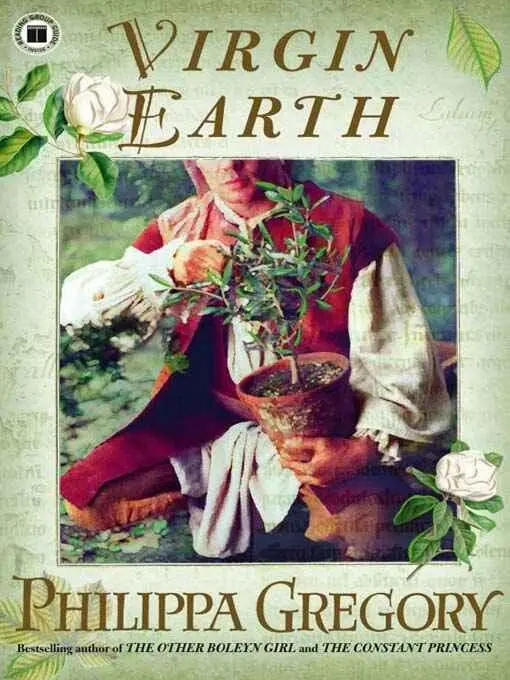
- Название:Virgin Earth
- Автор:
- Жанр:
- Год:неизвестен
- ISBN:нет данных
- Рейтинг книги:4 / 5. Голосов: 1
-
Избранное:Добавить в избранное
- Отзывы:
-
Ваша оценка:
Virgin Earth: краткое содержание, описание и аннотация
Предлагаем к чтению аннотацию, описание, краткое содержание или предисловие (зависит от того, что написал сам автор книги «Virgin Earth»). Если вы не нашли необходимую информацию о книге — напишите в комментариях, мы постараемся отыскать её.
Virgin Earth — читать онлайн ознакомительный отрывок
Ниже представлен текст книги, разбитый по страницам. Система сохранения места последней прочитанной страницы, позволяет с удобством читать онлайн бесплатно книгу «Virgin Earth», без необходимости каждый раз заново искать на чём Вы остановились. Поставьте закладку, и сможете в любой момент перейти на страницу, на которой закончили чтение.
Интервал:
Закладка:
And now there were slaves. John blinked at the numbers of black men and women, fetching, carrying, running at an obedient dog-trot behind a cart, catching the ropes on the dockside and running the gangplank out to the ship, unloading carts and throwing down the bales of cotton, and women with trays on their heads weaving through the crowd at the dockside with fresh produce to sell. Many of them were branded with the mark of their owner on their forehead or cheek. Many of them had the old scars of a whipping on their backs. But some of them, like the women traders, were clearly free to sell their own goods, and walked at their own speed with an arrogant roll of their hips under bright-patterned dresses.
A sailor opened the ship’s railing, made sure the gangplank was secure and then stepped back. John walked down the plank to the new land.
He had not thought that he would find her again, and he knew she would not look for him; but he did not expect that the country would be emptied of Suckahanna’s people. The last Indian war had indeed been the last. Opechancanough’s execution was the death of the People as well as the death of their last greatest war leader. Some drifted away, inland, and found other nations that would accept them, and then they too had to move, always westward, always away from the coast and the encroaching white men, the noise of falling timber and the scarcity of game. Some went into service, a service more like slavery for they were paid no wages and allowed no freedoms and worked until they died for no thanks. Some were imprisoned for the crime of rising up to defend their own villages and they served their sentences until illness and despair finished the work that the war had begun.
John stopped every one of the few Powhatan women or children that he saw in Jamestown and asked for Suckahanna, and for Attone, by name, but they all shook their heads at the strange white man and pretended that they could not understand his speech, though he asked them both in English and Powhatan. Ignorance and deafness were their last defense, and they mimed ignorance and deafness and hoped to somehow survive, clinging to the very edge of life in a land which had once been unquestionably their own.
John and the other men on the ship went to the governor’s office where the maps of the territory were kept and claimed his headright and then sold it on to William Lea, with his original claim alongside it.
“You don’t want it yourself?” Lea asked.
John shook his head. “I’m no planter,” he said. “I tried it before and I have not the skills or the endurance. I’m a gardener. You’ve paid my passage and more and I’m glad for that, but I will spend my time here out in the woods gathering the most interesting plants I can find – my cargo for the return journey.”
A gentleman in the office with them turned at the mention of plants and looked at John keenly. “Ah!” he said. “Now I know who you are. I am sure that you must be Mr. John Tradescant. I had not known you were coming to visit us again.”
John felt a little curl of pride at his name being known before him. “How do you do, Mr.-?”
“Forgive me,” the planter said. “I am Sir Josiah Ashley. I saw your garden when I was last in London and I ordered some plants for my garden here.”
“You are gardening?” John asked incredulously. “In Virginia?”
The man laughed. “Of course, everything will be very much changed since you were last here. I have a house and before it, running down to the river, I have a garden. Nothing compared to the great gardens you will have worked in, I know. But it is a pretty little couple of acres and it gives me much pleasure.”
“And do you only plant English plants?” John asked, wary of another hopeless attempt at an English garden in foreign soil like the barren attempt in Barbados.
“I grow flowers and plants from the woods too,” Sir Josiah replied. “I have a great love for English plants, of course, they remind us of our old home. But there are some exquisite flowers and shrubs that I have found and brought into my garden and they thrive.”
“I should so like to see them. And if you had any stock I should offer you a very fair price.”
Sir Josiah bowed. “You must come and stay with us.”
“I could not impose,” John started shyly.
“This is Virginia,” the man reminded him. “Guests are not an imposition; they are our only source of entertainment. You will be a great pleasure for us. I am sure you have much news of London.”
“Then I would be delighted.”
“I drive back to my house tomorrow,” Sir Josiah said. “Shall I collect you from your inn?”
“Drive?” John queried.
“Oh yes, we have a road which runs alongside the river. The tobacco still goes by boat, of course, but I generally drive into town in my cart.”
John blinked. “I see that everything is indeed changed.” He paused for a moment. “May I ask one thing: when I was last here I spent some time with the Powhatan people, before the war. They helped me in the woods when I was plant collecting.”
“Oh yes?” Sir Josiah was pulling on his gloves and clapping his hat on his head. John saw that the Virginian belief that the very air was a danger was still prevalent.
“I was wondering where they would be now?”
“Dead, most likely,” Sir Josiah said without regret. “A bad business. They could have lived with us in such harmony. But they chose not to. A bad business indeed.”
“All of them?”
“There is the village, of course.”
“The village?”
“There is a Powhatan village some ten miles inland. You could go and visit if you liked. I doubt that any that you recognized would be allowed out unless you took them into your service and said you would be responsible for their behavior.”
“I could do that?”
Sir Josiah hesitated. “Forgive me. You may not bring savages into my house.”
“You don’t have slaves?”
Sir Josiah laughed. “Of course I do. How else could I grow tobacco? But I won’t have the native peoples of this land anywhere near my borders. Africans are my slaves, the others are no use to me at all.”
“But I could go to the village and see if there was anyone I recognized?”
“Of course.” Sir Josiah gestured at the clerk. “George, give Mr. Tradescant here a pass to go to the savages’ village. I will countersign it. Shall you go today?”
“Yes,” John said quietly. “Today. At once.”
He told the woman at the inn that he would be home for dinner and would leave the next day. “And where are you going now?” she asked with the freedom of speech that the new colony allowed.
“I am going to find someone,” John said. “At the Powhatan village.”
“An old servant?” she sniffed. “If you want a servant you can buy a black girl for little more than seven pounds and she will serve you far better than any Indian. The blacks live longer too, and they’re more cheerful company. I’d have a black if I were you.”
“I want to find a particular person,” John said, choosing his words with care. “Not a slave. Can you point out the road?”
“Oh indeed,” she said. “There is only one road really. There is the road which runs east from here, inland, and there is the road which runs west to the coast. The Indian village is north of here. Take the road upriver and ask whoever you see on the road. Anyone can direct you.”
“Thank you,” said John, and set off.
He had thought he might collect some specimens as he walked upriver but there was almost no forest left at the riverside. The road went past one large house set among field after field of tobacco, and then past another. Some of the houses were still the familiar wooden buildings in the style that John remembered; but they were all growing and sprawling out, with new rooms added on one side, and stables built nearby. The more prosperous were grand with huge pillars and beautiful terraces, like little palaces in miniature, and behind them were little huts made of wood and roofed with reeds, the slave huts, poorer-built than the stables; horses were so much more valuable than slaves.
Читать дальшеИнтервал:
Закладка:
Похожие книги на «Virgin Earth»
Представляем Вашему вниманию похожие книги на «Virgin Earth» списком для выбора. Мы отобрали схожую по названию и смыслу литературу в надежде предоставить читателям больше вариантов отыскать новые, интересные, ещё непрочитанные произведения.
Обсуждение, отзывы о книге «Virgin Earth» и просто собственные мнения читателей. Оставьте ваши комментарии, напишите, что Вы думаете о произведении, его смысле или главных героях. Укажите что конкретно понравилось, а что нет, и почему Вы так считаете.