Philippa Gregory - Earthly Joys
Здесь есть возможность читать онлайн «Philippa Gregory - Earthly Joys» — ознакомительный отрывок электронной книги совершенно бесплатно, а после прочтения отрывка купить полную версию. В некоторых случаях можно слушать аудио, скачать через торрент в формате fb2 и присутствует краткое содержание. Жанр: Историческая проза, на английском языке. Описание произведения, (предисловие) а так же отзывы посетителей доступны на портале библиотеки ЛибКат.
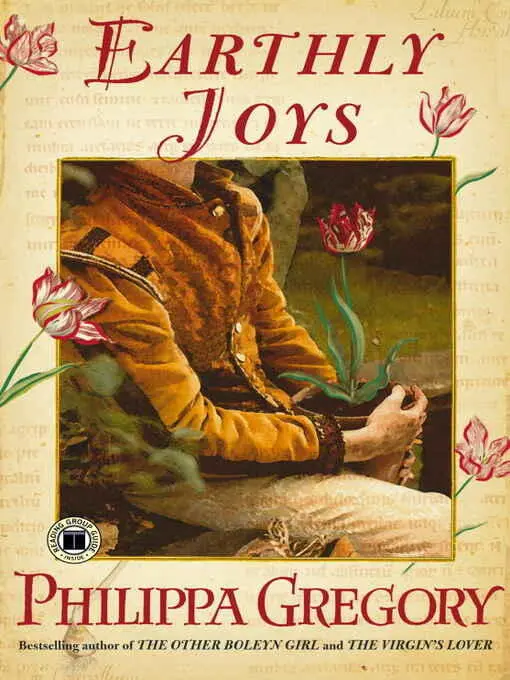
- Название:Earthly Joys
- Автор:
- Жанр:
- Год:неизвестен
- ISBN:нет данных
- Рейтинг книги:3 / 5. Голосов: 1
-
Избранное:Добавить в избранное
- Отзывы:
-
Ваша оценка:
Earthly Joys: краткое содержание, описание и аннотация
Предлагаем к чтению аннотацию, описание, краткое содержание или предисловие (зависит от того, что написал сам автор книги «Earthly Joys»). Если вы не нашли необходимую информацию о книге — напишите в комментариях, мы постараемся отыскать её.
Earthly Joys — читать онлайн ознакомительный отрывок
Ниже представлен текст книги, разбитый по страницам. Система сохранения места последней прочитанной страницы, позволяет с удобством читать онлайн бесплатно книгу «Earthly Joys», без необходимости каждый раз заново искать на чём Вы остановились. Поставьте закладку, и сможете в любой момент перейти на страницу, на которой закончили чтение.
Интервал:
Закладка:
“Stealing is still a sin,” John said doggedly.
“These are times when a man’s own conscience should be his guide,” Josiah replied. “If you think that he treated you fairly then deliver the goods to his house, pile riches upon riches and let the king take them to pay for his masques and vanities, as you know he will. If you think that the duke died owing you for your service, owing J, if you think these are times when a man does well to buy himself a little house and be his own master, then I think you would be justified in taking what you are owed and leaving his service. You should take only what you are owed. But you have a right to that. A good servant is worthy of his hire.”
“If you return the tulips to New Hall they will die of neglect,” J said quietly. “There is no one there to care for them, and then we will have killed the only Lack tulips in England.”
The thought of the waste of the tulips was as powerful as anything else for John. He shook his head like a bull does after a long baiting when it is so wearied that it longs for the dogs to close and make an end. “I am too tired to think,” he said. He rose to his feet but Elizabeth’s gaze held him.
“He hurt you,” she said. “On that last voyage to Rhé. He did something to you then that broke your heart.”
John made a gesture to stop her but she went on. “He sent you home with that pain in your heart, and then he recalled you, and he was going to take you to your death.”
John nodded. “That’s true,” he said as if it did not much matter.
“Then let him pay,” she said gently. “Let him repay us for the grief and terror he has caused us, and I will consider the matter settled, and I will remember him in my prayers.”
John put his hand on the little purse of diamonds at his throat. “He was my lord,” he said and they could all hear the deep pain in the back of his voice. “I was his man.”
“Let him go in peace,” she said. “All debts to us paid, all grievances finished. He is dead. Let him pay his debts and let us start a new life.”
“You will pray for him? And mean it in your heart?”
Elizabeth nodded.
Silently John took the purse from his neck and handed it to his wife. “Go and see the farm,” he said. “You decide. If you and J and Jane like it, then buy it and we will make our home there. And in return for that you must go and pray for his soul, Elizabeth. For he needs your prayers, and there are few enough praying for him, God knows.”
“And the tulips?” J asked.
John met his son’s questioning look. “Of course we keep the tulips,” he said.
November 1628
They crossed the river at Lambeth with a waterman rowing them: Jane bulky and eight months pregnant in the stern of the boat, John, Elizabeth and J seated amidships. Elizabeth had the keys to their new home in her lap, bought outright with Buckingham’s diamonds. When she turned the heavy key over and over the sun glinted on the cold metal.
On the south side of the river was the Swan Inn, where J had ordered a cart to meet them. He helped Jane up and then climbed up beside her. John smiled when he saw how his son held his wife as the cart lurched in the ruts of the South Lambeth road.
The journey was a short one and none of them spoke. They were waiting for John to break the silence but he said nothing. He had handed over the diamonds and the responsibility together. He sat in the wagon as if he were convalescent, weak from a long illness. His wife and his son could take the decisions for him.
“There it is,” J said at last, pointing ahead. “I hope to God he likes it,” he muttered in an undertone to Jane. “He let us buy it for him, but what if he refuses us now?”
Tradescant looked at his new home. It stood with its back to the road, an old half-timbered farmhouse with crisscross beams turning silvery gray from the weather of many seasons. The plaster between the beams had once been painted white but was mellowing to the color of pale mud. There was a little stream running between the road and the farm, crossed by a low bridge, broad enough for a cart. John got down and walked across it alone, the others waiting for him to speak.
The garden between the road and the house was a tiny patch, overgrown with briars and nettles. Tradescant walked around the house to the front. It faced southeast, placed to catch the morning and midday sun, and before it lay a good broad acre of meadow. Tradescant scuffed the heel of his boot in the soil and then bent down and inspected it. It was a dark soil, rich and easy to work. John took up a handful and rubbed it in his palm. He could grow things in this earth, he thought. Beyond the meadow was an orchard. He walked down to where the little wooden fence divided the meadow from the trees and measured it with his eyes. About two acres, he thought, and already stocked with apples, pears and plums; and along the south-facing wall a quince tree was growing in a ragged fan beside a pair of peach trees, roughly espaliered.
John had a momentary pang of homesickness for the kitchen garden he had left behind at New Hall with the tall heated wall built to his own innovative design, and the dozens of boys to carry dung and water for the trees. He shook his head. There was no point grieving. He had left beautiful gardens before now and started afresh. The worst had been leaving Theobalds Palace for the new house at Hatfield; and in the end Hatfield had been his great pride. He could make something of this garden, which would not be on the scale of Theobalds or Hatfield or New Hall, but would be his own. The fruit from these trees would be for his table. His grandson would sit in their shade. And no man could ever order him to leave them.
John turned back to look at the house, taking in for the first time the sloping roof of red clay tiles and the handsome tall clusters of chimney pots. Before the house there was a stone-flagged area overhung by the tiled roof and railed like the side of a ship, placed to overlook the meadow and the orchard. John walked back through the overgrown grass to the house and up the three creaking steps to the terrace. He turned, leaned on the rail and looked out over his property, the first good-sized garden he had ever owned.
He felt his face creasing in a smile of satisfaction. At last he had found a place where he could put down roots and see his son and his grandson secure in their future.
J, Elizabeth and Jane came around the corner of the house to see John leaning against the pillar of the terrace and surveying his acres.
“It’s like the deck of a ship,” Jane observed perceptively. “No wonder you look at home.”
“I shall call it the Ark,” John said. “Because we have come to it, two by two, to be safe from the deluge that is threatening the whole country, and because it will be an ark of rarities, which we will carry safe through the troubled times.”
They moved in at once. John drew up plans for the garden, and sent to Lambeth for a couple of lads to dig and weed in the orchard, and to a nearby farm for the loan of a horse and a plough to turn over the earth before the house. They planned a garden that would grow fruit and herbs for selling in London, where good-quality provender could command high prices. But also they knew that every gardener in the kingdom would long for a chestnut tree, for a double plum, for the Russian larches. It was the launching of a trade which was in its infancy. Every good gardener had spare stock of ordinary plants; the excessive bounty of God saw that where there was one plant there were a hundred seeds in the autumn. Every successful gardener exchanged stock or sold it at a profit to other gardeners. But what they longed for was the rare, the exotic, the strange. When John had worked for a lord it was part of his task to ensure that the gardens were full of rarities and he had guarded his seeds and saplings, and given them away to only his dearest of friends like the herbalist John Gerard or the gardener John Parkinson. Now he could sell them to men who had begged him for a cutting only a few years earlier. Now he could sell them to any gardener who might write to him, and already there were letters from all over England, even from Europe, asking Tradescant for seeds and saplings and yearling plants.
Читать дальшеИнтервал:
Закладка:
Похожие книги на «Earthly Joys»
Представляем Вашему вниманию похожие книги на «Earthly Joys» списком для выбора. Мы отобрали схожую по названию и смыслу литературу в надежде предоставить читателям больше вариантов отыскать новые, интересные, ещё непрочитанные произведения.








Обсуждение, отзывы о книге «Earthly Joys» и просто собственные мнения читателей. Оставьте ваши комментарии, напишите, что Вы думаете о произведении, его смысле или главных героях. Укажите что конкретно понравилось, а что нет, и почему Вы так считаете.