Philippa Gregory - Earthly Joys
Здесь есть возможность читать онлайн «Philippa Gregory - Earthly Joys» — ознакомительный отрывок электронной книги совершенно бесплатно, а после прочтения отрывка купить полную версию. В некоторых случаях можно слушать аудио, скачать через торрент в формате fb2 и присутствует краткое содержание. Жанр: Историческая проза, на английском языке. Описание произведения, (предисловие) а так же отзывы посетителей доступны на портале библиотеки ЛибКат.
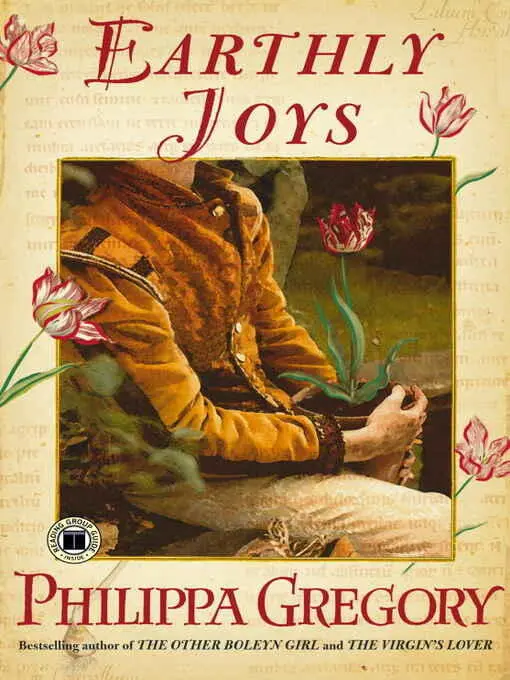
- Название:Earthly Joys
- Автор:
- Жанр:
- Год:неизвестен
- ISBN:нет данных
- Рейтинг книги:3 / 5. Голосов: 1
-
Избранное:Добавить в избранное
- Отзывы:
-
Ваша оценка:
Earthly Joys: краткое содержание, описание и аннотация
Предлагаем к чтению аннотацию, описание, краткое содержание или предисловие (зависит от того, что написал сам автор книги «Earthly Joys»). Если вы не нашли необходимую информацию о книге — напишите в комментариях, мы постараемся отыскать её.
Earthly Joys — читать онлайн ознакомительный отрывок
Ниже представлен текст книги, разбитый по страницам. Система сохранения места последней прочитанной страницы, позволяет с удобством читать онлайн бесплатно книгу «Earthly Joys», без необходимости каждый раз заново искать на чём Вы остановились. Поставьте закладку, и сможете в любой момент перейти на страницу, на которой закончили чтение.
Интервал:
Закладка:
John had plans also for the house. He commissioned a builder to construct a new wing which would nearly double the size of the house.
J took him to one side while the men were unloading a wagon of furniture, and spoke to him urgently while Jane and Elizabeth went to and fro watching the stowing of trunks.
“I know this is to be our family home, but we don’t need to build it all at once,” he said. “The windows you have planned for the downstairs room will go from ceiling to floor. How will we ever afford the glass? And what if it breaks?”
“You will be bringing up a young family here,” John said to J. “It’s time you had some room to yourselves. And we need a good-sized room, a handsome room, for the rarities.”
“But Venetian windows…,” J expostulated.
John laid a finger to his nose. “This is to be my rarities room,” he said. “We’ll store them here in a beautiful room and show them to people who come to see them. We’ll charge them sixpence each to enter, and they can stay as long as they like and look around at the things.”
J was uncomprehending. “What things?”
“The two wagons of Buckingham’s rarities,” John explained precisely. “What did you think to do with them?”
“I thought we would sell them,” J confessed, a little shamefaced. “And keep the money.”
John shook his head. “We keep them,” he said. “They will be the making of us. Rare plants in the garden, rare and beautiful things in the house. It is our ark with rare and lovely things. And every day the ships come in with more things ordered by my lord duke. We shall buy them on our own account and set them in our room.”
“And we charge people for looking?”
“Why not?”
“It just seems so odd. I’ve never heard of such a thing before.”
“My lord duke kept his cabinet of curiosities for his friends to look at and enjoy. And the Earl Cecil before him.”
“He didn’t charge them sixpence a time!”
“No, but we will open our doors to ordinary people. To anyone who wishes to come and see. Not friends of ours, or even people with letters of introduction. Just anyone who is curious about wonderful and peculiar things. We let them come!”
“But how would they know of it?”
“We will speak of it everywhere. We’ll make a catalogue so people can read of all the things we have on show.”
“D’you think people would come?”
John nodded. “In Leiden and Paris the universities have great collections and they show them to the students, and to anyone who applies to see them. Why not here?”
“Because we are not a university!”
John shrugged. “We have a collection which is equal to my lord Cecil’s, and many men admired that. We make a beautiful room with the big things hanging from the ceiling and displayed on the walls and the small things bedded in little drawers in big cabinets. Seeds and shells, clothing and goods, toys and ingenious things. I’m sure we can do it, J. And it will mean that we are earning money in the autumn and winter when the garden work is less.”
J nodded but then remembered the cost of the panes of glass. “But Venetian windows are not necessary…”
“We need good light if we are to show rarities,” John said firmly. “This is not some little petty fusty cabinet. This is the first rarities show in the country; it will be one of the first things to see in London. A grand room with the things laid out handsomely. People will not come to see them at all if they are not housed in a proud and handsome manner. Venetian windows and waxed floors! And sixpence a head!”
J deferred to his father’s judgment, and only muttered about grand schemes and a duke’s tastes over his dinner that night, but the two men clashed again when J, trundling a sapling in a barrow around the wall of the new wing, glanced up and saw the stonemason fixing in place a handsome coat of arms.
“What are you doing?” he yelled upward.
The stonemason glanced down and pulled his cap to J. “Handsome, isn’t it?”
J dumped the sapling and ran to the orchard, where John was at the top of a fruit-picker’s ladder, pruning out the dead wood on an old pear tree. “D’you think this can be a Spanish pear?” John asked. “I brought one back for my Sir Robert from the Lowlands. Could they have gotten hold of one and planted it here?”
“Never mind that now,” J said. “The stonemason is putting up a coat of arms on our house!”
John hung his saw on a protruding branch and turned his attention to his son. J, looking up at his father comfortably leaning against the trunk, thought that they had reversed their roles and that John was like a feckless laughing boy scrumping fruit up a tree and he was like the worried older man.
“I know,” John said with a gleam. “Do us credit, I thought.”
“You knew?” J demanded. “You knew he had some ridiculous coat of arms drawn up for us?”
“I don’t think it’s ridiculous,” John said easily. “I drew them myself. I rather like it. Leaves as background, and then the shield laid across it with three fleurs-de-lys, and then a helmet on top with a little crown and fleur-de-lys on that.”
“But what will the College of Heralds say?”
John shrugged. “Who cares what they say?”
“We will care when they fine us, and make us take it down, and humiliate us before our new neighbors.”
John shook his head. “We’ll get away with it,” he said confidently.
“But we’re not gentry! We’re gardeners.”
John came stiffly down his ladder and took J by the shoulder, turning him to see the house.
“What’s that?”
“Our house.”
“A good-sized house, new wing, Venetian windows, right?”
“Yes.”
John turned his son southward again. “And what’s that?”
“The orchard.”
“How big?
“Only two acres.”
“But beyond it?”
“All right, another twenty acres… but Father…”
“We’re landowners,” John said. “We’re not gardeners any more. We’re landowners with duties and obligations and a large family business to run… and a crest of arms.”
“They’ll make us take it down,” J warned.
Tradescant waved a dismissive hand and climbed slowly back up his ladder. “Not they. Not when they see who’s coming to the Ark.”
J hesitated. “Why? Who is coming?”
“Everyone who is anyone,” John said grandly. “And all their country cousins. When your baby is born he will grow up to be knighted, I don’t doubt it. Sir John Tradescant… sounds very well, doesn’t it? Sir John.”
“I might call him Josiah, after his other grandfather, a respected city tradesman who knows his place and is proud of it,” J said mutinously, and had the pleasure of seeing a flicker of doubt cross his father’s face.
“Nonsense!” John said. “Sir John Tradescant of Lambeth.”
December 1628
In the end, he was not Sir John Tradescant of Lambeth, nor plain John, nor even Josiah. She was Frances, and she came at four o’clock on a dark dreary December morning while J and his father drank brandy downstairs and the women and the women servants wailed and scolded and ran about upstairs until the men finally heard that tiny indignant cry.
J put down his glass with a crack and ran to the foot of the stairs. His mother was standing at the top, beaming. “A girl,” she announced. “A lovely dark-headed girl.”
J ran up the stairs and into Jane’s bedroom.
“And Jane?” Tradescant asked, thinking of the birth of J and the dreadful pain Elizabeth had suffered, and then the news that there would be no more babies.
“She is well, thank God,” Elizabeth said. “Resting now.”
Читать дальшеИнтервал:
Закладка:
Похожие книги на «Earthly Joys»
Представляем Вашему вниманию похожие книги на «Earthly Joys» списком для выбора. Мы отобрали схожую по названию и смыслу литературу в надежде предоставить читателям больше вариантов отыскать новые, интересные, ещё непрочитанные произведения.





Обсуждение, отзывы о книге «Earthly Joys» и просто собственные мнения читателей. Оставьте ваши комментарии, напишите, что Вы думаете о произведении, его смысле или главных героях. Укажите что конкретно понравилось, а что нет, и почему Вы так считаете.