Jody Shields - The Winter Station
Здесь есть возможность читать онлайн «Jody Shields - The Winter Station» весь текст электронной книги совершенно бесплатно (целиком полную версию без сокращений). В некоторых случаях можно слушать аудио, скачать через торрент в формате fb2 и присутствует краткое содержание. Город: New York, Год выпуска: 2018, ISBN: 2018, Издательство: Little, Brown and Company, Жанр: Историческая проза, thriller_medical, на английском языке. Описание произведения, (предисловие) а так же отзывы посетителей доступны на портале библиотеки ЛибКат.
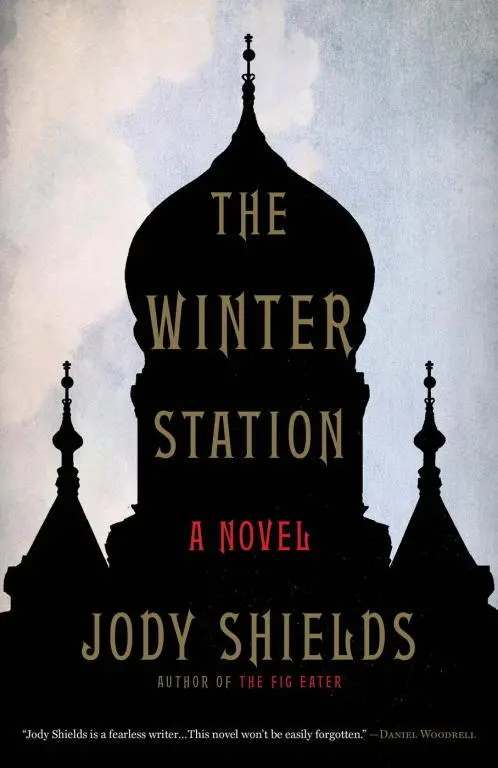
- Название:The Winter Station
- Автор:
- Издательство:Little, Brown and Company
- Жанр:
- Год:2018
- Город:New York
- ISBN:978-0-316-38532-9
- Рейтинг книги:5 / 5. Голосов: 1
-
Избранное:Добавить в избранное
- Отзывы:
-
Ваша оценка:
The Winter Station: краткое содержание, описание и аннотация
Предлагаем к чтению аннотацию, описание, краткое содержание или предисловие (зависит от того, что написал сам автор книги «The Winter Station»). Если вы не нашли необходимую информацию о книге — напишите в комментариях, мы постараемся отыскать её.
1910: people are mysteriously dying at an alarming rate in the Russian-ruled city of Kharbin, a major railway outpost in Northern China. Strangely, some of the dead bodies vanish before they can be identified.
During a dangerously cold winter in a city gripped by fear, the Baron, a wealthy Russian aristocrat and the city’s medical commissioner, is determined to stop this mysterious plague. Battling local customs, an occupying army, and a brutal epidemic with no name, the Baron is torn between duty and compassion, between Western medical science and respect for Chinese tradition. His allies include a French doctor, a black marketeer, and a charismatic Chinese dwarf. His greatest refuge is the intimacy he shares with his young Chinese wife—but she has secrets of her own.
Based on a true story that has been lost to history, set during the last days of imperial Russia, THE WINTER STATION is a richly textured and brilliant novel about mortality, fear and love.
The Winter Station — читать онлайн бесплатно полную книгу (весь текст) целиком
Ниже представлен текст книги, разбитый по страницам. Система сохранения места последней прочитанной страницы, позволяет с удобством читать онлайн бесплатно книгу «The Winter Station», без необходимости каждый раз заново искать на чём Вы остановились. Поставьте закладку, и сможете в любой момент перейти на страницу, на которой закончили чтение.
Интервал:
Закладка:
Khorvat momentarily forgot the Baron and muttered calculations. “Unless, of course, the Chinese ask for our help controlling the epidemic. Then our soldiers move in with their permission.”
“But soldiers will help keep order. Lives will be saved. How could the Chinese object?”
“The Chinese believe every Russian soldier is a foreign invader in their territory. I predict the Chinese will refuse help. Even if millions die.”
“So we’re unable to obtain any kind of assistance?”
Khorvat moved away from the Baron’s question. “We have a delicate peace. We must keep this illusion and hide our teeth. Our position is unstable. Japan wants Manchuria. They have a military quarantine along the Korean border. They built iron barracks, although they call them quarantine stations, along the CER train tracks, each accommodating one thousand to three thousand men. The Japanese Eleventh Division arrived from Hiroshima to relieve the Fifth Division in Kharbin. I don’t approve.” He waved his hand, delicately dropping cigarette ash over the papers on his desk. “But any Russian military action against Japan would be interpreted by China as infringing on their sovereignty. So the Japanese army waits like a cat for a mouse. At the right hour, they move into Manchuria and seize the Kharbin station and its network of trains. They’d be pleased if all the Russian soldiers died of plague, leaving Kharbin vulnerable to invasion. We’re the gateway to the world. Why do you think I’ve been posted here?”
“To be honest, I’ve never considered what determines a general’s location.”
Khorvat paid no attention to his comment, clearly enjoying spinning his argument. “We have a treaty with Japan. Secret, or it was secret. The presence of the Japanese army is to our advantage since they keep the Chinese in line. China hates Japan more than it hates Russia. China plays Russia against Japan. You see? The three armies checkmate each other.”
“But the Japanese also built their barracks along the railroad from Tientsin to Dairen. There are thousands of Japanese soldiers. They could easily be decimated by plague.”
“The Japanese have their own medical personnel. It’s out of my hands. I suppose the Japanese generals are convinced guns are a greater threat than plague. I understand this logic. Better the death that you know. But some generals take chances that surprise me. I predict China will welcome American aid, believing that they’re no threat.”
“So if we survive plague,” the Baron said, speaking slowly, as if examining something unfamiliar, “we could be attacked by the Japanese?”
Khorvat made a dismissive gesture. “The military would never target doctors or civilians. But I assure you, there are plans for evacuation in the event of a Japanese invasion.”
The general’s answers outlined the parameters of a trap. The Baron fixed his gaze on the rows of gold buttons on Khorvat’s uniform to help neutralize his expression. “There’s another battle in the hospital. Dr. Wu. He’s young and inexperienced. He can’t manage this situation. It isn’t just tending the sick in hospital beds. Wu has no loyalty from the other doctors. It’s hurting our patient treatment. He doesn’t understand—”
Khorvat interrupted. “Dr. Wu represents the Chinese government. He must be obeyed. One angry telegram from Dr. Wu to the emperor would end Chinese cooperation and perhaps bring their army into our streets. It can’t be risked.”
“Wu is incapable.”
“This isn’t just a feud between doctors. It’s a claim of national territory. You try to convince Wu that your analysis is superior to his own. But I won’t save your skin once he turns on you. You remember his dismissal of Dr. Mesny.”
The mention of Mesny stirred bitterness, as Khorvat had never properly acknowledged the doctor’s suffering. Mesny had sacrificed his life. The Baron struggled against his anger but failed to keep it in check. “So the only protection for everyone is the throw of the dice.”
Khorvat’s reservoir of sympathy had run out. “We wait and trust merciful God. I will forgive your disrespectful address to me, your superior. My job is to keep order. You tend the sick. We meet in the middle.”
“Better meet in the middle than at each other’s sickbed. Good day, General Khorvat.”
During the silent ride home in the droshky, the Baron remembered threatening dreams in which he’d been unable to move, had been trapped in place. Mesny’s death was like that dream. He had been powerless to save the dying man, to stop the remorseless force pumping blood through his veins until it gushed into the world, a shapeless liquid.
At home, he shook wet snow from his boots and his sheepskin coat, ridding himself of everything he had carried past the door. Without waiting for the servant to bring hot water, he angrily scrubbed his hands in the icy basin until they were bright red. Irregular surfaces that couldn’t be easily cleaned were suspect, invisibly veiled with contamination: his rough hands, carved furniture, the folds of a fan, buttons, books, embroidery. At night, he visualized everything he’d touched that day as if they were clues linked to a future catastrophe in the same way others worried about an unlocked door or an untended fire.
Li Ju brought his felt boots and sat close to him at the table. He felt the slight pressure of her body against his, remembered she and Chang had been planning to visit a fortune-teller that afternoon, although he’d cautioned her against it. He feared predictions might bring misfortune, a cataclysm of bad luck opening around them inexorably as a flower.
“What did the fortune-teller say? I hope there were no predictions of illness.”
“No,” Li Ju said quietly.
“Did she predict happiness, long life? A child?”
“First the woman offered the choices. She could tell my fortune by a coin toss, casting lots, or chopsticks in a bowl of water. Or cards and two shaped blocks of wood, buguo . She could read my face and head or the joints of my fingers. In spring, she interprets the cries of birds.”
“What was your choice?” He was relieved Li Ju so easily shared the information with him. She kept no secrets. Still, he disliked himself in the role of questioner.
“The I-Ching . The woman threw the forty-nine yarrow sticks on the table. She studied the sticks for a long time. I waited and tried to be still. Chang almost made me laugh; he kept making faces. Then she read a hexagram from the I-Ching . I remember one, nine in the second place.”
“Tell me.”
Li Ju was straightforward, a good child reciting lessons:
One kills three foxes in the field
And receives a yellow arrow.
Perseverance brings good fortune.
Kill three foxes? the Baron thought. The fox was associated with the supernatural. He had an old man’s nervousness, the bitter awareness of his own mortality. Had Li Ju carried his fear to the fortune-teller? “How did she interpret the hexagram?”
“The foxes are sly. She said I must battle the power that they hold and kill them. The yellow arrow’s a weapon to use in the future. It’s my reward. The color is harmonizing. Its message is to avoid the tangle of extreme passion.”
“Passion? She said avoid passion?” He was bewildered. He’d been secretly convinced the fortune-teller would praise him to his wife, celebrate their union, how well suited they were to each other.
“I think so. A warning of excess.”
He didn’t trust Li Ju’s answer; she seemed evasive. Perhaps she didn’t believe the prediction, although she’d heard nothing about death. Any future threats seemed conquerable.
“But what was the fortune-teller’s expression when she spoke to you? Do you believe she was truthful?” He continued to question her although she backed away from his pursuit.
Читать дальшеИнтервал:
Закладка:
Похожие книги на «The Winter Station»
Представляем Вашему вниманию похожие книги на «The Winter Station» списком для выбора. Мы отобрали схожую по названию и смыслу литературу в надежде предоставить читателям больше вариантов отыскать новые, интересные, ещё непрочитанные произведения.









Обсуждение, отзывы о книге «The Winter Station» и просто собственные мнения читателей. Оставьте ваши комментарии, напишите, что Вы думаете о произведении, его смысле или главных героях. Укажите что конкретно понравилось, а что нет, и почему Вы так считаете.