Jody Shields - The Winter Station
Здесь есть возможность читать онлайн «Jody Shields - The Winter Station» весь текст электронной книги совершенно бесплатно (целиком полную версию без сокращений). В некоторых случаях можно слушать аудио, скачать через торрент в формате fb2 и присутствует краткое содержание. Город: New York, Год выпуска: 2018, ISBN: 2018, Издательство: Little, Brown and Company, Жанр: Историческая проза, thriller_medical, на английском языке. Описание произведения, (предисловие) а так же отзывы посетителей доступны на портале библиотеки ЛибКат.
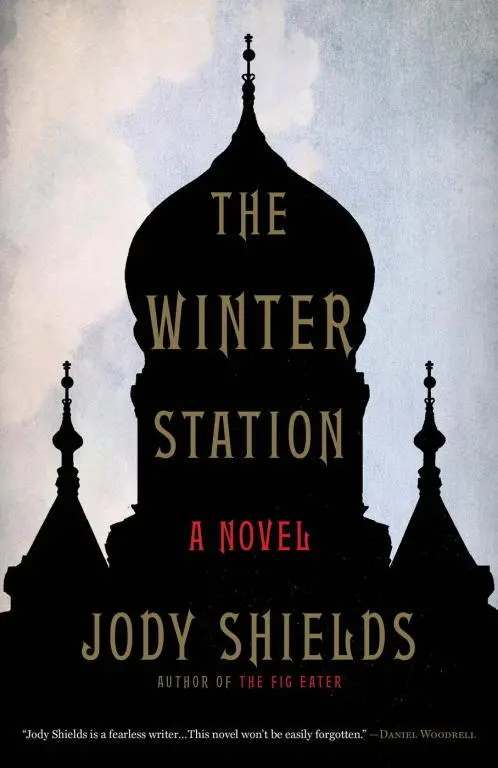
- Название:The Winter Station
- Автор:
- Издательство:Little, Brown and Company
- Жанр:
- Год:2018
- Город:New York
- ISBN:978-0-316-38532-9
- Рейтинг книги:5 / 5. Голосов: 1
-
Избранное:Добавить в избранное
- Отзывы:
-
Ваша оценка:
The Winter Station: краткое содержание, описание и аннотация
Предлагаем к чтению аннотацию, описание, краткое содержание или предисловие (зависит от того, что написал сам автор книги «The Winter Station»). Если вы не нашли необходимую информацию о книге — напишите в комментариях, мы постараемся отыскать её.
1910: people are mysteriously dying at an alarming rate in the Russian-ruled city of Kharbin, a major railway outpost in Northern China. Strangely, some of the dead bodies vanish before they can be identified.
During a dangerously cold winter in a city gripped by fear, the Baron, a wealthy Russian aristocrat and the city’s medical commissioner, is determined to stop this mysterious plague. Battling local customs, an occupying army, and a brutal epidemic with no name, the Baron is torn between duty and compassion, between Western medical science and respect for Chinese tradition. His allies include a French doctor, a black marketeer, and a charismatic Chinese dwarf. His greatest refuge is the intimacy he shares with his young Chinese wife—but she has secrets of her own.
Based on a true story that has been lost to history, set during the last days of imperial Russia, THE WINTER STATION is a richly textured and brilliant novel about mortality, fear and love.
The Winter Station — читать онлайн бесплатно полную книгу (весь текст) целиком
Ниже представлен текст книги, разбитый по страницам. Система сохранения места последней прочитанной страницы, позволяет с удобством читать онлайн бесплатно книгу «The Winter Station», без необходимости каждый раз заново искать на чём Вы остановились. Поставьте закладку, и сможете в любой момент перейти на страницу, на которой закончили чтение.
Интервал:
Закладка:
The doctors spoke quietly, explaining their actions as they buttoned long white jackets over their clothing, concealed their hands with rubber gloves, secured cotton masks across their faces. White was the color of death, traditionally worn by Chinese mourners at funerals. But it seemed the doctors hid their faces behind masks to prepare for a sinister ritual.
A wave of hostility and several men in the back of the room stood up. The clamor of angry voices. “Throw out the foreign devils!”
The Baron hesitated, then boldly walked between the tables, hoping his presence would calm the situation. He was slow and bumbling in his clumsy uniform, his voice and vision muffled, but if a blow came, the extra clothing offered some protection. The laborers watched him move among them, no one daring to touch the stranger in white. He searched their faces, noticed a man with a long queue under a fur hat hunched over the table, gently asked him to stand. Scowling, the man lifted his legs over the bench with an effort, his sullen expression vanishing as his body shook with coughing. The others edged away from him.
“Come with us, little brother.” The Baron took the man’s arm, guided him to a seat by the lantern. The man’s defiance vanished as if he’d confessed to a crime. His temperature was high. He was obviously unwell.
The rest of the men reluctantly cooperated with the doctors’ rudimentary examination. None of them showed signs of fever, a flushed face, or a swollen tongue. The Baron couldn’t look at them without a sense of betrayal as he checked them for symptoms. He was repeatedly overwhelmed by a wave of tenderness, a longing to stop this process, to explain the situation, turn them aside from their fate.
Gradually, the Baron became preoccupied with the fact that he could carry the thread of sickness. He scoured and cleaned his contaminated hands, wished they could be peeled raw like an orange or a lemon, the dull thick skin. The rough whorls of his fingerprints should be uncoiled. They were dangerous patterns that trapped bacilli, deposited it on everything he touched, the back of a chair, his pockets, bootlaces, a spoon, circumference of a teacup, edges of a tray, the wadded silk coverlet on the bed. Perhaps he’d unwittingly tracked infection across the pages of calligraphy, bacilli from his fingers embedded in ink, the weasel-hair brush, water in the jar that dissolved the ink. Perhaps his fingerprint on a glass was a charm of infection, waiting to contaminate the innocent touch of Li Ju and the servants.
He usually recognized and dismissed these disturbing thoughts as fantasies formed by despair and fear. Still, people reacted in unpredictable ways when they were frightened. Patients had been known to strike at doctors in fury when they were ignored or in pain. One of his patients had smashed the glass in his office door after a poor diagnosis.
He began to hoard rubber gloves, even those that had been worn and discarded, certain that in the future they’d be scarce or unavailable. Gloves were valuable; like gold, they were a hedge against misfortune.
The locations where the plague dead had been found were converted into red dots on a map behind General Khorvat’s desk. There were identical maps in the offices of the doctors Boguchi, Iasienski, and Haffkine. Dr. Wu was the only Chinese who possessed this information. The Baron leaned close to study this view of Kharbin, its cluster of deaths telescoped into code on the map. His two fingers covered all the red dots, the greatest number concentrated in Fuchiatien. Four bodies on Bazarnaya Street. The dead were also found at 238 Mekhanicheskaya Street, 19 Torgovaya Street, and 8 and 20 Yaponskaya Street. With his Chinese contacts, he’d helped build this map, searching boardinghouses, brothels, barbershops, inns, and eating places for the plague-stricken and the dead.
The Baron turned to face Khorvat. “This map is a fraud. The number of dead is far greater.”
Khorvat’s benign expression barely wavered into disagreement. “There’s no proof of your statement. The dead are removed by corpse carriers. They tally the bodies. I assume they’re reliable.”
“Have you seen the corpse carriers?”
“No. But I make decisions based on information I receive.” Distracting and placating others is one of the liar’s skills. “Last night, I was confronted by a woman at the Railway Club. Can you imagine? She wants a flag flying over Central Station to warn about the level of danger from plague. Claimed it was the system for a yellow fever outbreak when she was in India. My wife has greater inconveniences in Crimea. I dismissed the woman immediately.”
“They’re hiding bodies.”
The Baron’s statement fixed a bewildered expression on Khorvat’s face.
“Families, innkeepers, even shop owners hide the dead so you won’t burn down their buildings. Or take everyone in the place to the hospital for observation.”
“It’s fortunate that with few exceptions, bodies were found in Fuchiatien, one-third verst away from us here in Novy Gorod. So there’s no need to panic. God forbid there’s a corpse near the British American Tobacco Company or John Deere headquarters. We’d have an international crisis. The consuls would flee Kharbin.”
The Baron ignored his comment. “A corpse freezes solid in less than a day. The Chinese hide the frozen body, later return it to their village, and bury it with the ancestors. Even plague victims. It’s their custom. Plague will spread across the country.”
Khorvat dug a crumbly Crimean cigarette from a small tortoiseshell box and offered it to the Baron with a sour expression. “Baron, ask anyone in my office if they’ve seen a corpse. The answer is no. I plan to keep the situation quiet until it’s conquered. There’s order on the streets.”
“Order? It’s temporary. A false peace. There are bodies under the snow on the streets.” The Baron recognized he was verging on disrespect but recklessly continued. “Picking up corpses won’t stop the epidemic. You’re sweeping the floor while the wind blows in leaves and dirt.”
Khorvat lit the cigarette and then slowly exhaled fragrant pale tobacco smoke over his desk, an action meant to keep his temper in check. “My soldiers do what they can. They can’t peer under every rock and into every cart in Kharbin looking for corpses. The first twenty buildings registered as contaminated by plague were burned to keep the infection from spreading. Other buildings were fumigated with sulfur or carbolic acid solution. Even the Metropole Hotel was fumigated.”
“Mother of God. Would a thunderbolt strike sense into your head? The plague is out there in the street. It’s a live thing, a beast with a strategy for survival, for spreading infection. For killing us.”
“What do you offer? What will you put in my hands to help, Baron?”
“Yesterday we found one sick man at an inn on Torgovaya Street. By tomorrow there’ll be ten sick men. That’s how it works. People will panic as more bodies are discovered. There will be mobs in the streets. More soldiers will be needed.”
“We have limited options. I don’t have enough soldiers to patrol the city even under ordinary circumstances. If the number of dead goes up, our weakness will be exposed. Unfortunately, the newspapers Kharbinskii Vestnik and Novoe Vremya and two Chinese papers have reported Dr. Mesny’s death from plague. I couldn’t stop them. Why frighten civilians when the situation is being handled?”
The Baron slumped in his seat, stared at Khorvat as if he’d just recognized something familiar. “So it’s in Russia’s best interests that bodies are hidden?”
“The czar would gladly send more soldiers to Kharbin but the Chinese would regard it as a provocation. This is what they wish to avoid at all costs.”
Читать дальшеИнтервал:
Закладка:
Похожие книги на «The Winter Station»
Представляем Вашему вниманию похожие книги на «The Winter Station» списком для выбора. Мы отобрали схожую по названию и смыслу литературу в надежде предоставить читателям больше вариантов отыскать новые, интересные, ещё непрочитанные произведения.









Обсуждение, отзывы о книге «The Winter Station» и просто собственные мнения читателей. Оставьте ваши комментарии, напишите, что Вы думаете о произведении, его смысле или главных героях. Укажите что конкретно понравилось, а что нет, и почему Вы так считаете.