Dan Simmons - Black Hills
Здесь есть возможность читать онлайн «Dan Simmons - Black Hills» весь текст электронной книги совершенно бесплатно (целиком полную версию без сокращений). В некоторых случаях можно слушать аудио, скачать через торрент в формате fb2 и присутствует краткое содержание. Год выпуска: 2010, ISBN: 2010, Издательство: Little, Brown & Company, Жанр: Историческая проза, на английском языке. Описание произведения, (предисловие) а так же отзывы посетителей доступны на портале библиотеки ЛибКат.
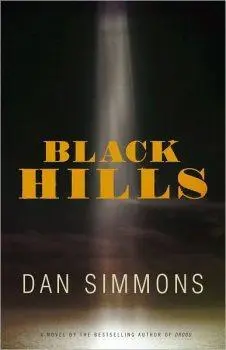
- Название:Black Hills
- Автор:
- Издательство:Little, Brown & Company
- Жанр:
- Год:2010
- ISBN:9780316071963
- Рейтинг книги:5 / 5. Голосов: 1
-
Избранное:Добавить в избранное
- Отзывы:
-
Ваша оценка:
Black Hills: краткое содержание, описание и аннотация
Предлагаем к чтению аннотацию, описание, краткое содержание или предисловие (зависит от того, что написал сам автор книги «Black Hills»). Если вы не нашли необходимую информацию о книге — напишите в комментариях, мы постараемся отыскать её.
In BLACK HILLS, Dan Simmons weaves the stories of Paha Sapa and Custer together seamlessly, depicting a violent and tumultuous time in the history of Native Americans and the United States Army. Haunted by the voice of the general his people called "Long Hair," Paha Sapa lives a long life, driven by a dramatic vision he experiences in the Black Hills that are his tribe's homeland. As an explosives worker on the massive Mount Rushmore project, he may finally be rid of his ghosts?on the very day FDR comes to South Dakota to dedicate the Jefferson face.
Black Hills — читать онлайн бесплатно полную книгу (весь текст) целиком
Ниже представлен текст книги, разбитый по страницам. Система сохранения места последней прочитанной страницы, позволяет с удобством читать онлайн бесплатно книгу «Black Hills», без необходимости каждый раз заново искать на чём Вы остановились. Поставьте закладку, и сможете в любой момент перейти на страницу, на которой закончили чтение.
Интервал:
Закладка:
I knew that Paha Sapa was starving but was afraid to take a tiny sandwich wedge, not being totally sure of how such things should be eaten in the presence of the ladies. If I remember correctly, you and I, Libbie my dearest, were once, in the earliest days of our marriage, confronted with precisely such miniature-sandwich fare at one of ancient General Winfield Scott’s last official soirees as head of Lincoln’s army before his great age and even greater weight carried him off into History’s oblivion, and that afternoon I had simply popped two or three of the tasteless little cucumber-and-bread-and-butter triangles into my mouth and washed them down with a giant swig of the general’s seriously substandard wine.
You had frowned at me, but your eyes were merry in those youthful days and then, when none of the crowd was watching, you winked at me. There was no winking or conspiratorial twinkle in your eye this day, the first of April 1933, and you addressed both the cup of tea that niece May had poured and one of the tiny sandwich triangles with deadly, frowning seriousness. It’s been my observation that interest in food is one of the—if not the—last things to go with the truly elderly.
It was while you were eating and chewing with such unladylike total concentration, my dearest, that I realized yet another reason that I was having trouble identifying the Libbie-you that I so wildly loved with this old-woman-Libbie in the high-backed chair opposite me: your teeth were different.
You had always had lovely teeth, but very small—each one looking like a miniature of one of those white Chiclet pieces of candy-covered gum that Paha Sapa used to discover young Robert chewing somewhere around 1906—and your perfect but tiny-toothed smile was part of your charm.
Now you obviously had full dentures. The dentist or denture maker had made no effort to match your original, lovely little teeth and these new, larger, much more aggressive substitutes changed your entire face, giving it an almost rodentlike thrust-forward and far too much exposure of the imitation teeth when you spoke or chewed.
I apologize for these unkind remarks, my darling Libbie. I make them because I know now you will never hear them.
My favorite (if unknown to me) grand-niece May cleared her throat. She was our facilitator here and she obviously believed that her aunt’s mistaken belief that she had seen Paha Sapa perform in Buffalo Bill’s Wild West Show (or Circus, as it had been called in New York City in 1888) was the perfect segue to the heart of our proposed discussion.
I was happy to hear this, since we had promised May that our visit would take up no more than fifteen minutes of your sacred time and energy, Libbie, and—according to the loudly hammering clock on the north wall—we had used up a little more than half that time already with our senseless chitchat.
“Auntie Libbie, perhaps you remember me mentioning that Mr. William Slow Horse wrote to us that not only was he in the re-creation of the… ah… Battle at the Little Big Horn in Buffalo Bill’s show, but he was actually there. At the Little Big Horn, I mean. He was… he saw… I mean, he was there on the field with Uncle Armstrong twenty-five June that year when… ”
I saw the transformation in you then, Libbie. From leaning forward to eat and sip your tea, you set down the saucer with a clank and sat far back in your high chair, your curved spine as rigid and vertical as you could make it, the expression on your face becoming guarded, protective, and neutral.
Paha Sapa had read to me an old article about your presence at an unveiling of some ridiculous equestrian statue of me in Monroe back in June of 1910: you had hobnobbed with his Immenseness, President Howard Taft, with Michigan’s Governor Warner, and with countless others that weekend, but—you said to some reporter much later—what had almost finished you off (not your words, my darling) was the evening meeting at the Armory with hundreds of veterans of the Seventh Cavalry. Some unkind wit there, I think it was a humorous officer in the infantry (the same one who had made you laugh when he said that his infantry following our cavalry during the War had been fascinating, since there were no fence rails left for a fire, no pigs or chickens left for a meal, no full smokehouses left untouched, or anything else that might inhibit their hungry advance in our wake), had commented drily that reports of the massacre of me and my men must have wildly exaggerated if there were so many regimental “survivors” there that weekend. You had ignored that, but what you could not ignore was this mandatory personal meeting with hundreds of aging, toothless, white-haired, white-mustached, wrinkled old veterans in their red neckties—I had worn one, of course, and some of the men had picked up the habit then and apparently all of the grizzled old veterans thought it a good idea—all of them insisting that they knew and remembered you well and that they had been “dear friends” with the General.
Other than a few staff officers, you admitted that you remembered not a single one of these men (much less the wives and children and in-laws and grandchildren they had dragged to the unveiling of the equestrian monument there in Monroe and whom they insisted on introducing to you as if they also had been dear friends and followers and intimates with you).
But it was more than this, I am certain, that made your spine rigid and your face expressionless this first day of April 1933.
Even through the severely restricted lens of Paha Sapa’s reading in recent years, I understood all too well that when it came to the topic of my death—my death and the deaths of 258 other officers and troopers of the Seventh Cavalry, including my two brothers, my very young nephew, and my brother-in-law—everyone who had taken the energy to form an opinion on me fell into either the category that considered me a megalomaniacal fool who managed to get my men, my relatives, and myself killed through sheer, arrogant stupidity, or in the opposing category wherein I, Lieutenant Colonel (still called “General” by those who loved me) George Armstrong Custer, had died following orders and in a valiant attack on the largest concentration of hostile Indian warriors in the entire history of our nation’s warfare against the Indians.
Custerphobes or Custerphiles, as one otherwise forgettable editorial writer had put it some years earlier. And it was true that there seemed to be no middle ground—no one who thought I was something between those opposite and mutually exclusive poles of arrogant fool or martyred hero.
Were you forgetting important things these days in your age and illness, my darling? Had senility begun to set in behind those rheumy eyes and that wrinkled, absent expression? Is it possible that you were, even as I sat opposite you, forgetting that you had led the Custerphile contingent now for fifty-seven long, bitter years? Ever vigilant in defense against any conceivable blot on my name or record of honor, you also led the offense at times, such as in 1926 and again in 1929, when you strongly objected to C. H. Asbury, then chief agent at the Crow Agency in control of the Little Big Horn battlefield that bears my name, when Asbury considered putting up even the smallest plaque honoring the name and memory of that drunkard and coward Major Marcus Reno—who, my darling, you were certain had left me and my three companies alone on that hill to die.
All those years and decades of never faltering as you led the Custerphiles in my name, never allowing the Custerphobes a foothold or fingerhold, using your grief and widowhood and dignity as your weapons, and during that time how many faux “unknown survivors” of my so-called Last Stand had you heard from or been forced to meet with? Dozens? Scores? Hundreds?
Читать дальшеИнтервал:
Закладка:
Похожие книги на «Black Hills»
Представляем Вашему вниманию похожие книги на «Black Hills» списком для выбора. Мы отобрали схожую по названию и смыслу литературу в надежде предоставить читателям больше вариантов отыскать новые, интересные, ещё непрочитанные произведения.

Обсуждение, отзывы о книге «Black Hills» и просто собственные мнения читателей. Оставьте ваши комментарии, напишите, что Вы думаете о произведении, его смысле или главных героях. Укажите что конкретно понравилось, а что нет, и почему Вы так считаете.