Dan Simmons - Black Hills
Здесь есть возможность читать онлайн «Dan Simmons - Black Hills» весь текст электронной книги совершенно бесплатно (целиком полную версию без сокращений). В некоторых случаях можно слушать аудио, скачать через торрент в формате fb2 и присутствует краткое содержание. Год выпуска: 2010, ISBN: 2010, Издательство: Little, Brown & Company, Жанр: Историческая проза, на английском языке. Описание произведения, (предисловие) а так же отзывы посетителей доступны на портале библиотеки ЛибКат.
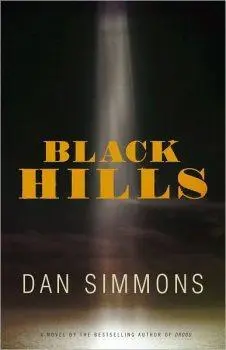
- Название:Black Hills
- Автор:
- Издательство:Little, Brown & Company
- Жанр:
- Год:2010
- ISBN:9780316071963
- Рейтинг книги:5 / 5. Голосов: 1
-
Избранное:Добавить в избранное
- Отзывы:
-
Ваша оценка:
Black Hills: краткое содержание, описание и аннотация
Предлагаем к чтению аннотацию, описание, краткое содержание или предисловие (зависит от того, что написал сам автор книги «Black Hills»). Если вы не нашли необходимую информацию о книге — напишите в комментариях, мы постараемся отыскать её.
In BLACK HILLS, Dan Simmons weaves the stories of Paha Sapa and Custer together seamlessly, depicting a violent and tumultuous time in the history of Native Americans and the United States Army. Haunted by the voice of the general his people called "Long Hair," Paha Sapa lives a long life, driven by a dramatic vision he experiences in the Black Hills that are his tribe's homeland. As an explosives worker on the massive Mount Rushmore project, he may finally be rid of his ghosts?on the very day FDR comes to South Dakota to dedicate the Jefferson face.
Black Hills — читать онлайн бесплатно полную книгу (весь текст) целиком
Ниже представлен текст книги, разбитый по страницам. Система сохранения места последней прочитанной страницы, позволяет с удобством читать онлайн бесплатно книгу «Black Hills», без необходимости каждый раз заново искать на чём Вы остановились. Поставьте закладку, и сможете в любой момент перейти на страницу, на которой закончили чтение.
Интервал:
Закладка:
“If you had apologized, Mr. Slow Horse,” you said to him in that whisper of a voice, “I would have told you there was no need. I realized long ago that it wasn’t you Sioux and your Cheyenne friends who killed my husband… it was those cowards and Judases in his own command like Marcus Reno and Frederick Benteen who killed my darling husband and his brothers and our nephew and so many of his troopers.”
Paha Sapa did not know what to say to that. I did not know what to tell Paha Sapa to say to that. He bowed and turned to leave. Mrs. May Custer Elmer hustled to show him out through the cluttered rooms.
There was a whisper from the parlor behind us and Paha Sapa turned back. You were still seated—seeming more shrunken somehow, my dearest, perhaps because you had slumped from that defiant posture and now looked only like a bent old woman—but you were beckoning Paha Sapa closer with a wiggle of one yellow-nailed finger.
He leaned over you, breathing in the scent of lilac toilet water and the deeper smell of a very old woman wrapped in her stifling layers.
You looked him in the eye then, looked us in the eye, and whispered… “Autie… ” or perhaps “Good-bye” or perhaps it was a pure nonsense syllable, something choked off or irrelevant to everything that had come before.
When Paha Sapa realized that you were not going to say anything else, he nodded as if he understood, bowed again, and followed May Custer Elmer out. The housekeeper, Mrs. Flood, had bustled in behind us, carrying what looked to be medicines on a tray into the parlor for you.

Back at the hotel for colored people, Paha Sapa slept well that night. His train was leaving from Grand Central Terminal at 7:45 the next morning. Although I never really slept, there were times when I faded into the nonconsciousness of the black background which I occupied when Paha Sapa did not summon me out to the light and sound, but I did not find escape there that night.
I found myself wishing that I could have told you many things, Libbie, my darling, my wife, my life.
I wish I could have explained to you that it wasn’t betrayal or cowardly officers that caused my death and that of my brothers Tom and Boston and my nephew Autie and the others there at the Little Big Horn. It was true that Major Reno was a drunk—and probably a coward—and that Benteen hated my guts (and always had) but proved his courage on the same field where Reno showed his cowardice, but none of that was relevant to my death. I know in my soldier’s heart that Reno and Benteen and the others couldn’t have come up to help me and my three surrounded companies; the four miles that separated us that day might as well have been the distance from the Earth to the moon. They had their own battle to fight, Libbie, my love, and no troopers could have reached us in time or to any effect other than dying with us.
There were just too many hostile Indians there, my dearest. Our best intelligence, the white agents at the Agencies, had assured us over and over that no more than eight hundred warriors in all, Cheyenne and Sioux, the Lakotas and Nakotas and Dakotas, all of them, had slipped away from the agencies to go hunt buffalo and fight. No more than eight hundred and probably far fewer than that, since such large bands rarely spent much time together—finding proper grazing for their horses was too difficult. And the sheer heaps of human excrement and other filth and garbage generated by camps of more than a few hundred Indians discouraged them from staying together long.
So we rode in expecting eight hundred and ran into… how many? You’ve heard all the figures, Libbie, my darling. They range from fifteen hundred warriors arrayed against us to more than six thousand, most coming from a village of ten to fifteen thousand men, women, and children, all of whom were willing to join in the fight—or at least in the scalping and mutilating. In the end, my darling, it turned out to be a matter of just too damned many Indians there waiting for us. It was unprecedented. It was unexpected. It was my undoing.
Even then, Libbie, we should have prevailed. Right up until the last minutes, I was sure we would prevail—even without Reno’s companies or Benteen’s or the supply train or the packs of ammunition.
The reason was simple: the cavalry in any solid numbers always had prevailed against Plains Indians. Our most trusted tactic was to charge any large band or village of hostiles. They might fight for a few minutes, or fight while running, but if there was a way for them simply to scatter and run in the face of a charge, they always had before . Always.
But this time they did not.
It is almost humorous when you think about it, my darling. It’s precisely what you once said to me about a skittish horse you were riding in Kansas—“Horses can be dangerous, but you can always trust them to act like horses. Once you know what they’re going to try to do to you, you can avoid it.”
I had trusted the Sioux and Cheyenne there at the Little Big Horn to act as they had at the Washita—as Indian warriors had everywhere else the Seventh Cavalry and other regiments had encountered them. Taken by surprise by a cavalry charge, they should have fought a few minutes but then scattered as they always had before.
But this time they didn’t. It was that simple, Libbie, my love.
If I had been able to talk to you that final day on April first, I might have explained to you that the sadness I felt was not for me, but for leading my young brother Tom (perhaps the bravest of all of us, he with his two Medals of Honor) and my non-soldier brother Boston (whom I hired as a scout at the last minute, on a whim, thinking that he would be sorry to have missed the Last Great Indian Fight), not to mention my nephew Autie, who had just turned eighteen and who came along precisely so as not to miss that promised Last Big Battle, all to that place on that day.
If I could, Libbie, if ghosts or Heaven were real, I would shake them by the hand and look them in the eye and apologize to all of them—especially to those men who’d followed me and trusted me for so long, like Lonesome Charley Reynolds and Myles Keogh and Bill Cooke—not for their deaths, for we all owe God a death (as Hamlet reminded us), but for the foolishness of my own assumptions and minor miscalculations that hot, humid June Sunday in 1876.
But I would also have reminded you of something, my darling. I would have reminded you of how much fun we had (and planned to continue to have, me earning money, at last, as a lecturer once that Final Great Indian Battle was over, and also writing my books, and perhaps some future in Democratic politics). But without worrying about our future, just remind you of how much fun we had.
I was a warrior and loved being a warrior. And you enjoyed the status and excitement of being a warrior’s wife, my love… or at least of being an officer warrior’s wife.
The Rebs had been the bravest enemy I would ever fight, and the hostile Indians served as a foe in the years after the War. But even then, even that last winter and spring, you and I knew that the days of an active warrior on the frontier were closing fast.
Finally, the last thing I would have told you that Saturday afternoon in your parlor of stale air was that you should have remarried. I had no doubt about that. You should have remarried as soon as you could after the Little Big Horn, Libbie, my love.
Читать дальшеИнтервал:
Закладка:
Похожие книги на «Black Hills»
Представляем Вашему вниманию похожие книги на «Black Hills» списком для выбора. Мы отобрали схожую по названию и смыслу литературу в надежде предоставить читателям больше вариантов отыскать новые, интересные, ещё непрочитанные произведения.

Обсуждение, отзывы о книге «Black Hills» и просто собственные мнения читателей. Оставьте ваши комментарии, напишите, что Вы думаете о произведении, его смысле или главных героях. Укажите что конкретно понравилось, а что нет, и почему Вы так считаете.