Dan Simmons - Black Hills
Здесь есть возможность читать онлайн «Dan Simmons - Black Hills» весь текст электронной книги совершенно бесплатно (целиком полную версию без сокращений). В некоторых случаях можно слушать аудио, скачать через торрент в формате fb2 и присутствует краткое содержание. Год выпуска: 2010, ISBN: 2010, Издательство: Little, Brown & Company, Жанр: Историческая проза, на английском языке. Описание произведения, (предисловие) а так же отзывы посетителей доступны на портале библиотеки ЛибКат.
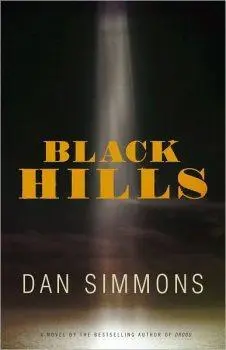
- Название:Black Hills
- Автор:
- Издательство:Little, Brown & Company
- Жанр:
- Год:2010
- ISBN:9780316071963
- Рейтинг книги:5 / 5. Голосов: 1
-
Избранное:Добавить в избранное
- Отзывы:
-
Ваша оценка:
Black Hills: краткое содержание, описание и аннотация
Предлагаем к чтению аннотацию, описание, краткое содержание или предисловие (зависит от того, что написал сам автор книги «Black Hills»). Если вы не нашли необходимую информацию о книге — напишите в комментариях, мы постараемся отыскать её.
In BLACK HILLS, Dan Simmons weaves the stories of Paha Sapa and Custer together seamlessly, depicting a violent and tumultuous time in the history of Native Americans and the United States Army. Haunted by the voice of the general his people called "Long Hair," Paha Sapa lives a long life, driven by a dramatic vision he experiences in the Black Hills that are his tribe's homeland. As an explosives worker on the massive Mount Rushmore project, he may finally be rid of his ghosts?on the very day FDR comes to South Dakota to dedicate the Jefferson face.
Black Hills — читать онлайн бесплатно полную книгу (весь текст) целиком
Ниже представлен текст книги, разбитый по страницам. Система сохранения места последней прочитанной страницы, позволяет с удобством читать онлайн бесплатно книгу «Black Hills», без необходимости каждый раз заново искать на чём Вы остановились. Поставьте закладку, и сможете в любой момент перейти на страницу, на которой закончили чтение.
Интервал:
Закладка:
“Is that Mr. Slow Horse down there?” came a shouted but still somehow softer voice from several floors above. It was not your voice, of course, Libbie. I guessed it was either your housekeeper’s or, more likely since the voice held no servant’s diffidence in it, that of the lady Paha Sapa and I had been writing to in order to arrange this interview, my so-called favorite niece (whom I had never met), a certain May Custer Elmer.
Paha Sapa walked over to the stairwell and raised his face. Now he did remove his cap.
“Yes.”
“Come up, please. Come up. Take the stairs, if you are able. The elevator takes forever to react to its summons. Come up, Mr. Slow Horse!”

I was sure that I was ready for the encounter with your little apartment there at 71 Park Avenue—I’d read about it, or rather Paha Sapa had, including the long 1927 interview where the reporter referred to your home as “a delightful return to the elegance of the previous century,” but the truth was far more powerful than that: entering your apartment was the equivalent of taking one of Mr. Wells’s time machines back to 1888. Outside, through thick panes of glass on windows shut tight even on such a lovely spring day, came the bus and train and automobile honking sounds of the 20th Century; inside, 1888 in all ways. The windows, although properly clean, seemed nailed shut, and each of the little rooms we moved through smelled increasingly musty—a mixture of furniture polish, of stale air, of hidden dust, of aged things, and of aged people. Your apartment, my beloved, had an old-woman smell about it. (I remember in the early days of our marriage we each were forced to come to terms with the fact—which no one warns newlyweds about—that in such cramped, one-room-and-a-bathroom quarters, one soon must learn to live amidst all the other person’s all-too-human smells. There had been something strangely exciting about that then. Now, through Paha Sapa’s still-keen senses, I noted only that the apartment smelled of old women.)
There was amidst all the dark, ancient furniture, however, a proud new console radio, a gift from friends, I learned later through something Paha Sapa read. It looked anachronistic there amidst all the furniture, photographs, and paraphernalia from the previous century. The dial was dark.
I remember Paha Sapa reading years ago that for the 50th anniversary commemoration of my regiment’s short-lived battle at the Little Big Horn, you’d owned no radio and thus had been invited to a nearby hotel on June 25, 1926, to listen to the radio broadcast ceremony and reenactment. Had it been the Doral across the street? I forget. The hotel had kindly offered you a deluxe room for the night but, according to published reports, you sat quite upright in your wicker chair, staring at the radio during the entire broadcast, and left—hobbling on your cane—immediately upon that broadcast’s conclusion. Your only recorded comment to the actors’ (one playing me) shouts and simulated hoofbeats broadcast from Montana—“Yes, that is how it would have been.”
How could you possibly know, my darling? How could you possibly know what it could have been like? For all your daring trips into hostile Indian territory with me and visits to this fort or that, how could you possibly have any idea what those final minutes were like with fifteen hundred or more bloodthirsty Sioux and Cheyenne closing in on our thinning ranks? How could you possibly have any idea?
There were two more women Paha Sapa had to meet before being led into your presence in the back parlor (where the single window did indeed, just as the 1927 reporter had told us, still retain a thin view of the East River). The first, the lady who had called down the stairway to Paha Sapa, was Mrs. May Custer Elmer, our interlocutor over the past year in setting up this brief meeting. I’ve mentioned that the newspaper in our hometown of Monroe, Michigan, during the time of the unveiling of one statue of me or the other, once referred to Mrs. Elmer as my (“the General’s”) “favorite niece,” but she was a grand-niece, and I had no memory of her. She was a smiling, pink-cheeked, slightly flustered middle-aged lady and did welcome Paha Sapa decently, without offering to shake the Indian’s hand.
With Mrs. Elmer (who was busy telling Paha Sapa that her husband was quite the amateur astronomer) in that first room of the warren of small rooms running back to the parlor, was a Mrs. Margaret Flood, the equally middle-aged maid, who squinted at Paha Sapa (and thus at me) with suspicion as open (but much quieter) as that of Miss Marguerite Merington down in the foyer. Mrs. May Custer Elmer interrupted her description of her husband’s passion for astronomy to explain that Patrick, that is, Mr. Flood, the handyman, was off running an errand today, as if that had some relevance to Paha Sapa’s meeting with the dead general’s widow.
And then we were in the little parlor, lit mostly by the afternoon light from the west reflected back from taller buildings and windows outside the east-facing window, and there you sat waiting, Libbie, my darling.
Except, of course, it was not you.
Being saved from the scourges of aging myself, I am not sure if any human being can keep the countenance and “selfness” of his youth and middle years so deep into old age. Perhaps men can be more successful in such indolent ambition since a few salient features—a beak of a nose such as mine, perhaps, or a mighty mustache—can stand in for the missing person the way a caricaturist’s bold, cruel lines stand in for reality. But for women, alas, the ravages and betrayals of time are much more cruel.
You were seven days away from your 91st birthday on that first day of April 1933, when Paha Sapa visited you, my dearest.
Only you—the Libbie that I had known and loved and made love to and dreamt of even in my death sleep —that you was not there.
You were dressed in crepey widow’s black (with some sort of cream-colored cloth at your throat, attached by a brooch from another century, my century), which seemed absurd to me fifty-seven years after the unlucky day that made you a widow.
Your hands, your lovely, soft, slender-fingered, smooth-skinned, loving Libbie hands, were now liver-spotted, tendoned, arthritis-swollen and contorted claws. The nails were yellow with age, like an old man’s toenails.
You made no move to offer your hand to Paha Sapa and this relieved both of us. Even though Paha Sapa’s looking-into-vision skills seemed to have waned in recent years, neither he nor I wanted to take the risk of any physical contact between him and you. At one time, years ago, when I first became aware of where and what I had become after my death at the Little Big Horn, I had fantasies of Paha Sapa going east and deliberately touching you so that my ghost-self might leave the aging Indian and dwell in and with you for the rest of our lives (yours and mine, I mean, my darling). How wonderful and intimate our silent conversations might have been over those last years. How that might have assuaged your loneliness and my own. But then I realized that I was not a ghost, nor a soul waiting to travel to Heaven (as I had preferred to think upon discovering my place in Paha Sapa’s mind), and the fantasy died with that revelation.
Your face was very, very pale and the blush or whatever the makeup on your cheeks was called only made the truth of the paleness—like rouge on a corpse—more painfully obvious. All of the newspaper and magazine accounts of you over the years had stressed how much more youthful than your chronological age you looked, and based on the few photographs Paha Sapa had seen—you at age 48, age 65, age 68—that had once been true. The smile and eyes and curls on the forehead (from dyed hair?) had indeed looked similar, if not the same. But now age had erased those vestiges of my Libbie’s continuity and beauty the way an angry schoolboy might draw a wet eraser over a chalk-filled blackboard.
Читать дальшеИнтервал:
Закладка:
Похожие книги на «Black Hills»
Представляем Вашему вниманию похожие книги на «Black Hills» списком для выбора. Мы отобрали схожую по названию и смыслу литературу в надежде предоставить читателям больше вариантов отыскать новые, интересные, ещё непрочитанные произведения.



Обсуждение, отзывы о книге «Black Hills» и просто собственные мнения читателей. Оставьте ваши комментарии, напишите, что Вы думаете о произведении, его смысле или главных героях. Укажите что конкретно понравилось, а что нет, и почему Вы так считаете.