Dan Simmons - Black Hills
Здесь есть возможность читать онлайн «Dan Simmons - Black Hills» весь текст электронной книги совершенно бесплатно (целиком полную версию без сокращений). В некоторых случаях можно слушать аудио, скачать через торрент в формате fb2 и присутствует краткое содержание. Год выпуска: 2010, ISBN: 2010, Издательство: Little, Brown & Company, Жанр: Историческая проза, на английском языке. Описание произведения, (предисловие) а так же отзывы посетителей доступны на портале библиотеки ЛибКат.
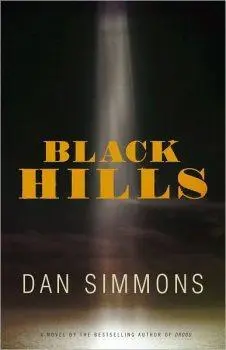
- Название:Black Hills
- Автор:
- Издательство:Little, Brown & Company
- Жанр:
- Год:2010
- ISBN:9780316071963
- Рейтинг книги:5 / 5. Голосов: 1
-
Избранное:Добавить в избранное
- Отзывы:
-
Ваша оценка:
Black Hills: краткое содержание, описание и аннотация
Предлагаем к чтению аннотацию, описание, краткое содержание или предисловие (зависит от того, что написал сам автор книги «Black Hills»). Если вы не нашли необходимую информацию о книге — напишите в комментариях, мы постараемся отыскать её.
In BLACK HILLS, Dan Simmons weaves the stories of Paha Sapa and Custer together seamlessly, depicting a violent and tumultuous time in the history of Native Americans and the United States Army. Haunted by the voice of the general his people called "Long Hair," Paha Sapa lives a long life, driven by a dramatic vision he experiences in the Black Hills that are his tribe's homeland. As an explosives worker on the massive Mount Rushmore project, he may finally be rid of his ghosts?on the very day FDR comes to South Dakota to dedicate the Jefferson face.
Black Hills — читать онлайн бесплатно полную книгу (весь текст) целиком
Ниже представлен текст книги, разбитый по страницам. Система сохранения места последней прочитанной страницы, позволяет с удобством читать онлайн бесплатно книгу «Black Hills», без необходимости каждый раз заново искать на чём Вы остановились. Поставьте закладку, и сможете в любой момент перейти на страницу, на которой закончили чтение.
Интервал:
Закладка:

Of all people on this good Earth, my darling, you know that my reputation as America’s “Greatest Living Indian Fighter” is exaggerated. Under my orders and following my lead, thousands upon thousands of Rebels were killed, but it’s not been my honor to kill many Indians.
Unlike the Rebs, the Indians are a sly and elusive enemy. The warriors fight at a time and place of their choosing, almost never in a stand-up battle but with feints and usually from a distance (except for their rushing in to count coup or to scalp fallen whites), and then they flee, often running to hide behind the skirts of their women and the rattles of their babies in villages. So the only time the cavalry usually can surprise and bring the warriors to fight is when we attack one of their villages, especially early, just after dawn. So it was at my Battle at the Washita River.
Those warriors, mostly Cheyenne, that bloody year of 1868 had been coming up out of the Indian Territory and out of Texican country farther south to raid in Kansas. That November, General Sheridan had showed me the butcher’s bill just since August—110 white people killed, 13 women raped, more than a thousand head of cattle stolen, and countless settlers’ cabins burned and looted. The Kansans were taking this rape, theft, and slaughter personally.
The Indians’ violence flowed, as you know I believe, directly from the peace treaties we signed with Red Cloud and the others that year at Fort Laramie: treaties in which Sherman gave the tribes everything they’d ever demanded and more, including the army’s agreement to abandon our entire string of forts along the Bozeman Trail and then, on top of that, acknowledging Sioux ownership of the Black Hills, despite the fact that the Sioux were recent invaders there themselves and also in spite of the additional fact that white men—miners—were already following my surveying trail into those hills and building their own cities there. But Indians, like any worthwhile enemy, see concession as weakness, so it was little surprise that mere weeks after their chiefs signed these agreements, their braves were slaughtering settlers all over Kansas, then retreating to safe havens such as the Fort Cobb Agency on the Washita River in northern Texas country, where they took our beef, wintered over, and waited for good weather before riding off to slaughter more settlers.
You remember Phil Sheridan, of course, my dear. (And I remember you dancing with him at Fort Leavenworth when the general came out to take over Hancock’s command.) General Sheridan was as helpful to my career as he was a bad dancer with you. He plucked me out of Monroe, where I was dying from boredom (except for the wonderful days and nights with you, my love), and on November 12, Sheridan and I were leading a mixed force of infantry and cavalry deep into Indian country.
The hostiles, with our help at such agencies disguised as forts as Fort Cobb, had short supply lines, but the cavalry always suffered from unacceptably long lines of supply, often all the way back to Leavenworth. Thus we built the Camp Supply depot on the North Canadian River near the Oklahoma panhandle. The hostiles were so used to their sanctuary there south of the Arkansas River that they’d grown smug and careless; this time, with Camp Supply as our logistics base, we were going to take them by surprise in the winter. (The old mountain man Jim Bridger argued that such a winter campaign couldn’t be done—that cavalry would founder in drifts in a day and be dead in three days—but Sheridan and I knew better than that.)
I’ve told you, Libbie, about Phil Sheridan’s unusual, almost nonsoldierly habit of using swear words (which I forswore forever on that same day in 1862 when I gave up drinking forever after you had seen me drunk in Monroe, just after I began courting you)—well, anyway, Phil’s delusion that he was the first cavalry commander in the West to consider attacking the Indians in the dead of winter (many before him had done so) mixed with his swearing made for a fascinating briefing before my officers and men and I set out in a serious snowstorm to the tune of “The Girl I Left Behind Me.”
The snow helped our Osage scouts (who were eager to settle old scores with their enemy the Cheyenne), and on November 26 we crossed the trail of a band of Indians returning to their village in the Oklahoma country from what obviously had been a raid into Kansas. We immediately left the wagon train behind and followed that trail south for a day and a night.
I pushed the men hard, as you know I tend to do when on the real warpath, stopping only once for coffee and hardtack in the short, freezing day and longer, freezing night. It was the only stop my men saw from 4 a.m. to late into the next day. My 720 men followed me through the night, the only sound the crack of ice atop the snow as their horses’ hooves broke through the crust. Finally one of the Osage guides called me forward to the crest of a hill, and I was surprised to see a river valley stretching away below us. I could see vague shapes moving about a half mile away, but I assumed they were buffalo.
“No,” grunted the Osage. “Heap Indians. Ponies.”
I whispered the query to the old Osage—why did he think they were Indian ponies? In the dim starlight, they could have been anything.
“Me hear dog bark,” grunted the old guide.
I strained to hear but could make out no barking dog. For a second I thought I heard a bell… Indians sometimes bell the lead mare in their pony herds… but it was not clear enough. Finally I heard the thin, frail cry of a baby rise out of the dark valley. There could be no doubt now.
I ordered the attack to begin at first light.
I divided my forces, just as I did yesterday (was it yesterday?) at the Little Big Horn. I broke the column into four detachments—one to swing around to the far end of the village in the valley, two to sweep in from the sides, my own detachment to attack south from our current location.
I had no idea how many Indians were down there that night, of course, Libbie; it might have been a hundred; it might have been ten thousand. But I had seven hundred cavalry at my command, and no force of irregulars on earth could stand up to seven hundred US Cavalry fighting with surprise on their side.
Some of the members of the regimental band said after that battle that it was so cold their lips stuck to their brass instruments when they began playing our regiment’s beloved “Garry Owen” at the beginning of the attack as I’d ordered, but they exaggerate. In truth, it was only their spittle that froze, soon sending the brass notes faltering and then stopping, but that was unimportant, since I’d already led the detachment down off our hill and into the valley and village at full speed, me at the lead (of course), sword out and extended in one hand, pistol in the other.
The Indians—it turned out to be a Cheyenne village, which pleased our bloodthirsty Osage scouts no end—were caught totally by surprise, but warriors came erupting from their tents and teepees within seconds, hurling lances, notching arrows, and firing repeating rifles. We cut them down where they stood. I have to admit to you the truth of war, Libbie—when an old man or old woman or, I saw early in the fight, a ten-year-old boy picked up a fallen brave’s rifle or lance and directed it at my men, the cavalrymen cut them down as well. Many of these troopers had been chasing hostile Indians for two years or more, never catching them in a fair fight, only seeing the scalped whites, raped women, and burnt settlements in the hostiles’ wake. The pent-up frustration on the part of my men was very great, the fighting—though brief, less than an hour with only the first half hour being a true fight—horribly intense.
Читать дальшеИнтервал:
Закладка:
Похожие книги на «Black Hills»
Представляем Вашему вниманию похожие книги на «Black Hills» списком для выбора. Мы отобрали схожую по названию и смыслу литературу в надежде предоставить читателям больше вариантов отыскать новые, интересные, ещё непрочитанные произведения.





Обсуждение, отзывы о книге «Black Hills» и просто собственные мнения читателей. Оставьте ваши комментарии, напишите, что Вы думаете о произведении, его смысле или главных героях. Укажите что конкретно понравилось, а что нет, и почему Вы так считаете.