Dan Simmons - Black Hills
Здесь есть возможность читать онлайн «Dan Simmons - Black Hills» весь текст электронной книги совершенно бесплатно (целиком полную версию без сокращений). В некоторых случаях можно слушать аудио, скачать через торрент в формате fb2 и присутствует краткое содержание. Год выпуска: 2010, ISBN: 2010, Издательство: Little, Brown & Company, Жанр: Историческая проза, на английском языке. Описание произведения, (предисловие) а так же отзывы посетителей доступны на портале библиотеки ЛибКат.
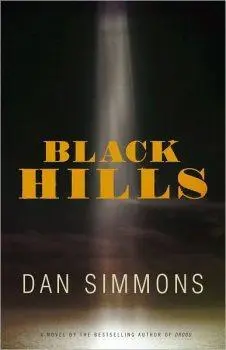
- Название:Black Hills
- Автор:
- Издательство:Little, Brown & Company
- Жанр:
- Год:2010
- ISBN:9780316071963
- Рейтинг книги:5 / 5. Голосов: 1
-
Избранное:Добавить в избранное
- Отзывы:
-
Ваша оценка:
Black Hills: краткое содержание, описание и аннотация
Предлагаем к чтению аннотацию, описание, краткое содержание или предисловие (зависит от того, что написал сам автор книги «Black Hills»). Если вы не нашли необходимую информацию о книге — напишите в комментариях, мы постараемся отыскать её.
In BLACK HILLS, Dan Simmons weaves the stories of Paha Sapa and Custer together seamlessly, depicting a violent and tumultuous time in the history of Native Americans and the United States Army. Haunted by the voice of the general his people called "Long Hair," Paha Sapa lives a long life, driven by a dramatic vision he experiences in the Black Hills that are his tribe's homeland. As an explosives worker on the massive Mount Rushmore project, he may finally be rid of his ghosts?on the very day FDR comes to South Dakota to dedicate the Jefferson face.
Black Hills — читать онлайн бесплатно полную книгу (весь текст) целиком
Ниже представлен текст книги, разбитый по страницам. Система сохранения места последней прочитанной страницы, позволяет с удобством читать онлайн бесплатно книгу «Black Hills», без необходимости каждый раз заново искать на чём Вы остановились. Поставьте закладку, и сможете в любой момент перейти на страницу, на которой закончили чтение.
Интервал:
Закладка:
There is a wriggling rabbit in one trap and the leg of a rabbit in another. Paha Sapa chants his song of thanks, kills the living rabbit, and takes the leg of the other.
His flint and steel are in the sweat lodge where he left them, along with some twigs still dry under a stack of robes. With shaking hands, he manages to get his lodge fire burning again. The winds and storm have blown away the leaves and some of the willow branches and blown off a robe, opening part of the little lodge to the sky and rain, but Paha Sapa ignores this as he huddles over the sparks, then breathes the tiny embers into flame. When he is certain that the fire will go…
— Thank you, Grandfathers! Thank you, Wakan Tanka.
… Paha Sapa skins and guts the rabbit, peels the hide off the leg, builds a crude spit with the fallen twigs, and begins to eat before the rabbit is fully cooked.

A DAY AND A NIGHT and a morning later, Paha Sapa is almost back to his village. He was in such a hurry to leave that his packing was careless; he left some robes behind at the sweat lodge site. He has not a moment to spare. He must tell Limps-a-Lot and Angry Badger and Loud Voice Hawk and all the other elders of his village this terrible news, share this terrible vision…. Perhaps the warriors and holy men will see the nightmare of the Wasichu Stone Giants rising out of the Black Hills as something not nearly so terrible as Paha Sapa imagines. Perhaps there are symbols and portents and signs in the dream that no boy of eleven summers could possibly understand.
Paha Sapa has never felt so young and useless. He wants to cry. Instead, deep into the morning of the second day heading north toward Slim Buttes, with the narrow river to his left now swollen into a torrent half a mile across (but he does not have to cross this to reach Slim Buttes and the village), Paha Sapa hugs the disassembled and blanket-wrapped still-red-feathered Ptehinčala Huhu Canunpa to his shivering chest and falls asleep while riding Worm.
HE WAKES TO HORSE SCREAMS hours or minutes or seconds later when the first arrow strikes White Crane.
Jerking upright on Worm, Paha Sapa looks over his shoulder, realizing at once how careless he has been. During his ride south to the Hills, he watched the horizons and hid himself constantly, despite the heavy rains. Now, with the clouds higher and occasional sunlight dappling the prairie, he has ridden on without looking back or around once, pregnant with need to get back home, arrogant in his carelessness.
Less than sixty yards behind him, eight Crows—all men, painted for war, screaming their war cries, heeling their war ponies on at top speed—are rushing at him. They are to the east as well as south. Paha Sapa has no direction to run except northwest, toward the absolute barrier of the flooded valley with its quarter-mile-wide raging waters.
A second arrow hits White Crane in the neck and Three Buffalo Woman’s beautiful mare goes down. Paha Sapa cuts the connecting strap a second before he is pulled down with the mare. Loud, terrible cracks and Paha Sapa realizes that two of the Crows have rifles. A small geyser of Worm’s warm blood leaps from the gelding’s straining shoulder and splashes Paha Sapa in the face.
He has no weapon with him other than his knife. The war lance and everything else went down with White Crane. Paha Sapa glances back again—the Crows have not spared even a man to plunder the dead horse’s packs. All eight come on, screaming, their mouths black and wide, their eyes and teeth a terrible white.
They have him cut off now, three of the Crow warriors wheeling around to the northwest of him. He must wheel left toward the water. He does.
An arrow strikes between his calf and Worm’s leaping rib cage, burying itself in the horse rather than the boy. A rifle bullet nicks his ear. Paha Sapa can hear a terrible whistling over Worm’s labored panting as the good horse continues galloping hard even with bullet holes in his lungs.
Paha Sapa rides full speed into the advancing waters. The Crows scream more loudly, their cries as terrible as the chewing noises the stone giants made.
Two more shots and Worm’s legs fold under him. Paha Sapa goes flying over the dying horse’s head—it is just like the Greasy Grass, where he counted coup on Long Hair, only here he, Paha Sapa, will die!—and then the boy clutches the segments of the sacred pipe and strikes the water and swims toward the tangle of cottonwood branches and uprooted willows swirling in the current ahead of him.
The Crows ride their slathered ponies into the water until the current tugs at the horses, whirling them around, up to the thighs of the riders, but there they stop, still screaming and shouting, and take careful aim and fire bullets and arrows at Paha Sapa.
But Paha Sapa is being hurled downstream now faster than any bullet can fly. He holds the red-wrapped Ptehinčala Huhu Canunpa high, trying to keep it dry, even as his own head goes under the cold, muddy water and he splutters and gasps.
Something to his right, upstream behind him, it can’t be a Crow… they wouldn’t dare to…
Paha Sapa turns to look, still holding the pieces of the sacred pipe and feathers high, just as the onrushing cottonwood log strikes him in the head.
HE WAKES. Not drowned. It is hours later—either sunset or the next dawn—and he is lying mostly buried in mud at the western edge of the rushing and now half-mile-wide river. He has not even made it across to the other side. The Crows have him now if they still want him.
One of Paha Sapa’s eyes is either gone or swollen shut. Several teeth are missing. A bullet has gone through his upper arm.
But these are nothing. The Ptehinčala Huhu Canunpa is gone.
Paha Sapa manages to get to his knees. He flails in the thin light, splashes water, somehow manages to get to his feet, wades, is knocked down, dives, dives again, barely manages to crawl out of the current, almost drowned.
It is gone. The Ptehinčala Huhu Canunpa handed down in his band from generation to generation, the most sacred item the tribe has, the heart of their mystery and their defense against the dark powers of the earth and sky, the pipe entrusted to him by Limps-a-Lot. Gone.
Paha Sapa is naked except for his breechclout, even his moccasins torn from his feet. He is covered with mud and horse’s blood and his own blood. His one eye does not see well.
— I still have to report the Vision to Limps-a-Lot and the elders. I still must tell them, then take my lifelong punishment for losing the Ptehinčala Huhu Canunpa.
Hurting everywhere, Paha Sapa crawls out of the water and mud, pulls himself forward up the muddy bank by grasping grasses, reaches the top, and staggers to his feet.
Three Crows are standing just a few paces away. Paha Sapa cannot run. These are not the same Crows—they are older, larger, and they wear wasichu soldier shirts open over their tattood chests.
Behind the three Crows are about sixty mounted men, black against the sunrise, but obviously cavalry. One of the wasichus shouts something in the same ugly syllables that Paha Sapa hears from Long Hair’s ghost at night.
The closest Crow, an old man with a scar running from his forehead across his nose and down his cheek, takes three steps forward, raises his repeating rifle, and brings the wood-and-metal stock down hard against Paha Sapa’s forehead.
Chapter 15 George Armstrong Custer
Интервал:
Закладка:
Похожие книги на «Black Hills»
Представляем Вашему вниманию похожие книги на «Black Hills» списком для выбора. Мы отобрали схожую по названию и смыслу литературу в надежде предоставить читателям больше вариантов отыскать новые, интересные, ещё непрочитанные произведения.





Обсуждение, отзывы о книге «Black Hills» и просто собственные мнения читателей. Оставьте ваши комментарии, напишите, что Вы думаете о произведении, его смысле или главных героях. Укажите что конкретно понравилось, а что нет, и почему Вы так считаете.