Dan Simmons - Black Hills
Здесь есть возможность читать онлайн «Dan Simmons - Black Hills» весь текст электронной книги совершенно бесплатно (целиком полную версию без сокращений). В некоторых случаях можно слушать аудио, скачать через торрент в формате fb2 и присутствует краткое содержание. Год выпуска: 2010, ISBN: 2010, Издательство: Little, Brown & Company, Жанр: Историческая проза, на английском языке. Описание произведения, (предисловие) а так же отзывы посетителей доступны на портале библиотеки ЛибКат.
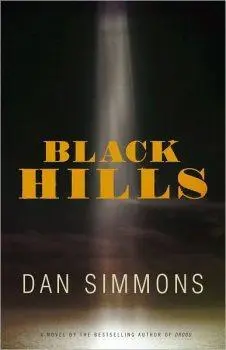
- Название:Black Hills
- Автор:
- Издательство:Little, Brown & Company
- Жанр:
- Год:2010
- ISBN:9780316071963
- Рейтинг книги:5 / 5. Голосов: 1
-
Избранное:Добавить в избранное
- Отзывы:
-
Ваша оценка:
Black Hills: краткое содержание, описание и аннотация
Предлагаем к чтению аннотацию, описание, краткое содержание или предисловие (зависит от того, что написал сам автор книги «Black Hills»). Если вы не нашли необходимую информацию о книге — напишите в комментариях, мы постараемся отыскать её.
In BLACK HILLS, Dan Simmons weaves the stories of Paha Sapa and Custer together seamlessly, depicting a violent and tumultuous time in the history of Native Americans and the United States Army. Haunted by the voice of the general his people called "Long Hair," Paha Sapa lives a long life, driven by a dramatic vision he experiences in the Black Hills that are his tribe's homeland. As an explosives worker on the massive Mount Rushmore project, he may finally be rid of his ghosts?on the very day FDR comes to South Dakota to dedicate the Jefferson face.
Black Hills — читать онлайн бесплатно полную книгу (весь текст) целиком
Ниже представлен текст книги, разбитый по страницам. Система сохранения места последней прочитанной страницы, позволяет с удобством читать онлайн бесплатно книгу «Black Hills», без необходимости каждый раз заново искать на чём Вы остановились. Поставьте закладку, и сможете в любой момент перейти на страницу, на которой закончили чтение.
Интервал:
Закладка:
At that very moment, the dialogue on stage was such:
HOTSPUR
Away, away, you trifler! Love? I love thee not;
I care not for thee, Kate. This is no world
To play with mammets and to tilt with lips.
We must have bloody noses and cracked crowns,
And pass them current too. God’s me, my horse!
What sayst thou, Kate? What wouldst thou have with me?
LADY PERCY
Do you not love me? do you not indeed?
Well, do not then; for since you love me not,
I will not love myself. Do you not love me?
Nay, tell me if you speak in jest or no.
HOTSPUR
Come, wilt thou see me ride?
And when I am a-horseback, I will swear
I love thee infinitely. But hark you, Kate:
I must not have you henceforth question me
Whither I go, nor reason whereabout.
Whither I must, I must, and to conclude,
This evening must I leave you, gentle Kate.
I know you wise, but yet no farther wise
Than Harry Percy’s wife; constant you are,
But yet a woman; and for secrecy,
No lady closer, for I well believe
Thou wilt not utter what thou dost not know,
And so far will I trust thee, gentle Kate.
LADY PERCY
How? So far?
HOTSPUR
Not an inch further. But hark you, Kate:
Whither I go, thither shall you go too;
Today will I set forth, tomorrow you.
Will this content you, Kate?
LADY PERCY
It must of force.
I remember it in such detail because I later read it in our newly acquired Compleat Shakespeare volumes at least half a hundred times. It did indeed sound like a cavalry officer speaking to his beloved but too-inquisitive wife. How many times had you and I had similar conversations, Libbie? Always with me promising that wherever I was to be sent, I would summon you and we would be together.
You also laughed that day, I remember, at this Hotspur’s seeming similarity to me in the way he asked his officers for advice but then interrupted them, never listening. And Hotspur’s temper and reckless boldness, you said, reminded you so much of me that you were considering calling me “My darling Hotspur” rather than “Autie” in your love letters.
But then Henry Percy, Hotspur, was cut down on the battlefield. (In single combat with that wastrel fop Prince Hal, which I did not believe for a moment.)
And then that fat, drunken bag of cowardly guts Falstaff gave his idiotic soliloquy about honor being “only a word, that is, nothing” and went so far as to slice Hotspur’s corpse with his own sword and claim the victory over this fine warrior, lugging the body off stage. This dishonorable act, evidently much approved of both by Shakespeare and the crowd at the dress rehearsal that evening, so upset you and so angered me that we left early.
But the next evening, during the rehearsal for Henry IV Part II, it was Lady Percy’s eulogy for her dead husband—the other kings and royals and knights seem almost to have forgotten him—that caused you to start weeping. We stayed for the end of that interminable play, but I’m sorry we did. I don’t think you ever forgot Lady Percy’s widow’s lament, and once, in the middle of the night, weeping hard even as I held you, you admitted that if anything ever happened to me, you would have to give the same speech, telling other members of the Seventh Cavalry and the ignorant public that your dead husband had been the miracle of men…
… and by his light
Did all the chivalry of England move
To do brave acts. He was indeed the glass
Wherein the noble youth did dress themselves….
In diet, in affections of delight,
In military rules, humors of blood,
He was the mark and the glass, copy and book,
That fashion’d others.
I told you then, Libbie (I almost said “Kate” there), each time you sobbed in the night that I would do everything in my not-inconsiderable powers to keep you from becoming the widow who would have to read Lady Percy’s lines like that.
But tonight (or today, there is only darkness here in this semiconscious state), I worry and wonder if I can keep that promise. I know that you would be a fierce and loyal widow, Libbie, always keeping my memory alive and defending my honor from those honorless rogues (Major Benteen?) who have always wanted and tried to sully my reputation.
But I do not want you to be a widow, Libbie. I do not want to die.
Oh, my darling, my dearest—I hold fast to the memories of you and of us, and I lie here and wait for the light. I know that you will be there when I awake. I know it as surely as I know our love.
Chapter 16 The Six Grandfathers

PAHA SAPA STEPS OFF THE BOTTOM STEP OF THE 506 STEPS down from the summit of Mount Rushmore and feels a wave of absolute exhaustion roll over him. He has to step aside and grab the railing just to remain standing. The other workers, most of them thirty to forty years younger than he, bound and joke and leap their way off the staircase, roughhousing, slapping, and shouting their way to the parking lot.
It is six p.m., and the direct sunlight has passed beyond the carved southern face of the mountain, but the waves of heat off the white granite hit Paha Sapa like a hot-knuckled fist. He has been up there all this long Friday, dangling from his cable and moving from site to site at the base of the three existing heads and the fourth field of white granite ready for carving the Roosevelt head, but only now does this absolute tsunami of fatigue and exhaustion strike him.
It is the cancer, he knows. The increasing and encroaching pain has been a factor, but one he’s been ready for and can deal with. This sudden weakness… Well, he is seventy-one years old, but he has never been weak before. Never.
Paha Sapa shakes his head to clear it, and sweat flies from his long, still-black braids.
— Old Man!
The August cicadas are loud and there is a buzzing in his ears, so at first Paha Sapa is not sure the cry is for him.
— Old Man! Billy! Hey, Slovak!
It is Mr. Borglum, standing between the hoist house and the path to the parking lot. Paha Sapa lets go of the railing and raises a weary hand. They meet in the clearing near where the shouting, laughing men are lining up to pick up their paychecks at the office.
— You all right, Billy?
— Sure.
— You looked… well, I guess pale isn’t the right word… fagged out. I need to show you something up on the mountain. You ready to head back up?
Paha Sapa turns his head toward the 506 steps of the stairway and wonders if he can climb them, even without his usual morning load of fifty or sixty pounds. His plan was to work all this Friday night to prepare and deliver the dynamite to a hiding place here—the site still to be determined—and then spend all of Saturday night placing the charges in time for President Roosevelt’s visit on Sunday. Now he wonders if he can even stagger up the stairs in this heat.
Borglum touches his back but only briefly. Paha Sapa rarely sweats so that others can notice—it’s been a long, bad joke on the site—but today his work shirt is soaked through.
— We’ll take the tram up.
Читать дальшеИнтервал:
Закладка:
Похожие книги на «Black Hills»
Представляем Вашему вниманию похожие книги на «Black Hills» списком для выбора. Мы отобрали схожую по названию и смыслу литературу в надежде предоставить читателям больше вариантов отыскать новые, интересные, ещё непрочитанные произведения.

Обсуждение, отзывы о книге «Black Hills» и просто собственные мнения читателей. Оставьте ваши комментарии, напишите, что Вы думаете о произведении, его смысле или главных героях. Укажите что конкретно понравилось, а что нет, и почему Вы так считаете.