Dan Simmons - Black Hills
Здесь есть возможность читать онлайн «Dan Simmons - Black Hills» весь текст электронной книги совершенно бесплатно (целиком полную версию без сокращений). В некоторых случаях можно слушать аудио, скачать через торрент в формате fb2 и присутствует краткое содержание. Год выпуска: 2010, ISBN: 2010, Издательство: Little, Brown & Company, Жанр: Историческая проза, на английском языке. Описание произведения, (предисловие) а так же отзывы посетителей доступны на портале библиотеки ЛибКат.
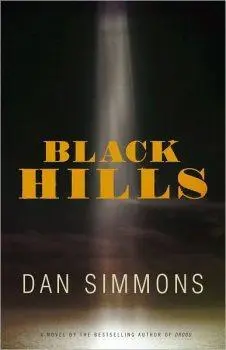
- Название:Black Hills
- Автор:
- Издательство:Little, Brown & Company
- Жанр:
- Год:2010
- ISBN:9780316071963
- Рейтинг книги:5 / 5. Голосов: 1
-
Избранное:Добавить в избранное
- Отзывы:
-
Ваша оценка:
Black Hills: краткое содержание, описание и аннотация
Предлагаем к чтению аннотацию, описание, краткое содержание или предисловие (зависит от того, что написал сам автор книги «Black Hills»). Если вы не нашли необходимую информацию о книге — напишите в комментариях, мы постараемся отыскать её.
In BLACK HILLS, Dan Simmons weaves the stories of Paha Sapa and Custer together seamlessly, depicting a violent and tumultuous time in the history of Native Americans and the United States Army. Haunted by the voice of the general his people called "Long Hair," Paha Sapa lives a long life, driven by a dramatic vision he experiences in the Black Hills that are his tribe's homeland. As an explosives worker on the massive Mount Rushmore project, he may finally be rid of his ghosts?on the very day FDR comes to South Dakota to dedicate the Jefferson face.
Black Hills — читать онлайн бесплатно полную книгу (весь текст) целиком
Ниже представлен текст книги, разбитый по страницам. Система сохранения места последней прочитанной страницы, позволяет с удобством читать онлайн бесплатно книгу «Black Hills», без необходимости каждый раз заново искать на чём Вы остановились. Поставьте закладку, и сможете в любой момент перейти на страницу, на которой закончили чтение.
Интервал:
Закладка:
— Not at all! I love walking. It is a short way to the Midway, and I have trod it a hundred times already in the three weeks that Father and I have been visiting our aunt in Evanston. Come, I will lead the way!
She sets a brisk pace, her arm still locked in Paha Sapa’s, as they walk quickly north past the looming Transportation Building and then around a slight curve and then north again past the endless Horticulture Building on their left, with its domes and arches and bright pennants. All this time to their right is the huge lagoon, quite separate from the Grand Basin on the Court of Honor, in which the sixteen-acre Wooded Island (with its tinier, satellite Hunter’s Camp Island to the south of it) holds center place.
Miss de Plachette is chattering away, although Paha Sapa does not hear it or think of it as chattering. He finds her voice melodic and delightful.
— Have you been on the Wooded Island? No? Oh, you must go there, Paha Sapa! It is best at night, with all of its fairy lanterns glowing. I love the maze of little paths—there are benches to sit on—a wonderful place to bring one’s lunch and sit in the shade and relax, especially near the south end, where the view of the grand dome of the Administration Building is truly inspiring. I admit that the landscaping is not quite up to the high standards they set for it—the exotic trees they planned, the irregular flower gardens, the mosses and other low plants appearing as if they had been there for centuries—but it is still far superior to the small, rigid plantings of the Paris Exposition four years ago. Did you go to that, by any chance? No. Well, I was only fortunate enough to attend that exposition because Father was invited to speak at a theological gathering in Paris, and although I was only sixteen, he happily saw fit to bring me along for those weeks and the tower that Mr. Eiffel built! Many thought it vulgar, but I thought it grand. They had planned to tear it down as soon as the exposition there was finished—they called it an eyesore—but I do not believe they have as yet and sincerely hope they do not. All that iron! But Mr. Eiffel’s Tower, as impressive as it is, does not move, and Mr. Ferris’s Wheel, which we shall reach in only a few minutes, most assuredly does move. Oh, I can smell the lilacs there on the northern plantings of the Wooded Island. Isn’t that breeze from the lake wonderful? And did I mention that Father knows Mr. Olmsted, who is the landscape architect responsible not only for the Wooded Island’s plantings but for the landscape design for most of the Fair? For this Fair, I mean, not for those rigidly planted and quite inferior little gardens at the Paris fair—such a disappointment!—as wonderful as Mr. Eiffel’s Tower was and, of course, the foods there. French food is always marvelous. Are you hungry by chance, Paha Sapa? It is late for lunch, of course, and rather early for dinner, but there are some wonderful lunch counters here in the Women’s Building, although some of them are set almost embarrassingly close to the large corset exhibit that… Why Paha Sapa! Are you blushing?
Paha Sapa is indeed blushing—furiously—but he smiles and shakes his head as they turn left past the Women’s Building. Miss de Plachette has not paused after her question but is informing him that the Women’s Building was designed by a female architect and that the dimensions of the Women’s Building are one hundred and ninety-nine by three hundred and eighty-eight feet, sixty feet or two stories high, and its cost was $138,000. One of the smaller buildings among the Exposition’s architectural behemoths, it is still a massive thing, with its many arches and columns and winged statuary bedecking the upper walls.
She squeezes his left arm now with her free hand.
— Have you seen the Fair at night, with all the thousands of electric lights illuminated and the dome of the Administration Building all outlined in lights and with the searchlights playing back and forth?
— No, I haven’t been here on the grounds at night, but I see the constant glow and the searchlights from the Wild West Show’s arena and tents.
— Oh, Paha Sapa, you must see the Exposition at night. That’s when the White City comes alive. It becomes the most beautiful place on earth. I’ve seen it from a ship out on Lake Michigan and from the Alley L coming down from the city, and I want to see it from the captive balloon here on the Midway, but it doesn’t make ascensions at night. The observation walkways atop the Manufactures and Liberal Arts Building, or atop the Transportation Building, are extraordinary viewpoints at night—the searchlights stab out and around from those very rooftops!—but the best place is on the Wooded Island, with all the soft-glowing electrical lanterns and the fairy lanterns and the clear view of the White City, especially the outlined domes to the south. But think how wonderful it must be to see all the blazing lights at night from high atop the Ferris Wheel!
— We need to ride it in the daytime first, Miss de Plachette. To see if one can survive at such altitudes.
Her laughter is quick and rich.

PAHA SAPA WONDERS if this young lady would—possibly could—understand why he has spent almost all of his time during eleven of his twelve visits to the Exposition standing or sitting rigidly in front of only two displays. He realizes that it would be folly to discuss it with her, and he watches his tongue more carefully than he has with her to this point.
The two hundred cavalry and Indians, not to mention Annie Oakley and her husband and the small army of workers for the Wild West Show, arrived here in Jackson Park in late March, and Mr. Cody staged his first show on April 3, long before most of the actual Exposition’s exhibits or Midway attractions were ready.
In May, President Clevelandand huge gaggles of more illustrious royal foreigners and local dignitaries officially declared the World’s Columbian Exposition open for business by closing a circuit that started up the gigantic Allis steam engine and its thirty subsidiary engines in the Machinery Building, thus sending electricity to everything at the Fair that ran on electricity. Not long after that, Mr. Cody paid the way for all of his more than 200 employees—Indian, cavalry, sharpshooters, and tent-raising roughnecks—who wanted to see the Fair.
That one day of general fairgoing was a blur in Paha Sapa’s memory: the taste of a new caramel-coated popcorn treat they were calling Cracker Jack; lightning leaping from Nikola Tesla’s head and hands; a glimpse of an optical telescope larger than most cannon; a longer, more lingering glimpse—the other Lakota and Cheyenne were appalled—of a real cannon, of the ultimate cannon, the largest cannon ever cast: the 127-ton, fifty-seven-foot-long (from breech to muzzle) Krupp’s Cannon, displayed in its own Krupp Gun Pavilion (which looked to Paha Sapa as foreboding as any real German castle, even though his experience with German castles was limited to picture books), a gun capable of throwing a shell larger and heavier than a bull buffalo some sixteen miles and penetrating eighteen inches of steel armor at the end of that screaming death arc.
But not even the giant Krupp’s gun most interested Paha Sapa after that first long, long day he and the others from the Wild West Show had spent at the Fair.
That first day he had ended up, alone, at the southern end inside the huge Machinery Hall. And there he stopped and gaped at forty-three steam engines, each producing 18,000 to 20,000 horsepower, that drove 127 dynamos that powered all of the buildings at the exposition. A sign told Paha Sapa that it required twelve of these engines just to power the Machinery Hall.
Читать дальшеИнтервал:
Закладка:
Похожие книги на «Black Hills»
Представляем Вашему вниманию похожие книги на «Black Hills» списком для выбора. Мы отобрали схожую по названию и смыслу литературу в надежде предоставить читателям больше вариантов отыскать новые, интересные, ещё непрочитанные произведения.



Обсуждение, отзывы о книге «Black Hills» и просто собственные мнения читателей. Оставьте ваши комментарии, напишите, что Вы думаете о произведении, его смысле или главных героях. Укажите что конкретно понравилось, а что нет, и почему Вы так считаете.