Dan Simmons - Black Hills
Здесь есть возможность читать онлайн «Dan Simmons - Black Hills» весь текст электронной книги совершенно бесплатно (целиком полную версию без сокращений). В некоторых случаях можно слушать аудио, скачать через торрент в формате fb2 и присутствует краткое содержание. Год выпуска: 2010, ISBN: 2010, Издательство: Little, Brown & Company, Жанр: Историческая проза, на английском языке. Описание произведения, (предисловие) а так же отзывы посетителей доступны на портале библиотеки ЛибКат.
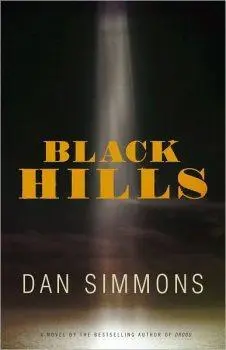
- Название:Black Hills
- Автор:
- Издательство:Little, Brown & Company
- Жанр:
- Год:2010
- ISBN:9780316071963
- Рейтинг книги:5 / 5. Голосов: 1
-
Избранное:Добавить в избранное
- Отзывы:
-
Ваша оценка:
Black Hills: краткое содержание, описание и аннотация
Предлагаем к чтению аннотацию, описание, краткое содержание или предисловие (зависит от того, что написал сам автор книги «Black Hills»). Если вы не нашли необходимую информацию о книге — напишите в комментариях, мы постараемся отыскать её.
In BLACK HILLS, Dan Simmons weaves the stories of Paha Sapa and Custer together seamlessly, depicting a violent and tumultuous time in the history of Native Americans and the United States Army. Haunted by the voice of the general his people called "Long Hair," Paha Sapa lives a long life, driven by a dramatic vision he experiences in the Black Hills that are his tribe's homeland. As an explosives worker on the massive Mount Rushmore project, he may finally be rid of his ghosts?on the very day FDR comes to South Dakota to dedicate the Jefferson face.
Black Hills — читать онлайн бесплатно полную книгу (весь текст) целиком
Ниже представлен текст книги, разбитый по страницам. Система сохранения места последней прочитанной страницы, позволяет с удобством читать онлайн бесплатно книгу «Black Hills», без необходимости каждый раз заново искать на чём Вы остановились. Поставьте закладку, и сможете в любой момент перейти на страницу, на которой закончили чтение.
Интервал:
Закладка:
Little did he know what awaited him in years to come.
They both turned to look at the roaring dynamo again. Without steam engines, it was much quieter in the Power Plant than in the Machinery Building, but the noise from this machine, while lower, went deeper. It made Paha Sapa’s bones and teeth vibrate and seemed to create a subtle but very real sexual stirring in him. He wondered if the older man felt it.
The gentleman’s voice was very smooth, modulated—Paha Sapa guessed—by decades of polite but informed conversation, but also moderated by an almost but not quite audible sense of humor, an unexpressed chuckle that came through despite the sadness that Paha Sapa still felt flowing from the man.
— When my friends the Camerons insisted that I come with them on this flying visit to the Fair—all the way from Washington, DC, mind you!—I was quite certain that it would be a waste of time. How could Chicago—I proclaimed in all my insular arrogance—how could Chicago do anything but fling its brash, new-earned millions in our faces and show us something far less than art, far less than business, even, but some demonstration less than either.
Paha Sapa listened hard over and under the dynamo hum. If most men he knew were to craft sentences like that, Paha Sapa would have laughed or left or both. But somehow Mr. Adams interested him deeply.
The older man gestured at the dynamo and showed a broad smile.
— But this! This, Mr. Slow Horse, the ancient Greeks would have delighted to see and the Venetians, at their height, would have envied. Chicago has turned on us with a sort of wonderful, defiant contempt and shown us something far more powerful even than art, infinitely more important than business. This is, alas or hurrah, the future, Mr. Slow Horse! Yours and mine both, I fear… and yet hope at the same time. I can revel and write postcards about the fakes and frauds of the Midway Plaisance, but each evening I return to the Machinery Hall and to this very chamber to stare like an owl at the dynamo of the future.
Paha Sapa had nodded and glanced at the little gentleman. Embarrassed, Adams removed his straw hat again and mopped at his scalp.
— I must apologize again, sir. I babble on as if you were an audience rather than an interlocutor. What do you think of this dynamo and of the wonders of the Machinery Hall, where I’ve seen you staring even as I do, Mr. Slow Horse?
— It’s the real religion of your race, Mr. Adams.
Henry Adams had blinked at that. Then he put his hat back on and blinked some more, obviously lost in thought. Then he smiled.
— Sir, you have just answered a question I have been posing to myself for some years. I have long been interested—in my distant, unbeliever’s vague and insolent way—in the role the Virgin Mary played in the long, slow dreams that were the construction of such masterpieces as Mont-Saint-Michel and Chartres. I believe you have given me my answer. The Virgin Mary was to the men of the thirteenth century what this dynamo and its brothers shall be to…
At that moment another man entered, and Adams interrupted himself to welcome him. They had obviously arranged to meet there at that time. This other gentleman was very tall, with a sharp beak of a nose, pomaded dark hair slicked back, and with eyes so piercing they reminded Paha Sapa not of an owl but of an eagle. The man was dressed all in black and gray with a brilliantly white shirt, which reinforced Paha Sapa’s impression of being in the presence of a predator, vigilant eagle in human form.
Mr. Adams seemed flustered.
— Mr. Slow Horse, may I present my companion at the Fair today, the eminent Sher… that is… the eminent Norwegian explorer Mr. Jan Sigerson.
The tall man did not offer his hand but bowed and quietly clicked his heels together in an almost Germanic fashion. Paha Sapa smiled and nodded in return. Something about the tall man made Paha Sapa afraid to touch his bare hand and risk learning about his life.
Sigerson’s voice was soft but sharp edged and sounded more English than Norwegian to Paha Sapa’s untrained ear.
— It is a true pleasure to meet you, Mr. Slow Horse. We Europeans rarely get the opportunity to meet a practicing wičasa wakan from the Natural Free Human Beings.
Sigerson turned to Adams.
— I apologize, Henry, but Lizzie and the senator are waiting at Franklin’s steam launch at the North Pier and inform me that we are all running late for Mayor Harrison’s dinner.
Sigerson bowed toward Paha Sapa again and he was smiling slightly this time.
— It has been a sincere pleasure meeting you, Mr. Slow Horse, and I can only hope that some day the wasichu wanagi will no longer be a problem.
Wasichu wanagi. The white man’s ghost. Paha Sapa could only stare after the two men as they left, Mr. Adams speaking but not being heard by the young Indian.
He never saw the man named Henry Adams or his Norwegian friend again.

MISS DE PLACHETTE LEADS THE WAY onto the Midway Plaisance—a mile-long strip of attractions, private shows, and rides that extends away from the lake from Jackson Park to the edge of Washington Park, as straight as a broad arrow fired into the back of the Columbian Exposition from the west.
Ahead are scatterings of exotic structures on either side of the low, broad, dusty Midway boulevard: Old Vienna medieval homes and a Biergarten; Algerian mosques and Tunisian minarets from which alien music blares and voices screech; a Cairo street where Paha Sapa and his friends have seen the overrated belly dancer; glimpses of Laplanders and Samoans and two-humped camels and a small herd of reindoor being hurried across the boulevard by men in shaggy fur despite the heat; the long water-propelled sliding railway; the Bernese Alps theater; a glimpse of the captive balloon far, far down the strip and to the right.
And in the middle of the boulevard and seemingly growing taller every minute, the 264-foot-tall Ferris Wheel, which, according to Miss de Plachette, boasts thirty-six contained cars or cabins (each larger than many log cabins Paha Sapa has known), with each car or cabin capable of carrying up to sixty people.
Paha Sapa feels a growing, if unfocused, anxiety. He is not afraid of the Wheel or of heights, but something suddenly seems perilous to him, as if he and this young lady he barely knows are approaching some point of no return.
— Are you sure you want to do this, Miss de Plachette?
— Call me Rain, please.
— Are you sure you want to do this, Rain?
— We must do this, Paha Sapa. It is our destiny.
Chapter 14 In the Paha Sapa

HE KEEPS TRYING TO RISE INTO THE AIR BUT FAILS EACH TIME.
What once came so easily to Paha Sapa, like effortless play, now seems impossible, as if his soul has grown inescapably heavy. It is the ninth day of his hanblečeya , the ninth day of his total fast, and his weakness is matched only by his weariness and sense of defeat. He has come to believe that this quest for a vision was premature, presumptuous, and doomed to failure. Many braves much older and wiser than he have failed before this—no male of the Natural Free Human Beings is ever assured a Vision and those few who receive them often do so only after years of frustration and many repeated hanblečeyas.
Читать дальшеИнтервал:
Закладка:
Похожие книги на «Black Hills»
Представляем Вашему вниманию похожие книги на «Black Hills» списком для выбора. Мы отобрали схожую по названию и смыслу литературу в надежде предоставить читателям больше вариантов отыскать новые, интересные, ещё непрочитанные произведения.




Обсуждение, отзывы о книге «Black Hills» и просто собственные мнения читателей. Оставьте ваши комментарии, напишите, что Вы думаете о произведении, его смысле или главных героях. Укажите что конкретно понравилось, а что нет, и почему Вы так считаете.