Dan Simmons - Black Hills
Здесь есть возможность читать онлайн «Dan Simmons - Black Hills» весь текст электронной книги совершенно бесплатно (целиком полную версию без сокращений). В некоторых случаях можно слушать аудио, скачать через торрент в формате fb2 и присутствует краткое содержание. Год выпуска: 2010, ISBN: 2010, Издательство: Little, Brown & Company, Жанр: Историческая проза, на английском языке. Описание произведения, (предисловие) а так же отзывы посетителей доступны на портале библиотеки ЛибКат.
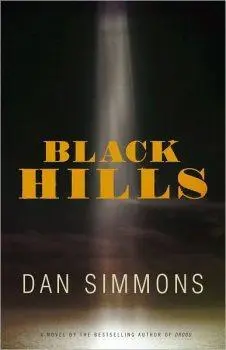
- Название:Black Hills
- Автор:
- Издательство:Little, Brown & Company
- Жанр:
- Год:2010
- ISBN:9780316071963
- Рейтинг книги:5 / 5. Голосов: 1
-
Избранное:Добавить в избранное
- Отзывы:
-
Ваша оценка:
Black Hills: краткое содержание, описание и аннотация
Предлагаем к чтению аннотацию, описание, краткое содержание или предисловие (зависит от того, что написал сам автор книги «Black Hills»). Если вы не нашли необходимую информацию о книге — напишите в комментариях, мы постараемся отыскать её.
In BLACK HILLS, Dan Simmons weaves the stories of Paha Sapa and Custer together seamlessly, depicting a violent and tumultuous time in the history of Native Americans and the United States Army. Haunted by the voice of the general his people called "Long Hair," Paha Sapa lives a long life, driven by a dramatic vision he experiences in the Black Hills that are his tribe's homeland. As an explosives worker on the massive Mount Rushmore project, he may finally be rid of his ghosts?on the very day FDR comes to South Dakota to dedicate the Jefferson face.
Black Hills — читать онлайн бесплатно полную книгу (весь текст) целиком
Ниже представлен текст книги, разбитый по страницам. Система сохранения места последней прочитанной страницы, позволяет с удобством читать онлайн бесплатно книгу «Black Hills», без необходимости каждый раз заново искать на чём Вы остановились. Поставьте закладку, и сможете в любой момент перейти на страницу, на которой закончили чтение.
Интервал:
Закладка:
Miss de Plachette pauses just outside the gate to extricate her arm for a second and open her parasol, then she slides her arm through Paha Sapa’s again and gazes back at the gate and long fence for a moment, the tiny holes in the parasol throwing Appaloosa speckles of light onto her pale face in the shade. Paha Sapa notices for the first time that there are also faint constellations of freckles across her small nose and flushed cheeks. How old is she? Twenty, perhaps. Certainly no older than twenty-one or twenty-two.
— It’s sad that Mr. Cody wasn’t able to set up his performing arena and other exhibits inside the fairgrounds proper. Father says that the Fair authorities rejected Mr. Cody’s application because the Wild West Show is—how did they put it? —“incongruous.” By which they mean, I presume, too vulgar?
Staring at Miss de Plachette’s hazel-colored eyes, Paha Sapa has a terrible second in which he realizes he has suddenly forgotten all of the English he has been speaking now for almost seventeen years. He finds his memory and voice only when they begin walking east together toward Sixty-third Street and the Fair entrance.
— Yes, too vulgar is what they meant, Miss de Plachette. They didn’t want to sully the Exposition with Mr. Cody’s entertainment, even though Mr. Cody had just returned from a very successful tour of Europe when he asked for the concession. But it’s all worked out for the best.
— How’s that?
He realizes that she is smiling, as if expectant of hearing something interesting, but it is hard to think in words because all of his attention at that moment is on the slight pressure of her right arm in the crook of his left arm (she kept her left hand free for the parasol).
— Well, Miss de Plachette…
He pauses in confusion as she stops and turns and nods her head in—he hopes—a pretense of impatience.
— I mean, Miss… ah… that is… when the Ways and Means Committee rejected the Wild West Show’s concession bid, Mr. Cody got the rights to these fifteen acres here just adjacent to the fairgrounds. Not being an official concession, Mr. Cody doesn’t have to share the profits with the Exposition and he can hold performances on Sunday—they’re wildly popular—while the Fair doesn’t allow shows then, and, of course, there’s just the fact of all this room, the full fifteen acres, I mean, Miss Oakley, Annie, has a whole garden around her tent and cougar skins on the couch and a beautiful carpet from England or somewhere, not to mention electric lights and real furniture from Italy and…
Paha Sapa realizes that after a lifetime of honorable, masculine taciturnity, he is babbling like a wasichu schoolboy. He shuts his mouth so quickly that the sound of his teeth clacking is audible to both of them.
Miss de Plachette twirls her parasol and looks at him expectantly, waiting. Is her small smile one of amusement or bemusement or mild contempt?
He gestures awkwardly with his free hand.
— Anyway, it’s worked out very well to Mr. Cody’s advantage. I believe we’re averaging about twelve thousand people per performance, which is far more profitable than any of the official concessions inside the Fair’s grounds. Almost everyone who comes to see the Fair also comes, sooner or later, to see our Wild West Show, and some take the elevated train down just to see it.
They walk in silence the half block from the Wild West Show’s huge area bordering 62nd Street to the closest Fair entrance at 63rd Street. Paha Sapa does not have enough experience being around women—especially white women—to have any idea whether this is a comfortable silence or one signaling tension or displeasure on the part of the lady. Overhead, passing over the boundary fence, runs the Elevated Railway—the so-called Alley L, called that, Paha Sapa has heard, because it threads its way through alleys to get out of the Chicago downtown area, since speculators bought up other rights-of-way—constructed to bring the millions of visitors from Chicago proper down here to Jackson Park. Some of those yellow-painted “cattle cars” are rumbling overhead now, and as they pass, Paha Sapa glances up to see eager fairgoers hanging out the open sides in a most precarious manner. Attendees have managed to kill themselves at the Exposition in many ingenious and terrible ways so far, Paha Sapa knows, but none yet, he thinks, from falling out of the Alley L.
Admission to the World’s Columbian Exposition is fifty cents, and those at the ticket counters like to tell grumpy fairgoers that if Mayor Harrison or Daniel Hudson Burnham, the man most responsible for the Fair, or President Cleveland presented himself at their gates, the gentleman would have to fork over fifty cents.
Paha Sapa pulls out a dollar, far too large a percentage of his monthly salary, but Miss de Plachette has freed her arm and is wrestling with a cloth purse hanging from her wrist by a string.
— No, no, Mr…. Billy… my father left me money to cover the price of both our admissions. After all, you would not be attending the Fair today were it not for your gallant offer to escort me.
Paha Sapa pauses, knowing that he hates the idea of her paying for the two of them, or even her paying for herself, but not knowing how to explain this important fact to her. While he dithers, the young woman pays, hands him one of the two tickets, and leads the way through the metal turnstiles. Paha Sapa grumbles, the dollar bill still dangling absurdly in his hand, but follows.
It is immediately after they enter the grounds and are passing a white towered building set near the western fence of the fairgrounds that something occurs that Paha Sapa is to think of many times in the coming years.
Suddenly Miss de Plachette whirls, looks at the windowless white building with its tall tower, and her demeanor changes completely. From being one of delighted, almost girlish animation, her expression has become one of alarm, almost horror.
— What is it, Miss de Plachette?
She hugs herself and, accidentally, hugs Paha Sapa’s arm closer, but it is no act of coquetry. He can feel her trembling through the layers of his wool coat and her silk sleeves.
— Do you feel that, sir? Do you hear that?
— Feel what, Miss de Plachette? Hear what?
He looks back at the nondescript white building just within the fairgrounds fence that they’ve just passed. The structure has a series of black blind arches near the top, short white towers on the eastern corners, and a higher tower with perhaps an observation deck on the far, western side.
She squeezes his arm more tightly and there is no melodrama in her terrified expression. The lady’s white teeth are chattering.
— That awful coldness flowing from the place? The awful screams? Can’t you feel the cold? Can’t you hear the terrible cries?
Paha Sapa laughs and pats her arm.
— That’s the Cold Storage Building, Miss de Plachette. I don’t feel the icy air to which you’re so sensitive, but it only makes sense it would be coming from the Exposition’s main repository for ice. And I do hear the cries—very faint—but they also have a benign cause. There’s an ice-skating rink inside, and I can just make out the happy cries of children or young couples on skates.
But Miss de Plachette’s expression does not change for a moment and she cannot seem to be able to take her eyes off the blocky white building. Then she turns away from it, but Paha Sapa can still feel the trembling of her body so close to his as they resume walking into the Fair.
— I apologize, Mr…. I apologize, Mr. Slow Horse. From time to time I get these odd, dark feelings. You must think me a terribly silly goose. Women are a strange species, Mr. Slow Horse, and I am one of the stranger members of that species. I have no idea where in this grand Exposition they would choose to exhibit so strange a non-fish, non-fowl, non-sensible specimen such as myself. Almost certainly in a jar of alcohol or formaldehyde on the Midway.
Читать дальшеИнтервал:
Закладка:
Похожие книги на «Black Hills»
Представляем Вашему вниманию похожие книги на «Black Hills» списком для выбора. Мы отобрали схожую по названию и смыслу литературу в надежде предоставить читателям больше вариантов отыскать новые, интересные, ещё непрочитанные произведения.


Обсуждение, отзывы о книге «Black Hills» и просто собственные мнения читателей. Оставьте ваши комментарии, напишите, что Вы думаете о произведении, его смысле или главных героях. Укажите что конкретно понравилось, а что нет, и почему Вы так считаете.