Alison Weir - Captive Queen
Здесь есть возможность читать онлайн «Alison Weir - Captive Queen» весь текст электронной книги совершенно бесплатно (целиком полную версию без сокращений). В некоторых случаях можно слушать аудио, скачать через торрент в формате fb2 и присутствует краткое содержание. Год выпуска: 2010, ISBN: 2010, Издательство: BALLANTINE, Жанр: Историческая проза, на английском языке. Описание произведения, (предисловие) а так же отзывы посетителей доступны на портале библиотеки ЛибКат.
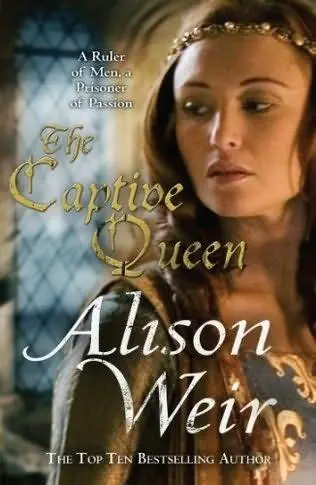
- Название:Captive Queen
- Автор:
- Издательство:BALLANTINE
- Жанр:
- Год:2010
- ISBN:978-0-345-52195-8
- Рейтинг книги:3 / 5. Голосов: 1
-
Избранное:Добавить в избранное
- Отзывы:
-
Ваша оценка:
Captive Queen: краткое содержание, описание и аннотация
Предлагаем к чтению аннотацию, описание, краткое содержание или предисловие (зависит от того, что написал сам автор книги «Captive Queen»). Если вы не нашли необходимую информацию о книге — напишите в комментариях, мы постараемся отыскать её.
Renowned for her highly acclaimed and bestselling British histories, Alison Weir has in recent years made a major impact on the fiction scene with her novels about Queen Elizabeth and Lady Jane Grey. In this latest offering, she imagines the world of Eleanor of Aquitaine, the beautiful twelfth-century woman who was Queen of France until she abandoned her royal husband for the younger man who would become King of England. In a relationship based on lust and a mutual desire for great power, Henry II and Eleanor took over the English throne in 1154, thus beginning one of the most influential reigns and tumultuous royal marriages in all of history. In this novel, Weir uses her extensive knowledge to paint a most vivid portrait of this fascinating woman.
Captive Queen — читать онлайн бесплатно полную книгу (весь текст) целиком
Ниже представлен текст книги, разбитый по страницам. Система сохранения места последней прочитанной страницы, позволяет с удобством читать онлайн бесплатно книгу «Captive Queen», без необходимости каждый раз заново искать на чём Вы остановились. Поставьте закладку, и сможете в любой момент перейти на страницу, на которой закончили чтение.
Интервал:
Закладка:
And something had died in her too. She could no longer bear to be in his presence.
He had insisted on her traveling south with him to Limoges, where he was to host a week of lavish banquets and festivities in honor of the betrothal of the Lord John to Alice of Maurienne. The guests of honor were to be Alice’s father, Count Humbert, the Kings of Aragon and Navarre, and the Count of Toulouse. Richard was to be present, as Duke of Aquitaine, and Henry had summoned the Young King from Hautfort; Geoffrey he had sent back to Brittany. Divide and rule, Eleanor thought cynically.
And that was how the great baggage train of the Plantagenets came once more to be wending its cumbersome way south through the Angevin territories. It was February, and cold, when they left Chinon, but Limoges, when they arrived, was mild, and the town was en fête . Although her heart was frozen, Eleanor mentally girded her loins and donned her most sociable mask, conducting herself as charmingly and wittily as ever toward her august guests. She warmed to the flattery of the Spanish kings, and reveled in the blatant regard of the black-haired Count Raymond of Toulouse, with whom, many years earlier, she and Henry had once been at war, each claiming that Toulouse belonged to them. Although Raymond had won the day, it seemed that he cherished no hard feelings toward his former aggressor. She wickedly hoped that Henry had seen him flirting outrageously with her. At fifty-one, it was balm to her broken heart and scarred lips to luxuriate once more in a man’s frank interest.
“I had never believed the reports of your beauty until I met a man called Bernard de Ventadour,” Raymond told her as they sat at the high table, dining off gold plates and drinking from crystal goblets. “He was a troubadour—you may remember him.”
“I knew him. He was once at my court,” she told him.
“He loved you, truly. Your husband the King had dismissed him through jealousy, and he sought refuge at my court. He pined for you so greatly; did you know that?” Raymond’s startling blue eyes, set in an angular, handsome face, were searching.
“I knew he had a regard for me,” Eleanor said. “But, although I say it myself, all the troubadours claimed to be in love with me. I was the duchess, and it was more or less expected of them.”
“But Bernard was special,” Raymond insisted. “His songs were not mere flattery, but inspired by the heart. I judge him to have been one of the greatest poets of our age.”
“You speak of him as if he were dead.” Eleanor paused.
The count sighed and laid down his knife. “Alas, madame, he is. His grief was such that he sought refuge and peace in the abbey of Dalon in the Limousin, where he ended his days not long after.”
“I am sorry for that,” she said, feeling regret that she had so lightly dismissed Bernard’s devotion.
“You could say he died for love of you—and most men, having seen you, would understand why.”
Eleanor recovered herself and frowned at Raymond in mock reproof. “Do you know how old I am, my lord?”
“If you tell me, I will not believe it. Madame, you rank among the immortals, your fame and beauty are legendary, and I can see for myself that the reports do not lie!” This was accompanied by increasingly animated gestures, and Eleanor noted with secret glee that Henry was looking at them suspiciously, and toyed mischievously with the idea of taking Raymond to her bed, to spite her husband further. It would not be difficult to seduce the amorous count. Dare she do it? It might be all that she needed to quell her inner turmoil and pain.
The Young King arrived on the third day, shortly after a messenger from the court at Paris, who had brought letters of congratulation for the King and Count Humbert—and a secret missive for Eleanor.
Dragging herself away from her tower window, through which she had been hoping to espy her eldest son and his retinue approaching across the distant hills, she hurriedly broke the seal. It was from Louis, offering her and her sons his support against the unjust treatment of her husband. As Henry’s overlord, he said, he had the right to demand the righting of the wrongs that her lord had done his heirs, and he, Louis, would pursue that even to the point of resorting to arms.
Her hands were trembling. She was horribly aware that in invoking the King of France’s aid, she had committed treason against her lord. Louis’s response had forcibly brought that home to her. She had not meant Henry any harm, had wanted only to make him aware of the needs of their sons. But it was probably too late to retract now. The letter had been written, the damage done. She suspected that the Young King would have been in touch with his father-in-law and received a similar assurance anyway.
And here was the Young King now, his party just visible in the distance. His mother stilled her conscience and forced a smile. She had longed to see this oldest son of hers, yet realized that his presence here could only mean trouble. And that, with what she knew, and the heavy knowledge of what she had done, she would be involved in it up to her neck.
King Henry had gathered his family, his guests, and his court in the great hall of the Abbey of St. Martial for yet another celebratory feast, and it was here that, with his face set hard like granite, he received the Young King and Queen Marguerite. To make matters worse, the younger man exchanged the kiss of greeting with his father in sullen silence, having barely bent his head in obeisance. His embrace of his mother was far warmer.
His disrespect did not go unnoticed. The Kings of Aragon and Navarre exchanged disapproving glances, while Raymond of Toulouse raised his elegant eyebrows at Eleanor. But she would not acknowledge him, and took her place between the two Kings, her husband and her son, for the solemn banquet.
After the cloths had been drawn and spiced wine served, the company proceeded into the church for the betrothal of the Lord John to Alice of Maurienne. The future bride was an exquisite child of four with chestnut curls framing her sweet, round face; her father, the portly Count Humbert, looked quite distressed at the prospect of giving her away, for she was his only, cherished child. But soon the deed had been done, and she was affianced to the six-year-old John, who could not have looked less interested. John’s avid curiosity had been captivated by the wonderful luxury and excitement of this rare week away from his cloistered existence, and he saw his betrothal only as a means of escaping his frustratingly ordered world.
The ceremony over, the moment had come for Count Humbert formally to commit his daughter into the custody of the English King, and there were tears in his eyes as he lifted Alice up, kissed her, then set her down and gently pushed her into a wobbly curtsey. Henry patted her on the head.
“Queen Eleanor here shall care for her as if she were her own daughter,” he assured the anxious father, and Eleanor stepped forward and gathered the little girl up in her arms.
“As dowry, I give you the four castles stipulated in the marriage contract,” the count confirmed, “and I formally designate the Lord John my heir.” Henry glared at the fidgeting John, indicating with a sharp downward nod that he should bow in acknowledgment of his good fortune, which he belatedly did.
There followed a second ceremony, in which it had been decided that Count Raymond, now acknowledged by Henry and Eleanor as Count of Toulouse, was to pay homage to them as his overlords. But Henry had made a change of plan. He had the glowering Young King and Richard, as Duke of Aquitaine in place of Eleanor, stand beside him, and obliged the count to swear fealty to the three of them. That prompted outraged murmurs from Eleanor’s subjects: what business had the Young King to be involved? It was Richard’s right, alone of the sons of Eleanor, for had not King Louis recognized him as the overlord of Toulouse?
Читать дальшеИнтервал:
Закладка:
Похожие книги на «Captive Queen»
Представляем Вашему вниманию похожие книги на «Captive Queen» списком для выбора. Мы отобрали схожую по названию и смыслу литературу в надежде предоставить читателям больше вариантов отыскать новые, интересные, ещё непрочитанные произведения.






Обсуждение, отзывы о книге «Captive Queen» и просто собственные мнения читателей. Оставьте ваши комментарии, напишите, что Вы думаете о произведении, его смысле или главных героях. Укажите что конкретно понравилось, а что нет, и почему Вы так считаете.