Alison Weir - Captive Queen
Здесь есть возможность читать онлайн «Alison Weir - Captive Queen» весь текст электронной книги совершенно бесплатно (целиком полную версию без сокращений). В некоторых случаях можно слушать аудио, скачать через торрент в формате fb2 и присутствует краткое содержание. Год выпуска: 2010, ISBN: 2010, Издательство: BALLANTINE, Жанр: Историческая проза, на английском языке. Описание произведения, (предисловие) а так же отзывы посетителей доступны на портале библиотеки ЛибКат.
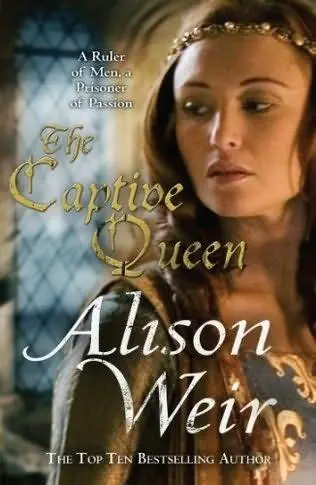
- Название:Captive Queen
- Автор:
- Издательство:BALLANTINE
- Жанр:
- Год:2010
- ISBN:978-0-345-52195-8
- Рейтинг книги:3 / 5. Голосов: 1
-
Избранное:Добавить в избранное
- Отзывы:
-
Ваша оценка:
Captive Queen: краткое содержание, описание и аннотация
Предлагаем к чтению аннотацию, описание, краткое содержание или предисловие (зависит от того, что написал сам автор книги «Captive Queen»). Если вы не нашли необходимую информацию о книге — напишите в комментариях, мы постараемся отыскать её.
Renowned for her highly acclaimed and bestselling British histories, Alison Weir has in recent years made a major impact on the fiction scene with her novels about Queen Elizabeth and Lady Jane Grey. In this latest offering, she imagines the world of Eleanor of Aquitaine, the beautiful twelfth-century woman who was Queen of France until she abandoned her royal husband for the younger man who would become King of England. In a relationship based on lust and a mutual desire for great power, Henry II and Eleanor took over the English throne in 1154, thus beginning one of the most influential reigns and tumultuous royal marriages in all of history. In this novel, Weir uses her extensive knowledge to paint a most vivid portrait of this fascinating woman.
Captive Queen — читать онлайн бесплатно полную книгу (весь текст) целиком
Ниже представлен текст книги, разбитый по страницам. Система сохранения места последней прочитанной страницы, позволяет с удобством читать онлайн бесплатно книгу «Captive Queen», без необходимости каждый раз заново искать на чём Вы остановились. Поставьте закладку, и сможете в любой момент перейти на страницу, на которой закончили чтение.
Интервал:
Закладка:
“No,” Henry told him. “You are yet young and inexperienced. There will be time enough for that when you are older.”
“Henry, when you inherited Normandy, you were eighteen, only a year older than Young Henry is now,” Eleanor reminded him.
“Yes, but I did not consort with troubadours, or feast with unworthy knights just because they bore a name that took my fancy. I had to grow up quickly, in the midst of a civil war, and I learned early on to fight in the field and pit my wits against my mother’s adversaries. Thanks be to God, our sons have never had to deal with such difficulties.”
“Even so, you have overly protected them,” Eleanor retorted. “Now you must let them be men and stand on their own feet, and give them cause to be thankful to you. Heaven knows, their demands are not unreasonable.”
“I beg leave to differ. The courier who brought Young Henry’s message was my own man. He had heard the cub boasting that he ought by rights to reign alone, for at his coronation, my reign, as it were, had ceased.”
Eleanor’s sharp intake of breath pierced the stunned silence. The two boys looked at their feet, knowing themselves defeated by their brother’s thoughtless stupidity.
“That is the kind of poison that your Bertran de Born has been dripping in my son’s ear,” Henry snarled. “I wonder where he got the idea.”
“Not from me!” Eleanor cried hotly. “That is unjust! How could you think it?”
“You always take his part.”
“That is because you refuse to see things his way.” She was in a ferment, past caring if she offended or upset him. “And now, clearly, it is too late. It is you who have brought us to this pass, Henry. You can never admit that you are wrong. Look at what happened in Aquitaine. It’s the same with your vassals all over the empire. They complain that you are too heavy-handed, too authoritarian. That’s exactly what is wrong with your treatment of your heirs, and I will not stand by and see it!”
Henry hit her, hard, across the mouth. “That’s enough!” he roared.
“Mmmm!” she cried in pain, clapping her hand to her bleeding lips. This could not be happening, she thought. Henry had been that rarity among husbands: only once before had he used violence on her, the time she unwisely taunted him about Becket—and that had been only a slap. Thus his lashing out at her now, and drawing blood, was shocking in the extreme. It was bad enough that he had struck her—worse still that he had done it in front of their sons.
Richard’s hand had flown to his dagger, and Geoffrey, equally outraged, sprang to comfort their mother. Henry glared at Richard.
“I am your king, and your father, to whom you owe all honor and obedience,” he said menacingly. “Lift one finger in anger against me and you commit treason, which I will punish accordingly, whether you be my son or no.”
“You hit my Lady Mother,” Richard replied through gritted teeth. “You are no father of mine.” And, leaving Henry glowering and muttering threats, he helped Geoffrey assist Eleanor to her bower, where her horrified damsels ministered to her wounds.
“There is no moving Father,” Richard said dejectedly.
It pained Eleanor to speak, and the pain in her heart was greater still—Henry had raised his hand to her; she still could not believe it—but she forced herself to clarify things for her boys. “There is more to this than his obduracy,” she mumbled through her cut lip. “He cannot see or comprehend what is happening right under his nose. He sees his word as law and expects it to be obeyed.” She sighed, fighting back tears. She must remain strong, for no one else would champion her sons’ cause.
“You are aware that your father and I have lived apart for some time,” she said gently. “That was our mutual decision. We had had our differences, yet we remained friends and allies. Today, that has all changed, for I will not have my children cheated of their rights. Plainly, we are in one camp, and your father is in another. That makes us enemies, although it grieves me to say it. But I promise you now, all of you, including Young Henry, that I will fight for your rights, and I will make the King see sense!”
“Will there be a war?” Geoffrey asked eagerly. He was desperate to prove himself in battle. But Richard’s face remained grave; a year older, he had realized the true implications of the rift. Eleanor could guess what he was thinking—they were that close.
“Your father said that a kingdom divided would be brought to desolation,” she mused. “Well, he has this day divided his kingdom, and if it all ends in desolation, he must bear the responsibility. By his stubbornness, he has laid himself open to the thing he most dreads. But I will not let it happen; there is too much at stake, for he is putting this empire we have built at risk. I have always been a true, loyal wife and helpmeet to my lord, but I will not stand by and see my sons treated unjustly. He is wrong, utterly wrong, and we must make him face that.”
Then her voice turned wistful, less strident. “This saddens me more than I can say. There should not be discord between father and son, or husband and wife. It is against the natural order of things.”
“What wonder if we lack the natural affections of mankind?” Richard laughed humorlessly. “We are from the Devil, and must needs go back to the Devil!”
What could she do to force Henry to his senses? Dare she write to Louis? It had been so long. Yet something told her that he would welcome her intervention. There was no doubt he was of the same mind, although for different motives. She wanted justice for her sons, and for them to enjoy their right to a share of their father’s power; Louis wanted Henry’s empire disunited. He too had evidently read the Scriptures.
But what exactly did the Young King want? Was it sovereign authority, even if that meant the overthrow of his father? If so, then what she was contemplating was dangerous in the extreme. At its best it was rebellion—at its worst, treason.
She must talk to her oldest son as soon as she could and find out what was in his mind. If it were indeed Henry’s ruin, then she must try to talk some sense into the Young King. In the meantime—it could not hurt, surely—she would write to Louis, parent-to-parent, as it were, and confide to him her concerns. One word from him, threatening the peace that Henry had worked so hard to negotiate, might be all it would take …
And there was another thing. Louis was her overlord; she had every right to appeal to him for aid against her enemies. And, by his insupportable acts, Henry had now made himself her enemy. She herself had not created this terrible situation. She had been trying all along to find a peaceable solution.
Putting quill to parchment, she found her thoughts drifting hopefully back through the years to a young man with long yellow hair who had been so pathetically eager to please her …
45
Limoges, 1173
When Eleanor next saw Henry, he made no reference to what had passed between them; nor did he refer again to the rift with his sons. Yet he could not have failed to notice the frigidity of her manner toward him, or that she shrank from his touch. It seemed he no longer cared what she thought of him.
His striking her had changed everything. There was nothing unusual in a husband beating his wife, of course: it was a man’s right, and she knew of many women who had to endure such chastisement. She also knew of several churchmen who wanted to limit the length of the rod that was used, but they had been dismissed as eccentrics. No, the issue here was that, in lashing out and wounding her, Henry had brutally demonstrated that his respect for her, and his love and regard, had died—and he had let her sons see that.
Читать дальшеИнтервал:
Закладка:
Похожие книги на «Captive Queen»
Представляем Вашему вниманию похожие книги на «Captive Queen» списком для выбора. Мы отобрали схожую по названию и смыслу литературу в надежде предоставить читателям больше вариантов отыскать новые, интересные, ещё непрочитанные произведения.




Обсуждение, отзывы о книге «Captive Queen» и просто собственные мнения читателей. Оставьте ваши комментарии, напишите, что Вы думаете о произведении, его смысле или главных героях. Укажите что конкретно понравилось, а что нет, и почему Вы так считаете.