Alison Weir - Captive Queen
Здесь есть возможность читать онлайн «Alison Weir - Captive Queen» весь текст электронной книги совершенно бесплатно (целиком полную версию без сокращений). В некоторых случаях можно слушать аудио, скачать через торрент в формате fb2 и присутствует краткое содержание. Год выпуска: 2010, ISBN: 2010, Издательство: BALLANTINE, Жанр: Историческая проза, на английском языке. Описание произведения, (предисловие) а так же отзывы посетителей доступны на портале библиотеки ЛибКат.
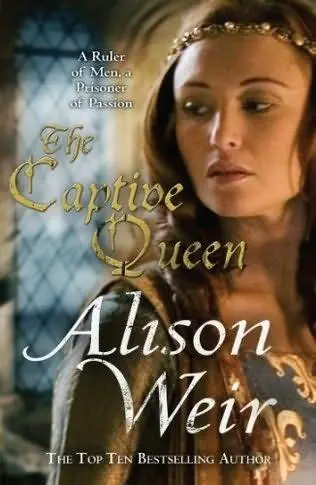
- Название:Captive Queen
- Автор:
- Издательство:BALLANTINE
- Жанр:
- Год:2010
- ISBN:978-0-345-52195-8
- Рейтинг книги:3 / 5. Голосов: 1
-
Избранное:Добавить в избранное
- Отзывы:
-
Ваша оценка:
Captive Queen: краткое содержание, описание и аннотация
Предлагаем к чтению аннотацию, описание, краткое содержание или предисловие (зависит от того, что написал сам автор книги «Captive Queen»). Если вы не нашли необходимую информацию о книге — напишите в комментариях, мы постараемся отыскать её.
Renowned for her highly acclaimed and bestselling British histories, Alison Weir has in recent years made a major impact on the fiction scene with her novels about Queen Elizabeth and Lady Jane Grey. In this latest offering, she imagines the world of Eleanor of Aquitaine, the beautiful twelfth-century woman who was Queen of France until she abandoned her royal husband for the younger man who would become King of England. In a relationship based on lust and a mutual desire for great power, Henry II and Eleanor took over the English throne in 1154, thus beginning one of the most influential reigns and tumultuous royal marriages in all of history. In this novel, Weir uses her extensive knowledge to paint a most vivid portrait of this fascinating woman.
Captive Queen — читать онлайн бесплатно полную книгу (весь текст) целиком
Ниже представлен текст книги, разбитый по страницам. Система сохранения места последней прочитанной страницы, позволяет с удобством читать онлайн бесплатно книгу «Captive Queen», без необходимости каждый раз заново искать на чём Вы остановились. Поставьте закладку, и сможете в любой момент перейти на страницу, на которой закончили чтение.
Интервал:
Закладка:
She had written to Henry, informing him of the outrage committed by the Lusignans, as her duty bound her; and, as she anticipated, he sent immediately to inform her that he was coming to teach the traitors a lesson they would never forget. She hoped that he would stop by in Poitiers to see her, so she could thank him for settling Aquitaine on Richard, and thereby mend matters between them a little. But the next she heard, from another exhausted travel-stained messenger, Henry had been unexpectedly diverted from his purpose and had to march on Brittany to quell a rising by Eudes de Porhoët, the father of Count Conan.
“But Conan’s family are our allies!” she exclaimed. “Eudes’s granddaughter Constance is married to the Lord Geoffrey. His daughter Alice is in the custody of the King, as surety for her father’s friendship. This is madness.”
The royal messenger flushed and looked at her somewhat shiftily, she thought.
“You must tell me what has happened,” she commanded, her tone sharpened by alarm.
The man looked at his feet and twisted his felt hat in his hands.
“It is said that the Lord King lay with the Lady Alice, and that she has borne him a child that died. Her kin have risen up in anger, for the young lady was a hostage in the Lord King’s household.”
At his words, Eleanor froze. Was there no end to Henry’s betrayals? And when would he cease having the power to hurt her? She had liked to think that she was free of him, and was stronger for it, but tidings like this proved to her that she was still in some thrall to him.
She dismissed the messenger and withdrew to her bower, trying to seek solace in music and the chatter of her ladies. But however hard she tried, she could not dismiss from her imaginings the horrible, disturbing image of Henry making Alice de Porhoët pregnant.
Sick to the heart, her delight in Richard’s future being settled so happily deflated, Eleanor resolved to stay in Aquitaine for good. She told herself, firmly and adamantly, that she would never go back to Henry and live with him as his wife. From now on they would be political allies, no more. She would henceforth invest all her love and care in her heir, her beloved Richard, and forget her faithless husband. Nowadays she had come to the comforting realization that her love for Richard was greater than what she had ever felt for Henry—apart from the passion that her husband had inspired in her physically. But that had died long ago.
Richard was now eleven, shooting up and developing strong muscles. She took great pride in his prowess, both in book learning and military exercises. She marveled at his dexterity in Latin, and herself taught him to play the lyre and to compose verses in French and Provençal; his voice was high and true, and she thrilled to hear him singing with the choir of her private chapel. Tall, ruddy-haired, and slender, he was in most respects his mother’s son. He had her straight-nosed profile and fine bone structure. There was little of Henry in him—save for a streak of Angevin devilment and ruthlessness, already apparent. Never mind, she told herself: a ruler needed to be firm and establish his authority, and he must be fierce in battle. Richard had what it took, in abundant measure. He was her true heir in every way, for he had the South in his blood, as she did. He would do well: he was destined for greatness. She knew it in her bones.
For much of that year, Eleanor stayed in Poitiers, governing her domains with wisdom and firmness. Her presence in the duchy did much to heal the wounds dealt by decades of foreign rule by both her husbands in turn, and she was intent on making every effort to win back the love and loyalty of her vassals.
As soon as she had reestablished herself in the duchy, she made a progress through her lands, her purpose being to greet and cultivate her lords, and be seen by them. If force had failed to establish central authority in Aquitaine, she would do it by love and peaceful persuasion. She traveled south, stopping first at the flourishing port of Niort, where she held court in the massive square fortress built by Henry, and was feasted by the locals with eels and snails from the nearby marshlands, and little cakes studded with angelica, a local delicacy. She promised that in due course she would grant the town a charter and new privileges, and was gratified by the delighted response of the worthy burghers.
Then she rode farther south to Limoges, to repair the damage done by Henry nine years before, when he ordered the walls to be torn down. She admired the new fortifications, granted boons, and received local lords, then moved on to the Périgord, land of the great rivers, the Vézère and the Dordogne, a region populated with flocks of plump ducks and gray geese. Here, she gloried in the deep-cut valleys nestling beneath limestone cliffs and caves, the lush dark woodlands, the fields of maize, the orchards of walnut trees, the bustling towns and hilltop villages, the mighty castles and humble churches, all basking in the golden sun. The people came with their gifts and their blessings, even the seigneurs who ruled these often lawless valleys bent the knee to her and swore fealty. She began to feel whole again, enveloped by the love of her people, cherished in the heart of her duchy, feted by the highborn and the lowly.
She swept westward to Bayonne on the coast, near the foothills of the mighty Pyrenees, and then north again to Poitiers, staying at castles, manor houses, or abbeys on the way. Everywhere she went, her subjects came thronging, calling down blessings upon her and bringing her their humble petitions and grievances. She read them all, dispensing justice with fairness and humanity, and earning herself a reputation for wisdom and generosity. She had left Poitiers a sad, disillusioned wife struggling to break free of the past; she returned to it a happy, confident, and jubilant woman, thankful to have won her independence.
Eleanor had written to tell Henry of her resolve to separate from him for good. It had been one of the most difficult letters she ever composed in her life, but she felt better after she set her mind down on parchment; in fact she felt strangely liberated. Love for which one paid a high price in sorrow and humiliation was just not worth having. She might have feelings for Henry still, but overriding those, at least for the present, was relief at having distanced herself from the torment their marriage had become.
He wrote back: “I am as troubled as Oedipus about the rift between us, yet I will not oppose your decision.” Oedipus! Great Heaven! Did he now think of her as a mother figure, no more? God’s blood, she swore to herself, that trollop Rosamund was welcome to him!
There was balm to her hurt pride in the courtly adoration of the troubadours who had flocked to her court, overjoyed to be once more dedicating songs of love and beauty to their famed duchess. Their praises warmed her heart, for she knew she was no longer the glorious young woman who had inspired such chivalrous verse in the past; and yet still they sang of the incomparable loveliness of their noble Eleanor.
It was a luxury, after so many years of what now felt like exile, to be living in the midst of a civilization that celebrated love in all its forms. Indeed, it was a delight to sit in a sun-baked arbor of an afternoon, discussing with her lords and ladies this most fascinating of subjects, with her courtiers gathered around, hanging on her every word.
“They do not speak of love in the kingdoms of the North as we do here in Aquitaine,” Eleanor told her astonished listeners. “They think that love, as we honor it, is merely an excuse for adultery. My Lord Henry could never understand our culture.”
“Love,” declared the young troubadour Rigaud de Barbezieux, “is the bedrock of happy relations between men and women.”
Читать дальшеИнтервал:
Закладка:
Похожие книги на «Captive Queen»
Представляем Вашему вниманию похожие книги на «Captive Queen» списком для выбора. Мы отобрали схожую по названию и смыслу литературу в надежде предоставить читателям больше вариантов отыскать новые, интересные, ещё непрочитанные произведения.









Обсуждение, отзывы о книге «Captive Queen» и просто собственные мнения читателей. Оставьте ваши комментарии, напишите, что Вы думаете о произведении, его смысле или главных героях. Укажите что конкретно понравилось, а что нет, и почему Вы так считаете.